
Table of contents
A question goes deep when it asks for a scene rather than an opinion. What are you afraid of invites a summary; when were you last genuinely frightened invites a story neither of you has heard before. The thirty questions below are sorted by how much they ask of you.
There is a reason couples of ten years sometimes tell each other less than they did on the third date. Not because there is nothing left, but because everyday conversation has a job to do. It settles who is collecting the parcel and when the train leaves. Questions that settle nothing have no slot in it.
This is a way to give them one. Not a game, not an exercise, not a test: an evening with thirty questions, of which you will get through perhaps eight. That is the intended outcome.
What makes a question deep
Three things separate a deep question from a merely personal one. It asks for a scene rather than a position. It cannot be answered in one word. And it has no socially preferable answer — there is no version that makes the speaker look better.
That last point is why most question lists circulating online do not work. What is your greatest strength has a preferred answer; what is the failure you still think about does not. The second is less comfortable and gives you something you keep.
The idea is not new. In 1997 the psychologist Arthur Aron published a study on generating closeness between strangers using 36 questions arranged in three sets of increasing intimacy. The finding that made it famous was not that the questions are magic but that the escalation is: the same question asked cold lands very differently from one asked after twenty minutes of easier ones. The rounds below are built on that principle.
You can tell a good question by the pause before the answer.
The format that stops it becoming an interview
Structure does the heavy lifting. One version that works and runs about two hours:
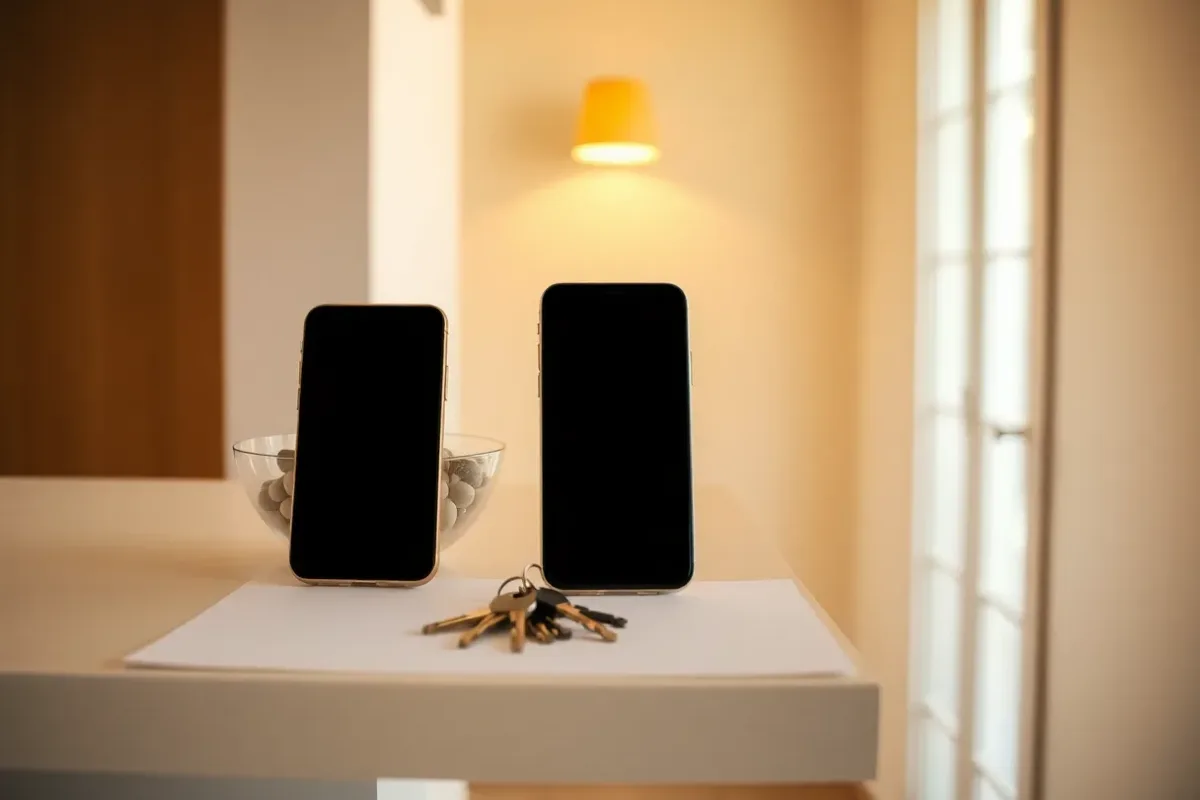
- Somewhere without a screen. Kitchen table, balcony, a corner table in a restaurant — not the sofa with something paused on it.
- Phones out of the room, not face down.
- Alternate, and whoever asks answers first.
- Any question can be declined. No reason required, no follow-up.
- No commentary on the other person's answer. Follow-up questions only.
Rule five is the important one and the hardest. The reflex to place an answer — I know exactly what you mean, or that surprises me — closes the subject faster than a refusal does. Follow-up questions keep it open: how old were you, who else was there, what did you do afterwards.
Thirty questions in three rounds
The rounds build. Start at one even if you have been together a decade — the early questions warm the conversation up, and without them the later ones feel like an ambush.
Round one — where you come from
- What smell takes you straight back to childhood?
- Which room from your childhood could you draw from memory?
- What did your mother say so often that you still hear it?
- What rule at home did you resent most?
- When were you first genuinely proud of yourself?
- Who was the first adult outside your family who took you seriously?
- What did you collect, and what happened to it?
- What was playing in the car on family journeys?
- What food will you never willingly eat again, and why?
- What did you never tell your parents?
Round two — what changed you
- Which decision did you very nearly make differently?
- When were you last genuinely relieved?
- Who do you miss without ever mentioning it?
- What did you give up and have never regretted?
- When did you last feel ashamed of something small?
- Which friendship faded, and whose fault was it?
- What was the loneliest stretch of your life?
- When did you last lie to protect someone?
- What did you do with the first money that was genuinely yours?
- What would fifteen-year-old you find hardest to believe about your life now?
Round three — what we do not say
- How can you tell something is wrong with me before I say it?
- What do I do that calms you without my noticing?
- When were you last frightened about us?
- What have you stopped trying to change about me?
- What would you change about our week if it annoyed nobody?
- What are you afraid of that you have never told me?
- What do you want me to do if you become seriously ill?
- Which memory of us would you give up last?
- What do you hope I think about you?
- What do you wish I asked you more often?
Related articles
Listening is the harder half
Almost every guide to evenings like this is about the questions. The questions are the easy part — they are written down and can be read aloud. The difficult thirty seconds are the ones after the answer.
Two reflexes ruin these conversations and both are kindly meant. The first is matching: that happened to me too. The other person's answer is now over and yours has begun. The second is reassuring: it was not that bad. The answer has now been corrected. Both happen faster than you can notice them.
What helps is unremarkable: sit through the pause and ask something that goes deeper rather than wider. Not what else happened, but what that felt like at the time. The difference between a pleasant evening and one you still refer to in five years lies almost entirely here.
One case deserves naming. Not everybody answers in paragraphs. Someone who meets a large question with a single sentence and then stops is not evading it — they think differently. Pressing harder is the reliable way to end the conversation there. What works instead is time and something to do with the hands: answers like that arrive far more often while walking, driving or cooking than across a table. If one of you is built that way, make the evening a long walk instead.
When an answer opens something
It is rare, but it happens: an answer touches something neither of you was ready for. A loss that never came up. A fear larger than expected. A sentence about the relationship that stays in the room.
One rule covers it: nothing gets resolved tonight. Whatever surfaced is named, and given a date of its own. This evening is for listening, not negotiating, and the difference is the same as between a conversation and a meeting.
Some couples turn this into a habit — an evening like it twice a year, always with new questions. If what you want is regular structure rather than an occasion, a short weekly conversation serves that far better. This evening works because it is rare.
What survives from an evening like this is usually two or three sentences. It is worth writing them down the same night — not the questions, but the answers you had not expected. Couples who are in the middle of a wedding tend to put notes like that wherever the rest of their shared record already lives: a notebook, a shared document, or a wedding website of their own. The location is irrelevant; the writing down is not. A year later you will remember how the evening felt and not one sentence of what was said.
Thirty questions, eight of them answered, nothing decided: that is what a good version of this evening looks like. For next time, take five questions out of whatever came up tonight — they will beat any list.
Planning your dream wedding?
Create your own wedding website in minutes – with RSVP function, photo gallery, and more.