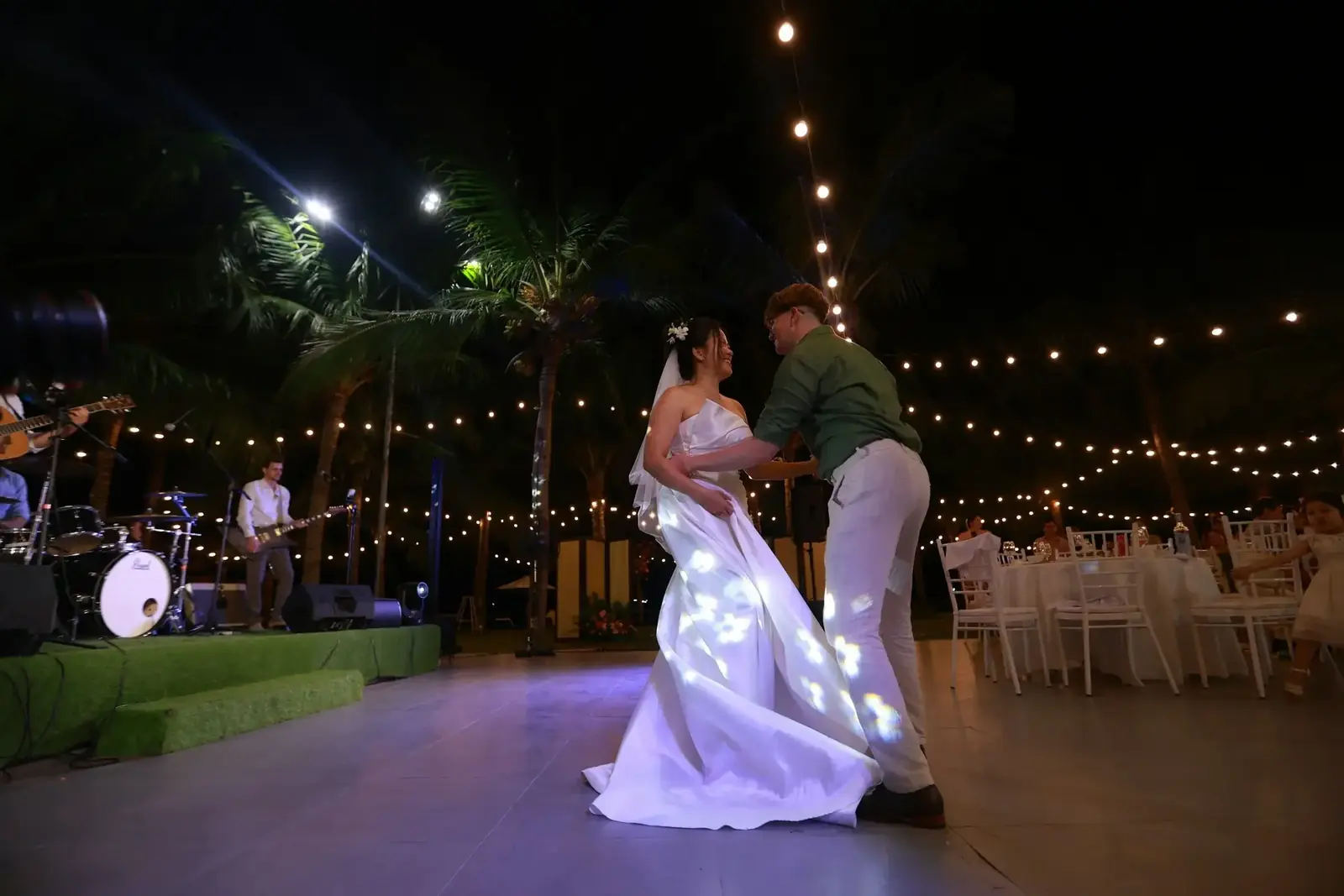
The decision hangs on three things that have nothing to do with your taste in music: how large and how echoey the room is, how long you want people dancing, and how wide the age range among your guests is. Which music you like comes after that.
The argument is usually run as a matter of taste, and it cannot be settled that way, because both sides are right: live music has an energy no recording reaches, and a sound system has a repertoire no band has. Stop at that opposition and you decide on rapport, then wonder at half past midnight why the dance floor is empty.
The more useful question is what job the music has to do on your evening. This piece works through the three factors that effectively pre-decide the choice, sets the two options side by side, explains when the hybrid is worth it, and describes the marks of quality separately for each — because you recognise a good band by different things than a good DJ. Fees are deliberately not the subject here.
1. The three factors that come before the music
Before you listen to a single demo, settle three things about your evening. Each of them either rules one option out in practice or makes it clearly more attractive.
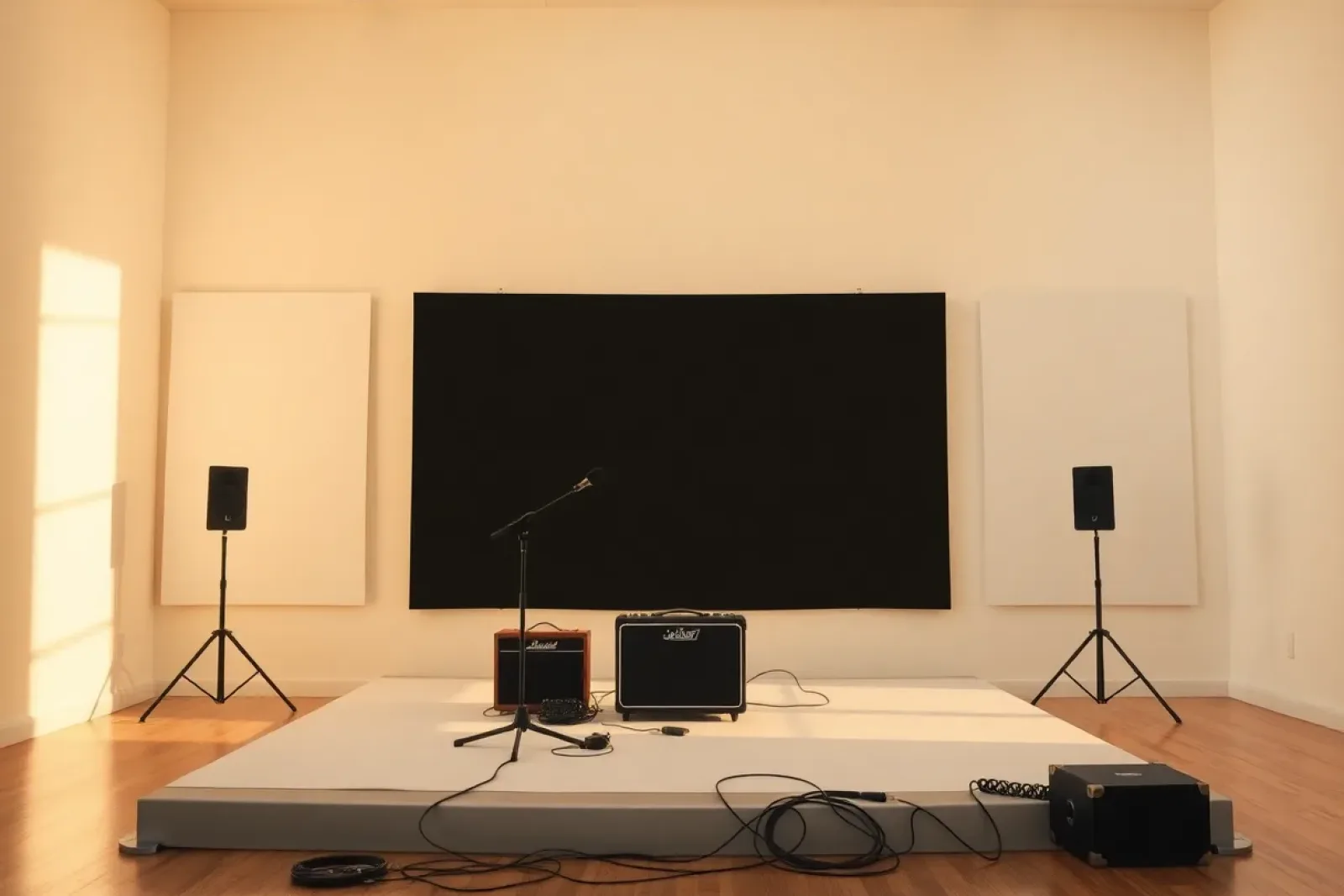
- The room. How many square metres, how high the ceiling, how much echo? A band needs floor space — four to six people with instruments occupy a corner nobody will put chairs in afterwards. In a small, echoing vaulted room a band is often too loud and a duo with a small PA is the better answer.
- The hours. When should the first dance happen, and how long should the party run? Bands play in sets with breaks — blocks of 45 to 60 minutes are usual. If you want dancing into the small hours, you need either a very large band or somebody to cover the breaks anyway.
- The guest mix. How wide is the age range, and how many of these people actually dance? A mixed room from 18 to 85 demands breadth of repertoire, and breadth is the sound system's discipline.
A fourth point comes from outside and is easily overlooked: noise limits and curfews. Depending on the country they are set by the local authority, by the venue, or by both, and some venues have a limiter physically installed. Ask your venue which rule applies before you book — a band that only works above a certain volume does not fit every room.
With those four answers in hand, the choice is usually already narrow. Where the blocks of the evening actually fall is best sorted out in parallel in the running order.
An empty dance floor is almost never a music problem. It is usually a room problem or a timing problem.
2. The comparison, line by line
This comparison is about properties, not quality. There are outstanding bands and outstanding DJs, and the table below says nothing about that — only about how each behaves in operation.
| Property | Band | DJ |
|---|---|---|
| Repertoire | Limited to what has been rehearsed | Effectively unlimited |
| Reacting to the mood | Within the set list, with a lag | Immediately, track by track |
| Breaks | Scheduled, several of them | Few, usually none |
| Space needed | A stage or floor area for the line-up | A table and two speakers |
| Set-up time | Longer, often a sound check in front of guests | Short |
| Volume | Has a floor — a drum kit cannot be turned down | Freely adjustable |
| Special requests | Only with notice and rehearsal time | Usually possible on the spot |
| Effect on reluctant guests | High, including on those just listening | Works mainly on the dance floor |
| Hosting | Often present, varies in strength | From none to leading the evening, negotiable |
Two rows decide it most often in practice. The breaks: two or three band breaks of twenty minutes each are not a detail, they are a third of the evening, and if silence falls the dance floor sits empty again afterwards. And the volume floor: an acoustic drum kit has a base level it cannot go below. In small rooms that is the point at which conversation becomes impossible — and then the guests who wanted to talk leave the room instead of dancing later.
3. The hybrid, and when it is worth it
The commonest solution in practice is not a decision at all but a combination: a band for a limited window, a sound system for the rest. It costs more than either alone, but it solves the break problem and the repertoire question at the same time.
Three shapes work well:
- Band for the drinks reception, DJ for the evening. An acoustic duo or trio outside, then the system takes over. The live moment sits where everyone is listening, and the dance floor gets breadth of repertoire.
- Band for two sets, DJ in between and afterwards. The classic. What matters: the handover has to be agreed, or each changeover opens a five-minute hole in which the dance floor empties.
- Solo musician for the ceremony, DJ for the evening. For couples who want live music in the formal part and not on the dance floor.
If you combine, settle four points in writing beforehand: who supplies the PA, who operates it during the break, how long the changeover takes, and who is responsible if the sound fails. Two suppliers sharing equipment are the most common cause of the question “whose job was that”, and it is not a question you want to ask on your wedding evening.
Settle the power supply too. A band with amplifiers and lighting needs more than an ordinary socket in a barn will give. Ask the venue what the circuits are rated at and pass the answer to both sides — that is a number, not a negotiation, and it is resolved in one email.
Related articles
4. How to recognise a good band
Band videos are almost always edited and frequently sweetened in the studio. They are fine for a shortlist and useless for a decision. What actually helps:
- See them live. Many bands play public dates, some run showcase evenings. One hour in a room beats ten videos.
- Ask for an unedited recording. A phone video of one complete song from a real party says more than any trailer.
- Put the line-up in the contract. Many bands work with rotating musicians. That is normal and fine — but if you are booking because of one particular voice, that person has to be named in writing.
- Read the set list. Not for your favourites, but for breadth: is there something for your parents' generation, are there quiet points, is there more than one style?
- Ask about the first dance. Will the band play your song live? If so, in what arrangement, at what length, and how far in advance does it have to be fixed?
One detail separates good bands from average ones: what do they do if the dance floor stays empty? An experienced band has a concrete answer — a different running order, a slower start, a short announcement. Anyone who says it never happens to them has either played few weddings or is not telling you the truth.
And ask about travel and food. A six-piece band is a small touring party; travel, meals and possibly accommodation are either in the quote or turn up later. How to make items like that comparable is under comparing quotes.
5. How to recognise a good DJ
With a DJ the selection problem is reversed: the equipment is similar almost everywhere, and the repertoire is complete almost everywhere. What differs is hard to demonstrate and easy to ask about.
- Transitions. Ask for ten unedited minutes from a real party. It is not about the tracks but about whether a gap opens between them.
- Reading the room. Ask: how do you notice a track is not working, and what do you do then? Anyone who answers that they hold their line is the wrong choice for a wedding — a club is not the model here.
- How much they talk. Some host the whole evening, others say nothing at all. Both are legitimate, but it has to suit you and be agreed beforehand.
- Handling requests. The workable position is the middle one: requests are taken, but not played unchecked in the order they arrive.
- The do-not-play list. A good DJ asks for it unprompted. Anyone who only asks for favourites has half the job in view.
The rest are questions about equipment, running order, cover and contract — those are collected under questions to ask a DJ before you commit.
One last point applies to both options: tell your guests early when the dancing starts. It sounds trivial, but it decides who is still there at eleven — anyone with a long drive home plans around what they know. An approximate running order with times on your wedding website is plenty, and you can change it without writing to sixty people. How the evening ends after that is a separate decision — the options are under a send-off with sparklers or confetti.
Decide in this order: first the room, the hours and the guest mix, then the format — band, sound system or combination — and only then the specific person or line-up. Do it the other way round and you fall in love with a demo, then find out it does not fit the room.
Once the format is fixed, get two or three quotes for an identical time window — otherwise you are comparing hours rather than what is being delivered.
All things wedding
Plan your wedding
Bring your tasks, costs and guests together for the day.
Invitations and wording
Find the right words for your wedding invitation.
As a wedding guest
Write a personal message and choose a thoughtful gift.
Wedding anniversaries
Explore anniversary names, traditions and celebration ideas.
Planning your dream wedding?
Create your own wedding website in minutes – with RSVP function, photo gallery, and more.