
Book in order of dependency: venue and ceremony first, then the trades that can only serve one couple a day — photography, music, celebrant, catering. Anything that takes several bookings a day comes last. Book flowers before the venue and you are decorating a room you have not seen.
A booking order is not a calendar, it is a chain of dependencies. Some decisions lock others: the place decides how much styling is needed, whether a band physically fits, and whether the caterer finds a kitchen. Other decisions depend on nothing and can wait until the end.
The common mistake is emotional rather than logical. Couples book what they are most excited about first — the dress, the cake, the flowers — and later discover that one of those choices does not sit well with the venue. The order below inverts that without postponing the fun.
1. Why the order is a dependency question
Every booking has two properties: how scarce it is, and what it fixes for everyone else. Scarcity alone is misleading — otherwise you would start with the photographer, since photographers go early. But a photographer cannot give you a date until you have one.
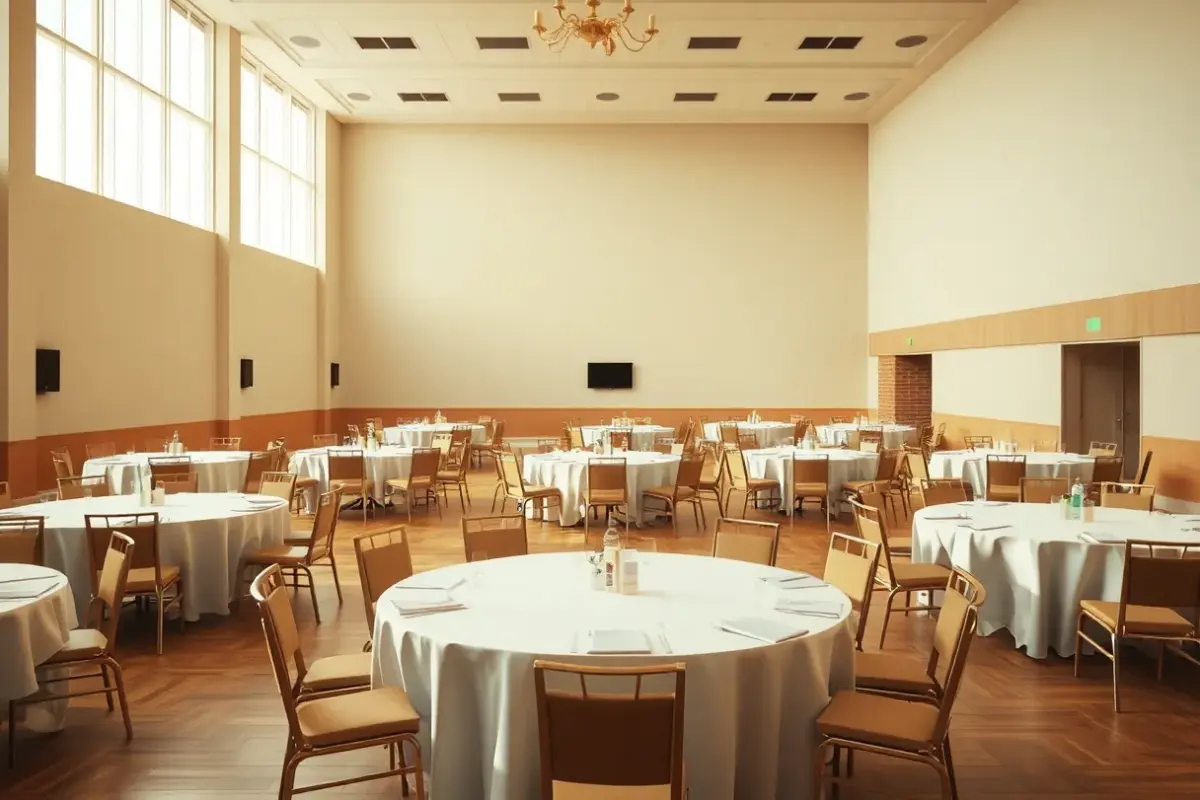
So the venue is always the first booking. It fixes the date, the capacity, the access and clearing windows, the kitchen situation, the power supply, any noise curfew, and how much decoration is needed at all. A room with a good wooden floor and tall windows needs a tenth of the styling of a bare hall. That is not a matter of taste, it is a budget and time factor.
Then come the trades that can only serve one couple on any given day. They are scarce but they fix little, which is why they sit in the second rank. Last come the ones who take several bookings a day and adapt to the room: flowers, cake, stationery, hair and make-up.
One exception applies to couples marrying at home or on private land. There is no venue answering the questions for you, so you have to answer them yourselves: how many people fit on the space, where the power comes from, how many restrooms are needed, what happens if it rains. Only once those four are settled can you sensibly approach caterers and musicians — otherwise the quotes you get are built on assumptions. For eighty guests in a garden, the tent is the first booking, not the last.
Book in order of dependency, not in order of excitement.
2. The order, and what each booking locks
The table shows what each booking depends on and what it fixes for everyone downstream. The third column is the reason for the sequence: book something too early and you take the air out of a later decision.
| Supplier | Needs first | Fixes for others |
|---|---|---|
| Venue | A guest range, a season, the type of ceremony. | Date, capacity, access times, kitchen, power, curfew, how much styling is needed. |
| Registrar or officiant | The date from the venue, plus your date window. | The start time, which the whole day hangs from. |
| Catering | The venue, because kitchen and delivery access are set there. | Dinner time, set-up window, staffing, table shape. |
| Photography | The date and a rough ceremony time. | The portrait window and when the morning starts. |
| Band or DJ | The venue, for space, power and curfew. | Set-up time, when the night ends, the layout of the room. |
| Celebrant | Date and ceremony location. | Ceremony length and therefore the start of the drinks reception. |
| Flowers and styling | Having seen the venue and settled a colour direction. | Very little. It adapts, which is why it can come late. |
| Cake, stationery, hair and make-up | Date and rough timings. | Nothing that affects another supplier. |
One exception overrides all of this: if a specific person matters to you — a photographer whose work you have followed for years — ask them first and build the date around them. But make that a conscious inversion rather than an accident.
3. The three anchors everything else rests on
Before the first enquiry goes out, three things need to exist, roughly rather than exactly:
- A guest range. Say 60 to 80. Without it you cannot judge a venue or compare two quotes.
- A date window. Two to three months. A single wished-for day halves your odds on every single enquiry.
- The type of ceremony. Civil only, civil plus celebrant, or religious. This decides how many locations and how many hours your day has.
These are not bookings, they are preconditions. They cost you one evening together and save you weeks of back-and-forth. Enquire without them and what comes back is not a quote but a questionnaire.
Once the anchors exist you can enquire in parallel rather than in series. That is where the real time is won: five emails in one evening cost the same hour as one, and you end up comparing actual answers instead of assumptions.
Related articles
4. When the order is allowed to flip
Three situations justify breaking the sequence. First, the irreplaceable person: if one photographer, one band or one celebrant is genuinely not interchangeable for you, ask them for free dates first and choose the venue around that. You are trading venue choice for certainty about a person.
Second, a garden or family farm. If you are celebrating at home, the venue is not the first booking — the tent is, because it answers the same questions: capacity, ground, power, weather resistance.
Third, a short runway. With three months you cannot book in ranks at all, only in one pass: everything available is checked at once, and anything that clashes drops out. In practice that means bundling enquiries and laying the answers side by side rather than waiting on a single yes. Keeping the incoming details in one place — next to guest information on your wedding website, for instance — means the time goes into deciding rather than searching.
A fourth situation arises when you marry abroad. There the order inverts almost completely: first the legal requirements and whether the marriage will be recognised at home, then the date, and only then the place and the suppliers. The reason is mundane and consequential — documents need translation, legalisation and sometimes a residency period in the destination country, and no amount of planning shortens those. Apply the domestic order there and you may book a venue for a date on which you are not yet permitted to marry.

5. Enquiring without committing
A good first enquiry is short and contains exactly four things: your date window, a rough guest number, the area, and the question of whether anything is free at all. Everything else — timings, the service you want, your budget and whatever else makes an enquiry answerable — belongs in the second conversation. Setting out your vision, running order and budget in the first message gets you long answers to a short question.
Do not confuse a hold with a booking. Many suppliers will hold a date informally, usually for one or two weeks. That window is your checking time — use it to verify the dependent bookings, and always come back with an answer, including a no. The industry is smaller than it looks.
And write down what was agreed. A short summary emailed back after every call beats memory later, and it is what makes it possible for every supplier to be reading the same schedule at the end.
Settle the three anchors tonight — guest range, date window, type of ceremony — and email three venues with them. As soon as one says yes, the order for everything else falls into place on its own.
All things wedding
Plan your wedding
Bring your tasks, costs and guests together for the day.
Invitations and wording
Find the right words for your wedding invitation.
As a wedding guest
Write a personal message and choose a thoughtful gift.
Wedding anniversaries
Explore anniversary names, traditions and celebration ideas.
Planning your dream wedding?
Create your own wedding website in minutes – with RSVP function, photo gallery, and more.