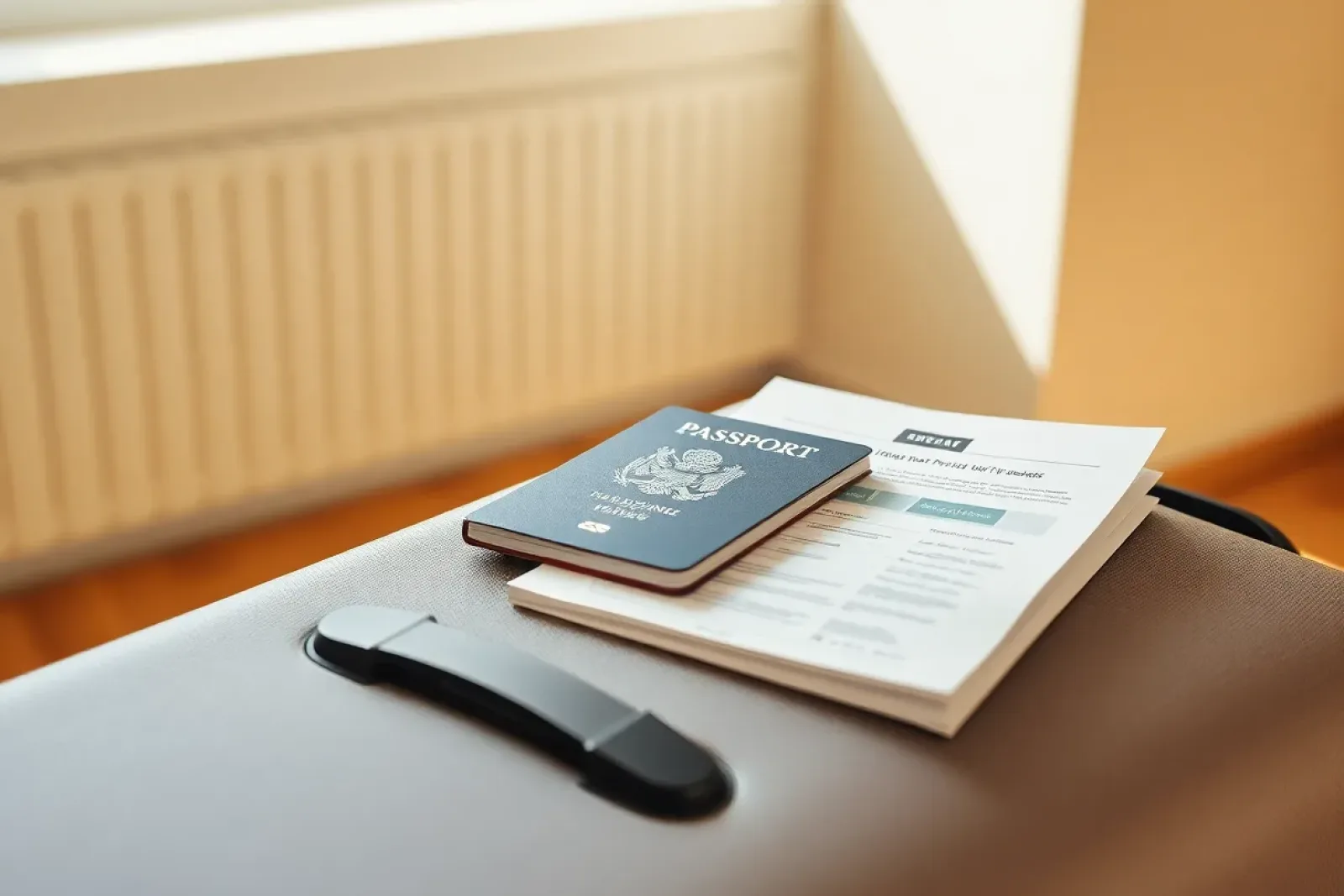
Most couples leave one to four weeks after the wedding and travel for seven to fourteen nights. Flying out the morning after sounds romantic and costs you the most restful part of the trip. Where you go is decided by one question: which month does your wedding put you in, and which regions are in season then?
A honeymoon is the only vacation whose date is set by something else. That constrains the destination far more than most couples realise when they start browsing: marry in February and your options are not the ones you would have in August, and the same island costs a completely different amount in each. This article covers timing, length, booking lead times and how to pick a destination that suits the month you are stuck with. Costs and the short-break alternative have articles of their own.
1. When to leave: the day after is rarely the best day
There are three common patterns, and each has an obvious cost.
- The morning after. Seamless, and the mood carries you. The price is boarding a plane exhausted, with the last guests still at breakfast and nobody having taken down the venue. If you want this, somebody else has to handle decor, gifts and rented glassware — arrange that weeks in advance, not on the night.
- Two to seven days later. The most common compromise, and the one that protects the vacation. A day of sleep, a brunch with guests who travelled, then you leave.
- Weeks or months later. Sensible after a winter wedding, on a tight budget, or when your dream destination has a different season. The trade-off is a break in continuity: after a month of ordinary life it feels less like part of the wedding.
Whichever you choose, treat the first day away as a buffer rather than a vacation day. Do not schedule connecting flights, car rental pickups or excursions on it. And be honest about the maths on time off: the days around the wedding itself — setup, rehearsal, arrivals, clear-up — usually eat three to five days from the same allowance. A two-week honeymoon is really three weeks away from work.
The best honeymoon is not the furthest one. It is the one where you get to sleep in on the first morning.
2. How long: seven nights is the floor for anything long-haul
Length is not a matter of taste, it is arithmetic involving flight time and time zones. A workable rule of thumb: allow roughly one day of adjustment per hour of time difference.
| Type of trip | Sensible minimum | Why |
|---|---|---|
| Short-haul, under 3 hours flying | 4 to 5 nights | almost no adjustment needed |
| Mediterranean, North Africa, Canaries | 7 nights | arrival and departure days are lost |
| Caribbean, East Africa, Indian Ocean | 10 to 14 nights | 4 to 8 hours of time difference, long transfers |
| Southeast Asia, Australia, New Zealand | 14 to 21 nights | up to 12 hours difference; the first three days are a write-off |
| Multi-stop tour | 14 nights upwards | every change of base costs half a day |
If you can only take one week and still want somewhere far away, postpone rather than compress. Nobody has ever described a twelve-hour flight home after five nights as restful. The alternative that does work is splitting the trip: a few nights close to home immediately after the wedding, and the long-haul journey later in the year when you can take the time properly.
One more variable belongs in this calculation: the transfer at the far end. Brochure flight times stop at the airport, and plenty of island resorts add a boat, a small plane or a two-hour road journey on top. Add those legs to both the outbound and the return before you decide the trip is long enough — a nominally eleven-hour journey is frequently sixteen door to door, and that is a whole day at each end rather than an afternoon.

3. Where: the season decides, not the brochure
The most common planning mistake is choosing the destination first and discovering afterwards that your wedding month falls in its rainy season. Work the other way round: take the travel month your wedding gives you, and see which regions are at their best then.
- Spring wedding, travelling April to June: southern Europe before the heat, Morocco, Japan, the American national parks, the Caribbean at the end of its dry season.
- Summer wedding, travelling July to September: Scandinavia, Canada, Iceland, East Africa during the migration, Indonesia. Southern Europe is possible but expensive and crowded.
- Autumn wedding, travelling October and November: the best window of the entire year for long-haul. Maldives and Seychelles as the rains end, Thailand from November, South Africa, New Zealand in spring.
- Winter wedding, travelling December to March: Caribbean, the Gulf of Thailand, Argentina and Chile, Australia. In Europe, winter destinations only — no beaches.
Two practical notes. The period around Christmas and New Year is the most expensive of the year in almost every long-haul destination, often with a compulsory gala dinner supplement on top. Moving two weeks either side changes the weather barely at all and the price enormously. And ask yourselves honestly whether you want rest or variety after weeks of constant decisions — a seven-hotel tour immediately after a wedding sends people home more tired than they left.
Related articles
4. How far ahead to book
Honeymoons get booked late because wedding planning absorbs all the attention. These lead times work:
- 9 to 12 months ahead: long-haul in high season, safaris, tours with fixed lodges, anything with a small number of rooms.
- 6 to 9 months ahead: long-haul flights. Prices rarely improve later, and you get seat selection.
- 3 to 6 months ahead: Europe, package vacations, car rental.
- At least 3 months ahead: check visas, vaccinations and electronic travel authorisations. Some vaccination courses need several appointments spread over weeks.
- 6 to 8 weeks ahead: reconcile every booking against the names that will actually be on your travel documents.
That last point is the one that goes wrong most often and matters most. If either of you is changing name, the ticket has to match the passport, not the marriage certificate — and the new passport comes at the end of a sequence of name-change steps that has to be worked through in order. Airlines differ enormously in how they handle a post-wedding name change — some do it free on production of the certificate, others charge a rebooking fee, and budget carriers often apply a flat charge. Settle this before you book, not after.

5. Planning the trip itself
A honeymoon is not a normal vacation, because for the previous month you have made a decision roughly every hour. That is exactly why a densely scheduled itinerary works less well here than it would otherwise. The pattern that holds up is simple: the first half slow and in one place, the second half active if you want it. The reverse almost always disappoints.
Two small things that make a disproportionate difference. First, say when you book that it is a honeymoon. Plenty of properties put something in the room or upgrade you if they have space. It is not something to rely on, but asking costs nothing and the answer is often yes. Second, carry a copy of the marriage certificate if you are travelling under different surnames on a joint booking. You will rarely need it — and when you do, it will be at a desk with no internet connection.
Finally, decide before you leave what happens with the photographs everyone is waiting for. If you kept your wedding website live, it is the obvious place to point people while you are away, rather than answering messages from a beach.
Fix the order before you open a single brochure: first the travel month your wedding gives you, then the region that is in season, then the length that region needs, and only then the hotel. Couples who plan in that sequence almost never end up somewhere lovely in the wrong month. The next sensible step is to set the budget, because it will shape the destination more than any photograph will.
All things wedding
Plan your wedding
Bring your tasks, costs and guests together for the day.
Invitations and wording
Find the right words for your wedding invitation.
As a wedding guest
Write a personal message and choose a thoughtful gift.
Wedding anniversaries
Explore anniversary names, traditions and celebration ideas.
Planning your dream wedding?
Create your own wedding website in minutes – with RSVP function, photo gallery, and more.