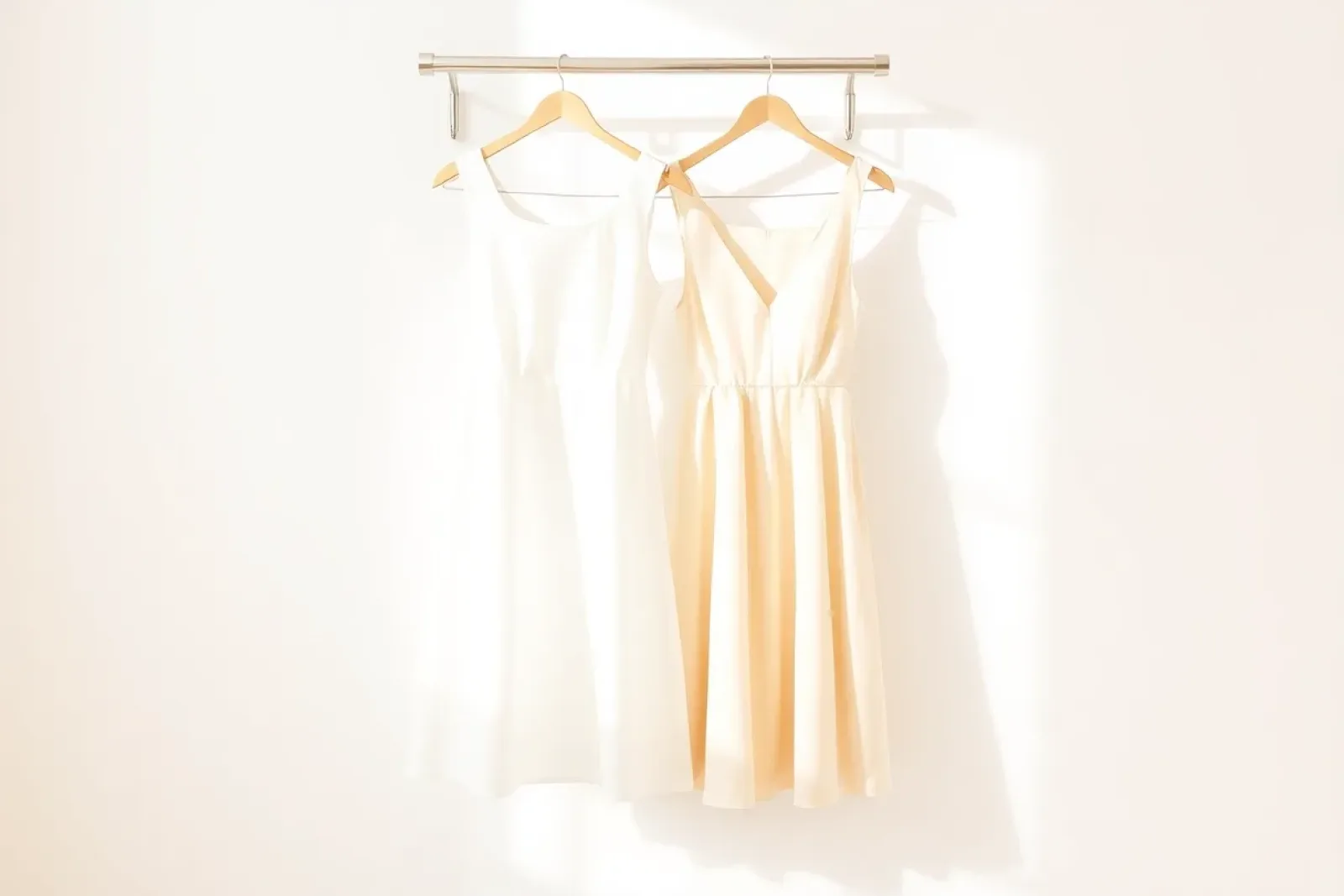
As a rule, no. In Britain, Ireland and North America white, ivory, cream and champagne are reserved for the bride, and that extends to a white top or a mostly white print. The exceptions are narrow: a stated all-white dress code, a bride who has asked for it, and cultures where white is not bridal.
This is the one wedding rule almost everyone has heard and almost nobody can source. It is also the rule guests most fear breaking, which is why the question gets asked so anxiously and answered so absolutely.
What follows is the honest version: where the convention came from, how far it actually reaches, which shades sit in the grey zone, and what to do when the couple say they genuinely do not mind. There is also the case nobody plans for, which is discovering the problem on the morning itself.
1. Where the convention comes from
The white wedding dress is often credited to Queen Victoria, who married in white lace in 1840 and whose choice was widely copied. That much is well documented. What is far shakier is the story usually attached to it, that white was chosen to signify purity; the more prosaic explanations, that it displayed the lace and that it photographed and engraved well, are at least as plausible.
Before then, brides across Europe simply wore their best dress, in whatever colour that happened to be, and expected to wear it again. White as a default is therefore about 180 years old, not ancient, and the guest rule is younger still.
That matters because it explains the shape of the rule. It is not a moral code. It is a visual convention: at a wedding one person is meant to be immediately findable in a crowd and in a photograph, and colour is how that is done. Everything the rule covers follows from that single purpose, which is also why it bends where the purpose does not apply.
The rule is not about the dress. It is about one person being instantly identifiable in every photograph taken that day.
2. Which shades are actually a problem
The rule is about how a colour reads in a photograph across a room, not about what the label says. Use that as the test.
| Shade | Verdict | Why |
|---|---|---|
| White, ivory, cream | Avoid | Reads as bridal from any distance |
| Champagne, blush nude | Avoid | Photographs almost white under flash |
| Pale silver, pale gold | Caution | Fine as an accent, risky as a full-length dress |
| White with a bold print | Usually fine | Pattern breaks the block of colour |
| White top, coloured skirt | Usually fine | Reads as separates, not a dress |
| White shirt with a suit | Fine | Standard menswear, always has been |
Two practical checks settle most cases. Photograph yourself in daylight and look at the picture rather than the mirror, because a phone flattens colour much as a camera at a wedding will. And ask whether, from thirty feet away, someone could briefly mistake you for a member of the wedding party. If the answer is no, you are fine.
The bridesmaid colour deserves the same test. Wearing the exact shade the bridal party is in is a smaller mistake than white, but it is the second most common one.

3. The exceptions that are real
Four situations genuinely release the rule, and one of them is the couple simply saying so.
- An all-white or ivory dress code. Some couples ask for it deliberately, particularly at beach and destination weddings. Follow the invitation.
- The bride has said she does not mind. Her wedding, her call. Take it at face value if it comes from her rather than from a third party.
- The bride is not wearing white. Increasingly common, and it changes the calculation. Ask rather than assume, because a bride in colour may still not want a guest in white.
- Cultural context. In parts of East and South Asia, white is associated with mourning rather than with weddings, and the colour to avoid may be entirely different. At a wedding in a tradition you do not know, ask whoever invited you.
Note what is not on that list. Not knowing the couple well, being a distant relative, attending only the evening, or the dress being the only one you own are all common arguments and none of them works. Nor does it help that the dress is short: length is not the variable.
Where the couple do have a preference, they will often say so in the details they send out, alongside timings and the dress code, and it is worth reading their wedding website properly before shopping.
Related articles
4. When you get it wrong, and when someone else does
Occasionally the discovery happens on the day, at the venue, in the outfit. There is a short and useful list of fixes.
- A coloured jacket, wrap, cardigan or blazer over the top. This solves most of it in five minutes.
- A wide belt or scarf that breaks the block of colour.
- Staying out of the formal photographs where the wedding party lines up, if it cannot be fixed.
- Saying something to the bride first, briefly, before anybody else does. An apology in advance is a completely different conversation from an explanation afterwards.
What not to do is announce it to the room, which turns a minor thing into a topic. Most brides genuinely do not notice on the day; they are extremely busy.
If you are the couple and a guest arrives in white, the practical answer is to let it go. The day is not improved by a confrontation, nobody looking at the photographs in ten years will be able to name the guest, and the story of the row will outlive the dress. If it is deliberate and repeated behaviour from someone close to you, that is a conversation for a different week entirely.

5. What to wear instead
The safest palette is wider than most people assume, and two colours that carry old warnings are back in ordinary use.
Black is now entirely normal at weddings in Britain, Ireland and the US, in the evening and increasingly in daytime. The idea that it is funereal has essentially gone.
Red is often said to be discouraged for drawing attention, but no current etiquette source treats it as a rule, and it is common at weddings across the English-speaking world. At weddings in some South Asian traditions red is bridal, which is the situation where it genuinely matters.
Beyond that, almost anything works: jewel tones, navy, green, terracotta, dusty pink, prints. The two questions worth asking are whether the colour is close to the bridal partys, and whether it works in the venue you are going to. A vivid print reads differently in a stone church than on a beach.
And if the invitation names a colour scheme, that is usually an invitation to join in rather than a requirement. Couples put it there because they like the photographs to hold together, not because they are policing wardrobes.
One last case, since it comes up every summer: an outfit you have already worn to another wedding is entirely fine, including one the same guests saw. Nobody is keeping a register, and the alternative is a wardrobe full of dresses worn once.
Avoid the pale end of the range, apply the same caution to the bridesmaids' colour, and treat a stated dress code as the final word. If you are unsure about a specific dress, one photograph in daylight answers it faster than any list of rules. And if you are hosting, saying what you do and do not mind is the single kindest thing you can put in your wedding details. For everything that is not about colour — the hour, the venue, how smart is smart enough — there is the guide to what to wear as a guest.
All things wedding
Plan your wedding
Bring your tasks, costs and guests together for the day.
Invitations and wording
Find the right words for your wedding invitation.
As a wedding guest
Write a personal message and choose a thoughtful gift.
Wedding anniversaries
Explore anniversary names, traditions and celebration ideas.
Planning your dream wedding?
Create your own wedding website in minutes – with RSVP function, photo gallery, and more.