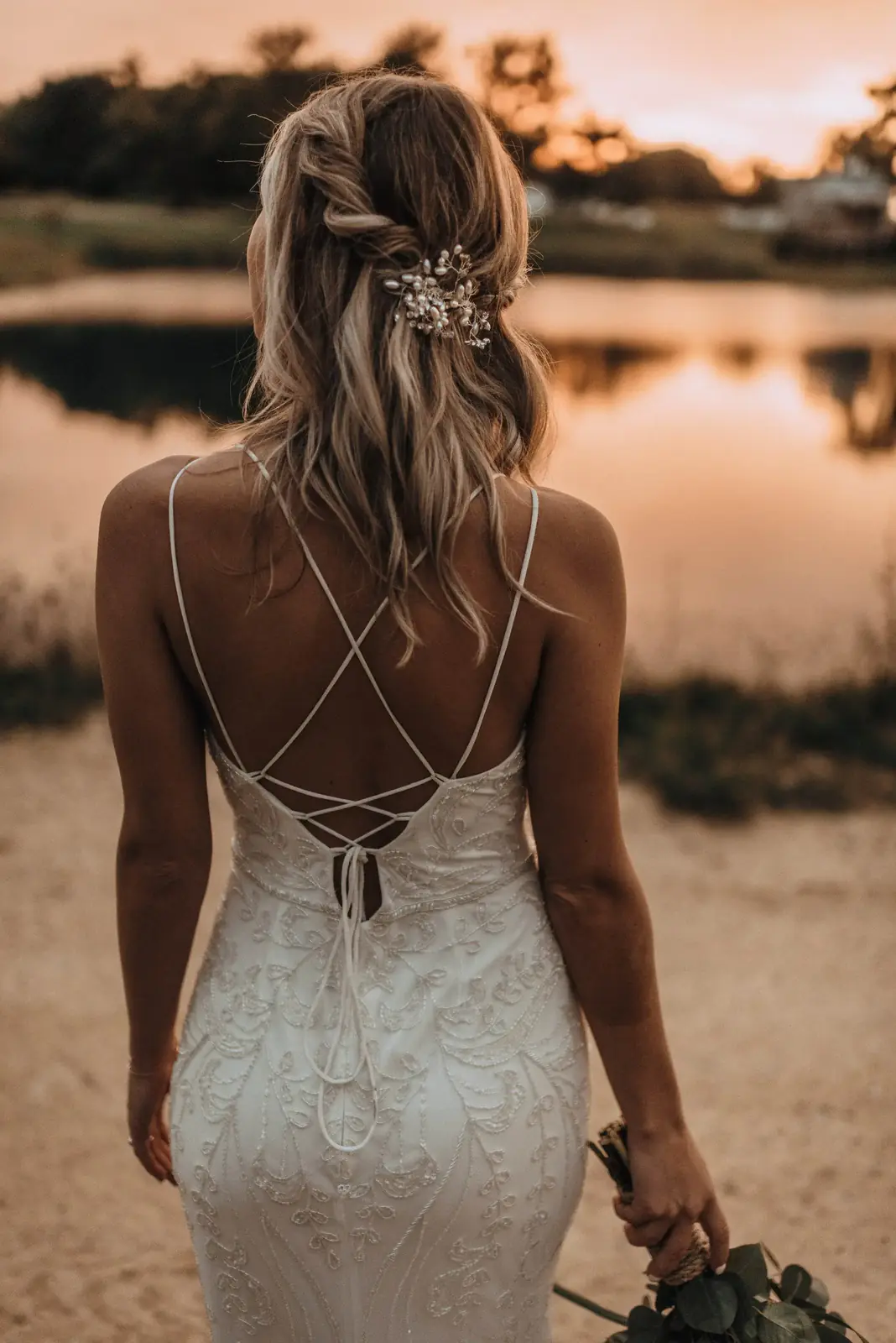
It is a superstition, not a rule, and a fairly recent one. The usual explanation traces it to arranged marriages, where keeping the couple apart prevented either family withdrawing at the last moment. Plenty of couples now meet deliberately before the ceremony and report that it settled their nerves.
This is the wedding superstition people are most reluctant to break, even when they do not believe it, because breaking it feels like tempting something.
What follows is the history, what the custom actually covers and what it does not, the arguments on both sides, and the practical alternatives, including the arrangement where you meet without seeing each other. There is also the question nobody asks until the week before: what happens when you are both getting ready in the same house.
1. Where the superstition comes from
The explanation given almost everywhere is that marriages were once contracts between families rather than choices between individuals, and that keeping the couple apart until the ceremony reduced the chance of either party seeing something they disliked and calling it off.
It is a plausible story and it is repeated constantly. It is also poorly evidenced: the earliest clear statements of the rule as a superstition are relatively modern, and the arranged-marriage explanation looks like a later rationalisation attached to an existing habit. Treat it as the received account rather than as history.
What is better documented is that the custom hardened in the twentieth century alongside two other things: the professional wedding photograph, which created a formal reveal moment, and the practice of the bride getting ready separately with her attendants, which created the logistics that make the rule easy to keep.
Whatever its origin, the modern function is clear enough. The rule preserves a single moment of surprise, and that is why most people keep it: not for luck, but for the aisle.
A superstition that requires two people to spend the most nervous morning of their lives in separate buildings deserves at least one question asked of it.
2. What the rule actually covers
The superstition is narrower than it is usually applied, and knowing where the line falls removes most of the awkwardness.
| Situation | Covered by the tradition? |
|---|---|
| Seeing each other in wedding clothes before the ceremony | Yes, this is the actual custom |
| Talking on the phone that morning | No |
| Having breakfast together, not dressed | No |
| Staying in the same house the night before | No, that is a separate and even softer convention |
| Seeing the dress on a hanger | Sometimes claimed, rarely meant |
| Trying the dress on with both rings, before the day | A different superstition entirely |
Two of those rows do most of the work. The custom is about the outfit, not about proximity, which means a couple can spend the entire morning together and still keep it by simply getting dressed in separate rooms.
And the night before is a separate convention that has largely dissolved. Couples who live together increasingly stay together, particularly where the venue accommodation makes separating expensive and complicated. Nobody has yet produced a reason why this matters, and it saves an evening of logistics.
3. The first look
The alternative that has grown fastest is the first look: a private meeting shortly before the ceremony, usually arranged with the photographer, where the couple see each other for the first time in their wedding clothes without an audience.
The reasons couples give are consistent:
- Nerves. Five minutes together before the ceremony settles most people more than an hour of reassurance from anybody else.
- The photographs. Couple portraits can be taken before the ceremony rather than during the drinks reception, which returns an hour of the day to you.
- Privacy. The reaction happens between two people rather than in front of a hundred and fifty.
- Light. An afternoon ceremony in winter can mean the only good daylight is before it.
The arguments against are equally real. The aisle moment is genuinely different when it is the first sight, and some people would not trade it. Photographers will tell you both versions produce good pictures; what changes is where in the day the emotion lands.
There is no compromise position that gives you both, and pretending otherwise is how couples end up doing a half-hearted version of each. Pick one.
Related articles
4. Meeting without seeing
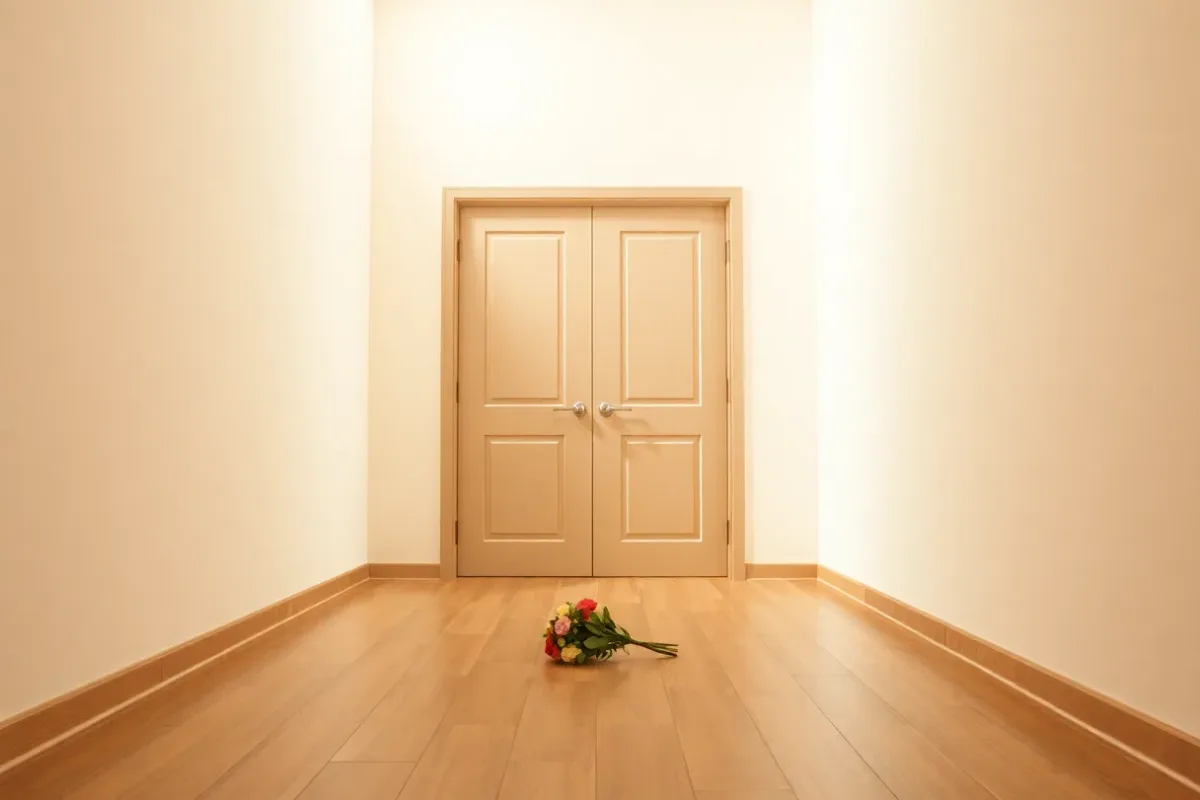
The middle option is a first touch: the couple meet around a corner, a door or a wall, hold hands, talk for a few minutes and do not look at each other.
It sounds contrived and works surprisingly well. It gives you the conversation, which is the part that actually calms people, without giving up the reveal. It also produces good photographs, because the framing is unusual.
Three practical arrangements couples use:
- Either side of a door. The simplest. Any venue has one.
- Back to back. Outdoors, where doors are scarce.
- A letter instead. Written the night before, delivered by somebody else in the morning, read alone. This is the version that survives a wedding where the two of you genuinely cannot be in the same building.
Whichever you choose, tell the photographer in advance. These moments last four minutes and are almost never repeatable, and a photographer who is setting up in another room will miss them entirely.
The same goes for whoever is running the morning. A first look or a first touch has to be built into the schedule, because the alternative is discovering that hair and makeup have overrun and the only window has gone.
5. Running the morning either way
Most of the friction here is logistical rather than superstitious, and it comes down to three questions that are easier answered in advance.
- Where does each of you get ready? Separate rooms is enough. Separate buildings adds travel, a second set of transport and often a second hair and makeup call-out fee.
- Who is the go-between? Name one person in each group. Two people passing messages beats twelve people in a group chat.
- What time does the not-seeing stop mattering? Usually the moment the ceremony begins. Say so, or someone will still be hiding behind a pillar at the drinks reception.
If you are keeping the tradition, there is one arrangement worth planning around: the accidental encounter. Venues are small, corridors are shared and someone will need the same staircase. Agreeing a route for each of you in advance is less silly than it sounds and takes two minutes with the venue coordinator.
If you are not keeping it, say so to the people who will otherwise enforce it on your behalf. Parents, ushers and photographers all have strong inherited views about this, and a couple who have decided to meet at eleven will otherwise spend twenty minutes explaining themselves.
Either way, put the morning schedule somewhere everyone with a job can see it. The timings for hair, transport, photographs and the ceremony usually sit with the rest of the day's plan on your wedding website, and that is the version people check when they cannot find you.
It is folklore, and the arranged-marriage story behind it is not well evidenced. Decide whether you want the surprise at the aisle or a private five minutes beforehand, then tell your photographer and whoever is running the morning which one it is. The one thing worth avoiding is leaving it undecided until the day, which produces the worst version of both.
All things wedding
Plan your wedding
Bring your tasks, costs and guests together for the day.
Invitations and wording
Find the right words for your wedding invitation.
As a wedding guest
Write a personal message and choose a thoughtful gift.
Wedding anniversaries
Explore anniversary names, traditions and celebration ideas.
Planning your dream wedding?
Create your own wedding website in minutes – with RSVP function, photo gallery, and more.