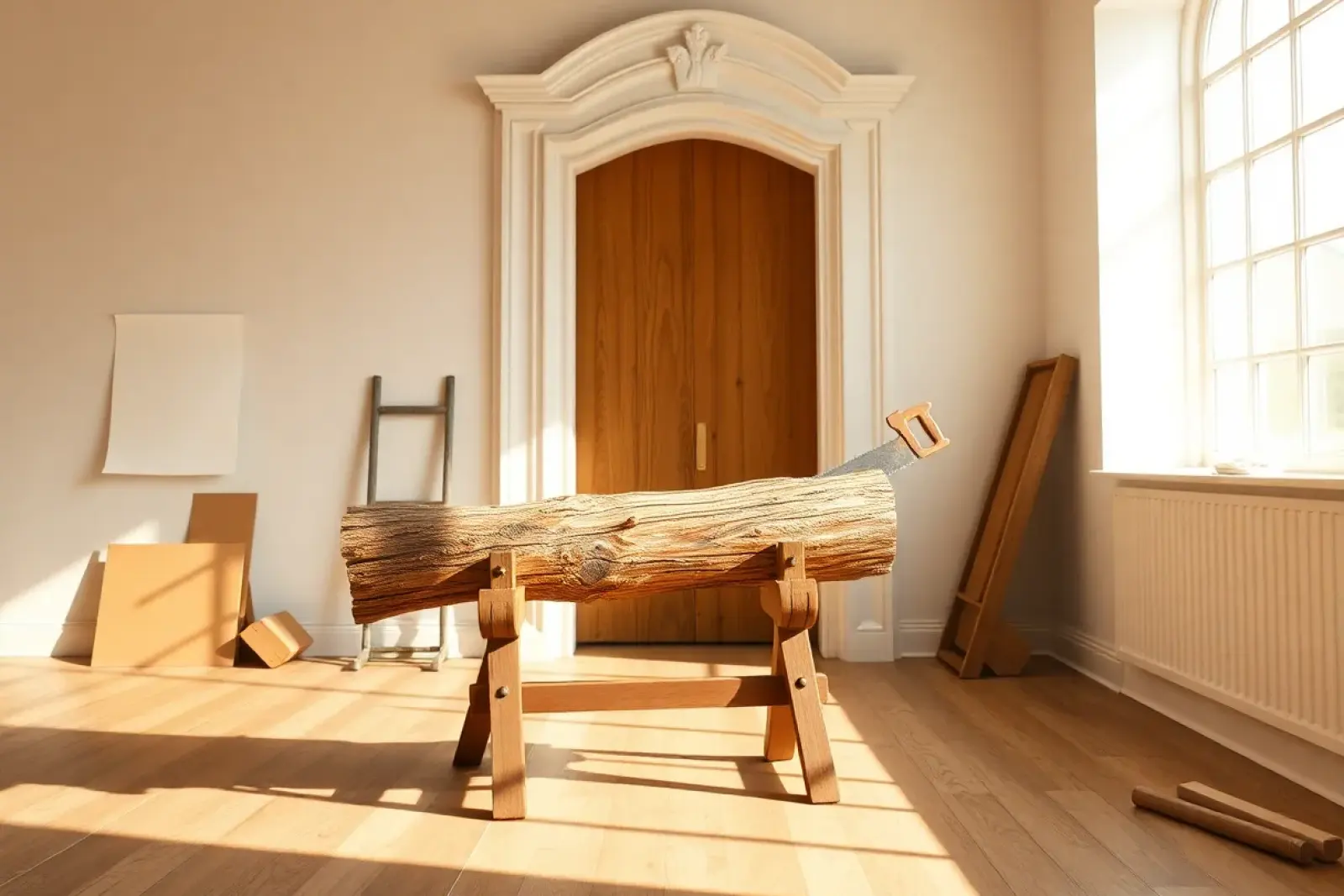
Straight after the ceremony the couple are led to a log on a trestle, handed a long two-handled saw and left to cut through it in front of everyone. It is a picture of the first job that only works if both of them pull. The custom belongs to the south rather than to Germany as a whole, and guests are there to watch.
Of the customs that happen in the few minutes between the ceremony and the drinks, this is the loudest and the most physical. It is also the only one that can visibly go wrong, which is part of why people enjoy it.
What follows sets out what it is meant to show, which regions keep it, what a guest does while it happens, and why some couples spend far longer at the trestle than others. It is written for the people watching rather than organising: those marrying into a German family, and those who accepted an invitation without knowing a saw would be involved.
The last section is for the other case, where the wedding is half yours and somebody has raised the idea.
1. What you are watching
The mechanics carry the meaning, so they are worth understanding before the first stroke. A two-handled saw cuts on the pull and does nothing on the push. If both people pull at once the blade binds in the cut and stops. If one of them does all the work, that person tires within a minute and everybody can see it. The only way through the wood is to take turns, at a shared pace, with each of them relaxing while the other draws.
That is the whole idea, and it is unusually legible for a wedding custom. Two people who have just promised to run a household together are handed a job that punishes competing and rewards listening, in their ceremony clothes, in public.
There is a second, quieter function. The stretch after a ceremony is dead time: the photographer is arranging people and the guests are standing on a path with nothing to do. The log gives everyone a job — cheering, filming, offering advice nobody asked for — and fills the gap that otherwise fills itself with milling about.
And it leaves an object behind. The slice that falls off the end is often kept, dried and engraved, and turns up later as a cake stand or a house sign.
The custom does not show which of the two is stronger. It shows whether they can find the same rhythm with everyone watching.
2. Where the custom lives
This is the part most descriptions get wrong by generalising. Log sawing is not a German wedding custom in the way that a first dance is a Western one. It is regional, and knowing which region tells you whether to expect it.
- Southern Germany, Austria and Switzerland. Its heartland. Commonly staged immediately outside the church door, after the guard of honour, before anyone moves off.
- Northern Germany. Much less rooted. Where it appears it has usually been picked up from a wedding somebody attended further south, which is how these things have always travelled.
- Registry-office weddings anywhere. Less usual, mainly because the space outside a town hall rarely allows for a trestle and sawdust.
So a great many German weddings involve no saw at all, and none of the guests feel anything is missing. If you are attending one and want to know whether this will happen, ask whoever invited you rather than reading it off the country.
It sits inside a wider family of first-job games that vary by valley: hammering nails into a block, pegging out washing, older ones tied to farm work. Each makes the same point out of whatever the local day job happened to be. How old any of it is cannot honestly be established, and confident origin stories about medieval symbolism are almost always attached afterwards.
3. What a guest is supposed to do
Almost nothing, and that is deliberate. The custom needs an audience, not helpers.
- Do not take hold of the saw. This is the one real mistake available to a guest, and it comes from a kind instinct. When the couple are struggling, a strong pair of hands looks like a rescue. It is not: the point is that the two of them get through it, and a third person on the handle ends the picture.
- Make noise. This is not a solemn moment. Clapping, counting the strokes and shouting unhelpful encouragement are all part of it, and a silent crowd makes the couple feel watched rather than supported.
- Leave the photographer a line. The trestle is usually set across the crowd rather than facing it, so that both faces are visible. Standing directly in front of it means standing in the one shot everybody wants.
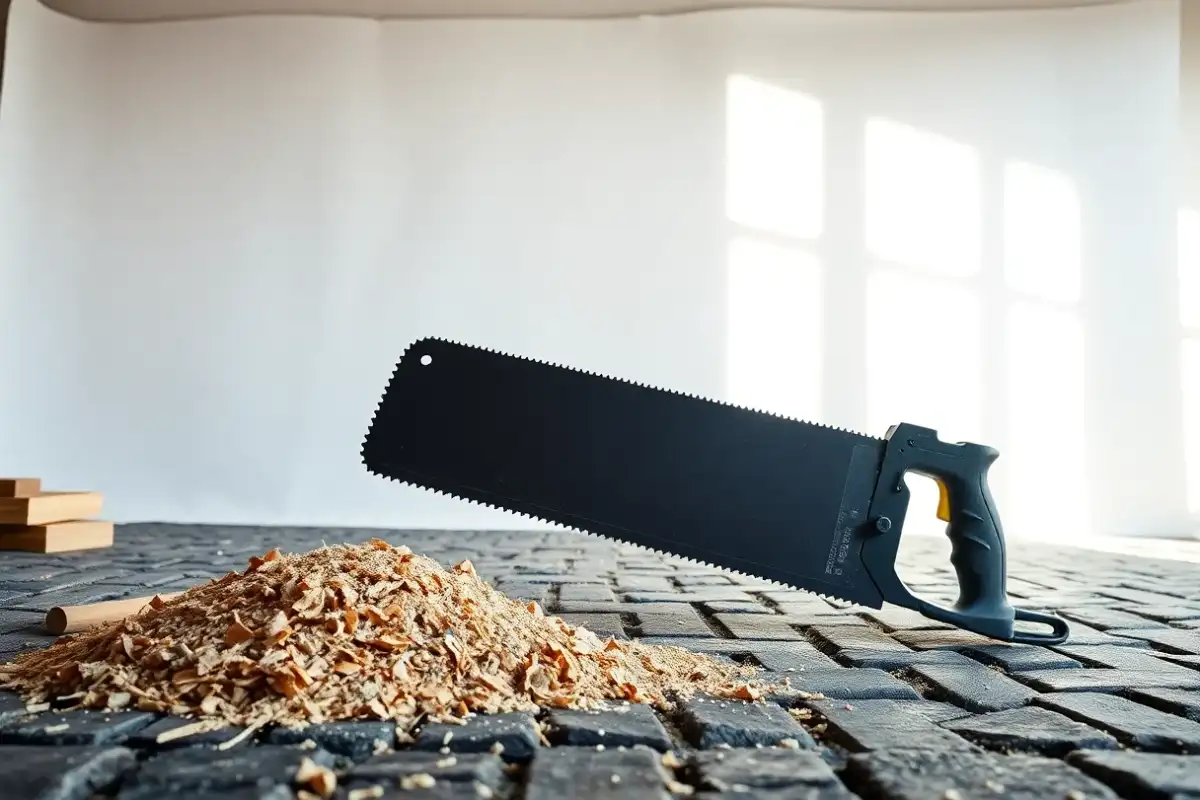
- Give the blade room. Long teeth, moving fast, at chest height for a child. A clear space around the trestle is somebody's job, and often nobody's.
- Hold things. If you are close to the couple you may be handed a bouquet, a jacket or a cloth to keep the dress out of the sawdust. That is the full extent of guest participation.
One piece of timing: this happens on the way out of the ceremony, not at the reception. Head for your car to beat the traffic and you will miss it. Evening-only guests never see it at all.
Related articles
4. Why it sometimes drags
When it drags, the cause is almost never the couple. It is the material, chosen weeks earlier by somebody trying to be helpful.
The wood. Softwood — spruce, fir, poplar, willow — parts easily. Oak and beech do not, and a hardwood log in wedding clothes is a genuine ordeal. Freshly felled timber is far harder work than seasoned timber, because wet fibres grip the blade instead of releasing it.
The thickness. Roughly the width of a dinner plate is the sweet spot. Anything appreciably fatter stops being a picture and becomes a test of endurance, and it is usually the result of someone deciding to source something impressive.
The saw. A blunt or slightly bent blade turns a short job into a long one, and the fault only reveals itself once everyone is watching.
The start. A round surface offers the blade nowhere to sit, so the first strokes skid. The usual remedy is short slow pulls to cut a notch before settling into a rhythm.
There is also a reason the custom sometimes moves away from the church entirely. Sawdust and chips outside a porch are the parish's problem the following morning, and some congregations no longer allow it on their ground. Where that is the case it happens in the yard at the reception instead, which changes nothing except the backdrop.

5. If the wedding is half yours
Couples marrying across two countries meet this custom as a proposal rather than a spectacle, usually from a best man who has already found a log.
The decision is small and worth stating plainly: do you want a public, physical, faintly comic shared task in the middle of your ceremony clothes? Everything else is logistics somebody else will handle. If the answer is no, no substitute is required, and nobody in the south will think the wedding was short of anything.
If the answer is yes and half the guests have never seen it, say so out loud. A sentence from the officiant or the best man before it starts is the difference between a shared joke and a confused crowd wondering whether something has gone wrong.
Several alternatives produce the same image with less force behind it. Cutting a shape from a thin board with a smaller saw is finer work and just as visual. Planting a tree takes two spades and a hole dug in advance, and children can join in. A block and two hammers is short, loud and photographs well where there is no room for a trestle.
Whichever you pick belongs in the written running order, because the photographer, the musicians and the venue are all pricing the time it takes. Couples who keep the day's timings and jobs on their wedding website spare the witnesses a morning of guessing.
Log sawing is a regional custom with an unusually clear message, and it fails on materials rather than on people. As a guest, stand out of the camera line, make a noise and keep your hands off the handle. As a couple, decide whether you want the moment at all, and tell the visiting half of the room what they are about to see.
All things wedding
Plan your wedding
Bring your tasks, costs and guests together for the day.
Invitations and wording
Find the right words for your wedding invitation.
As a wedding guest
Write a personal message and choose a thoughtful gift.
Wedding anniversaries
Explore anniversary names, traditions and celebration ideas.
Planning your dream wedding?
Create your own wedding website in minutes – with RSVP function, photo gallery, and more.