A castle rarely lets you a room; it grants you a use, with conditions attached. Settle three things above all: who owns the house, which suppliers are compulsory, and what heritage protection allows in the way of decor, lighting and fixings. Whether your legally binding marriage can happen there is decided by the marriage law where you are marrying, not by the castle.
Hardly any venue type has such a wide gap between the picture and the running of the day. In photographs a castle is a backdrop; in operation it is a historic building with conditions, fixed hours, often with visitors during the day, and with staff who work for the house rather than for your celebration.
This guide explains why the ownership question decides almost everything else, how the price is built up, what is possible for the ceremony, and which conditions you notice in practice. It is deliberately dry — you already know the beautiful side, or you would not be considering it.
1. Who owns the castle decides your evening
Before you talk about dates, find out who stands behind the letting. Four arrangements recur across countries, and they behave completely differently.
State or foundation. Many well-known houses belong to a region, a national heritage body or a trust. Such houses are reliable and immovable: fixed time slots, designated rooms, supervision staff booked in with the hire, and little room for special requests. In exchange you know exactly where you stand.
A hotel inside the castle. Here the wedding runs like one in a good hotel — kitchen in the house, rooms for guests, and a contact who does events every week. This is the most comfortable route and usually the dearest per head.
Private ownership. Families who maintain their own house often let only a handful of dates a year. Dealings are personal, the possibilities are wider, and more of the organising falls to you. Check particularly carefully here what has been promised in writing.
A society or a local council. Smaller houses and castles are frequently run by volunteers. Answers take longer, prices are low, equipment is thin — much of what applies to a raw venue applies here.
In every case, ask about the day-to-day operation: is the house open to visitors on your wedding day? A castle with guided tours until five in the afternoon means your set-up starts later and strangers walk through your backdrop.
In a castle you are a guest in a building that has its own operation. Almost every surprise follows from that one sentence.
2. Why the price is built differently
A castle rarely quotes rent. It quotes a use fee plus a series of items you cannot negotiate away, and that structure is the real difference from other venue types.
| Item | Why it arises |
|---|---|
| Use fee | For the rooms and the time slot |
| Compulsory caterer | Historic houses rarely admit outside kitchens |
| Supervision and security staff | Required as soon as rooms with contents are used |
| Sound and lighting | Often absent, and permitted only through the house supplier |
| Cleaning and floor protection | Historic floors get covered, not mopped |
The second row has the largest consequences. A compulsory caterer means the per-head price is fixed before you talk about the menu. So ask early for the minimum per guest — it says more about the total than the use fee does.
Reckon as well with a time structure that costs money. If set-up can only start after closing and clear-down has to happen the same night, suppliers work overnight and bill it at premium rates. The two together — staff and time slot — explain why two castles with similar use fees can end up far apart. How large a block like that is against everything else is shown in the breakdown of what a wedding costs.
3. The ceremony in a castle: what is actually possible
Two things get confused constantly here: the legally binding marriage and the ceremony you plan.
The transferable question is what your jurisdiction licenses — the place or the person — because the answer changes what a castle can offer, and it is not the same across borders. Where the place is licensed, only rooms on an official list may host the legal marriage: Germany names approved rooms through the local register office, England and Wales work from approved premises. Where the person is licensed, the building barely matters: in Scotland and across most of the United States, an authorised celebrant or officiant can marry you in a courtyard or a field. Ask which model applies before you plan anything, and ask the licensing body rather than the castle.
If the castle is not licensed and yours is a place-licensing country, the usual route remains: the civil marriage on another day or the same morning, then a celebrant-led ceremony at the castle. That is not a fallback, it is the normal case for this venue type.
A third, practical question comes on top, and few people think of it: where does the ceremony happen if it rains? Courtyards and garden terraces are the typical castle ceremony spots, and the alternative room is often a hall already laid for dinner at that hour. Have the wet-weather plan shown to you concretely, with the room and the seating — what number is realistic there is settled in the piece on venue capacity.
Related articles
4. Heritage protection in daily practice
Conditions sound abstract until you are standing in front of the wall where nothing may be fixed. In a protected building the conservation authority decides together with the owner what is allowed, and the authority has a different name in every country. These points are regulated particularly often:
- Fixings. No nails, no wall plugs, often no adhesive tape either. Decor hangs on its own frames or not at all.
- Naked flame. Candles, torches, sparklers and fireworks are usually restricted or forbidden.
- Anything scattered. Confetti, rice and petals fall into cracks and joints and are therefore frequently excluded.
- Floors and routes. Historic parquet gets covered; heavy furniture may often be moved only along certain routes.
- Image and film rights. Some houses regulate whether and how footage may be published, and drone shots almost always need separate permission.
The last point affects you more than it sounds. If the castle restricts photography indoors, your picture planning moves outside and therefore into a particular time of day. Discuss that early with your photographer — the points that belong in that conversation are in the photography checklist.
None of this is a reason to give up on a castle. It is a reason to read the list of conditions before booking rather than after — serious houses always have one, and they hand it over when asked.
5. What your guests experience
A castle impresses, and it tires people out. Four points are worth walking through from the guests' side before you sign.
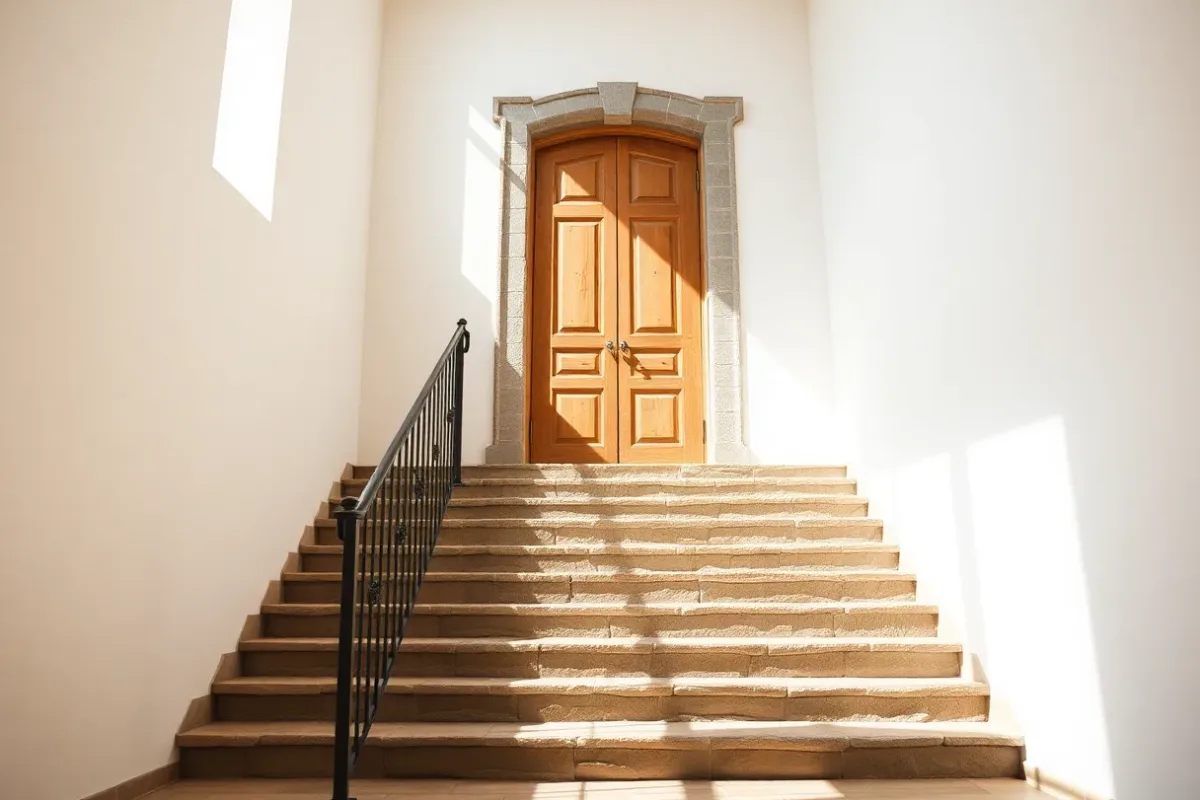
- Distances. Car park to entrance, entrance to hall, hall to toilets. In historic grounds that quickly adds up to several hundred metres over gravel and steps — a real obstacle for older guests.
- Step-free access. Lifts are rare, staircases wide and old. Ask specifically how a person in a wheelchair reaches the banqueting hall, and accept no maybe.
- Temperature. Stone halls are pleasantly cool in high summer and sharply cold in spring or autumn. Additional heating is often not permitted in protected buildings.
- Acoustics. Tall rooms with hard surfaces ring. Without amplification, at eighty guests the back half of the table hears no speech at all.
Because the grounds are large, precise directions are compulsory for this venue type — which gate, which car park, which entrance. How to word that clearly is in the piece on directions for guests. And if guests are travelling in, settle early what accommodation exists nearby; at remote houses the supply runs out fast.
A castle wedding is a good decision if you accept the building's conditions rather than planning against them. The three questions to ask first: who owns the house, which suppliers are compulsory, and what is on the list of conditions?
The next step: ask the authority that licenses marriages where you are marrying whether the castle can host the legal ceremony, and ask the house for its written terms of use. Both answers come within days and save you weeks.
All things wedding
Plan your wedding
Bring your tasks, costs and guests together for the day.
Invitations and wording
Find the right words for your wedding invitation.
As a wedding guest
Write a personal message and choose a thoughtful gift.
Wedding anniversaries
Explore anniversary names, traditions and celebration ideas.
Planning your dream wedding?
Create your own wedding website in minutes – with RSVP function, photo gallery, and more.