The song that works is two to three minutes long, holds a steady tempo of roughly 80 to 120 beats per minute and has lyrics you are happy for your parents to hear. Genre matters far less than a clear, unchanging beat. Play it once through on real speakers before you commit.
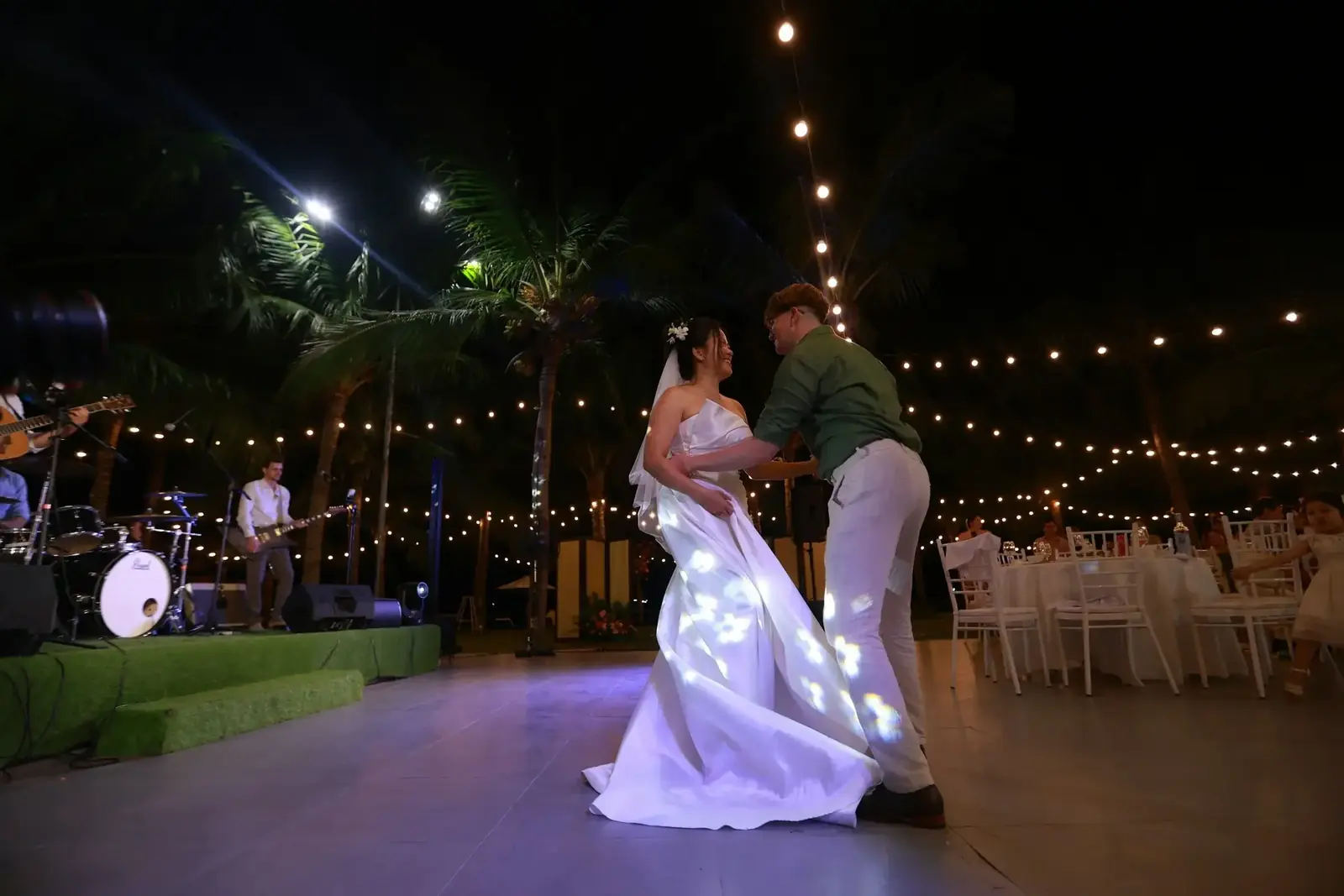
The first dance is the only moment of the evening when every guest is looking at the same thing. That makes it tempting to pick a song for what it means rather than for whether it can be danced to. The two can go together, but only if you listen to the track once as a dancer instead of as a listener.
Three things decide whether a song holds up on the floor: its length, its tempo and whether the beat stays obvious from start to finish. A track that shifts tempo between verse and chorus is genuinely hard to dance to without lessons. A track over five minutes feels long for everyone in the room, including the people watching from the edge.
1. Length and tempo matter more than genre
The most reliable number in this decision is the running time. Two to three minutes is the target. Shorter and the dance feels cut off; longer and a couple without a choreographed routine visibly runs out of things to do, because the same few steps start repeating. Plenty of well-loved first dance songs run four or five minutes, which is fine, because they can be shortened.
The second number is tempo, measured in beats per minute. A slow waltz sits comfortably around 84 to 90 beats, a relaxed foxtrot around 120, and most social partner dancing works between 100 and 130. If you do not know the tempo of your track, tap along for fifteen seconds, count the taps and multiply by four. That approximation is more than accurate enough for this purpose.
Genre matters less than most couples expect. There are first dances to rock tracks, to film scores and to folk songs, and they all work on the same conditions: a steady tempo, an audible pulse and no long intro without rhythm. A song that opens with sixty seconds of strings leaves you standing still for sixty seconds, which is far longer than it sounds on the sofa.
A song that moves you is not automatically a song you can move to.
2. Listen to the whole lyric, once, properly
A surprising number of popular first dance songs turn out on closer inspection to be about separation, longing or loss. Nobody notices while the chorus is playing in the car. Everybody notices when the second verse plays through a PA in a silent room with your grandparents in the front row.
So give the track its full three minutes with the lyric sheet in front of you, and check three things. Does the sentiment fit the occasion? Are there lines that read differently at a wedding than they do on the radio? And is there any language you would rather not broadcast to a mixed room including children? It takes five minutes and it is the single cheapest check in this whole decision.
If the lyric does not work but the song must stay, there are two ways out. An instrumental version keeps the melody and removes the problem entirely. A cover version often shifts the mood far enough that the awkward line no longer sits in the foreground. Both are widely available on the major streaming services, and a good instrumental arrangement frequently suits dancing better than the original anyway.
3. Played live or from a recording
A band plays your song at their tempo, not at the tempo of the recording you practised to. That is the single biggest difference between the two options and the most common thing couples get caught out by. If you want a live first dance, ask the band for a recording of their version of that specific track, early enough to practise to it. Without one, you will rehearse to a version that is not the one played on the night.
The comparison below covers the practical differences.
| Consideration | Recording through the PA | Played live by the band |
|---|---|---|
| Tempo | identical to what you practised | usually differs by 5 to 10 per cent |
| Length | editable to the second | agreed in whole verses |
| Starting cue | on request, exact | needs eye contact and a signal |
| Lead time | file to the DJ three days before | rehearsal recording four to six weeks before |
| Failure risk | low, carry the file twice | higher, agree a fallback version |
Either way, the audio file belongs in two places on the day: on the machine of whoever is handling music and entertainment across the whole evening and on your own phone or a memory stick. Streaming as the only source is a recurring reason first dances start late at rural venues, where the signal is exactly as reliable as the field it stands in.
Related articles
4. Shortening a song without it showing
A four-and-a-half minute track can almost always be trimmed to just under three without anybody noticing. The usual cut points are the instrumental solo, the third verse and the second run of the chorus at the end. Whoever makes the edit should place the cut on the first beat of a bar, never in the middle of a line, or the join will be audible even to people who are not listening for it.
The simplest treatment is a gentle fade across the last five to eight seconds. It sounds more natural than a hard stop and it gives you an audible cue to finish the dance, which removes the awkward question of when to walk off. Most DJs will make this edit at no cost if they have the file in good time, and will send a preview for approval.
The step people forget is what comes next. The moment when guests join you only works if the following track starts without a gap. Agree two follow-ups in advance: something gentle for parents and the wedding party to step in to, then something faster to open the floor properly. If guests are sending you song requests, collecting them in one place rather than across three messaging apps helps, for example as a song request field on your wedding website that you hand over to the DJ as a single list.
5. Agreeing on one song between two people
This decision rarely stalls for lack of ideas. It stalls because there are too many. A process that reaches an answer quickly: each of you writes down ten tracks alone, without consulting the other. Merge the lists, then delete anything over five minutes and anything below roughly 70 or above 140 beats per minute. Take three of what is left and try them in the living room, standing up and moving.
That practical test decides it almost every time, not the discussion beforehand. A song that seemed perfect in your head often feels too slow or too restless once you are actually moving to it. Meanwhile something that was seventh on the list turns out to be the one where you both start smiling at the same moment.
If you still cannot agree, two compromises work well. The first is a medley of two songs with a crossfade after about ninety seconds, which a DJ can prepare from the two files. The second is to split them: one song is the first dance, the other is played later in the evening when the floor is full and everybody is dancing anyway. Both are more honest than settling on a track one of you only half wanted.
A first dance song that works runs two to three minutes, keeps one tempo, carries a lyric that suits the day and exists as a file in two places. Everything after that, from choreography to the follow-up track, hangs on this one choice. The next sensible step is the living-room test: put your three shortlisted songs on tonight and dance each one all the way through.
All things wedding
Plan your wedding
Bring your tasks, costs and guests together for the day.
Invitations and wording
Find the right words for your wedding invitation.
As a wedding guest
Write a personal message and choose a thoughtful gift.
Wedding anniversaries
Explore anniversary names, traditions and celebration ideas.
Planning your dream wedding?
Create your own wedding website in minutes – with RSVP function, photo gallery, and more.