A dance floor stays full when it is slightly too small, sits in the middle of the room and is never interrupted once dancing starts. Allow 0.4 to 0.5 square metres per guest, run sets of 45 to 60 minutes with no announcements between them and keep drinks within a few steps of the floor.
An empty floor is almost never a music problem. It is a problem of layout, of timing and of interruptions. A couple who arrange the evening so that nobody picks up a microphone between two songs need far fewer good songs than a couple who slot an announcement in every forty minutes.
Behind all of it sits one decision: from what point does the evening belong to dancing alone? Every speech, every game, every presentation and every group photograph has to happen before that line. After it, the floor is the programme. Drawing that line is uncomfortable because it means cutting something, but it decides the whole second half of the night.
1. Why floors empty in the first place
Watch any wedding where the dancing dies at half past ten and you will find the same four causes, in roughly this order of frequency. The floor is too big, so thirty people on it look like a rehearsal. The floor is in the wrong place, usually a side room or a level down, so stepping onto it is a visible decision rather than a drift. The music stopped for something, and the something ran long. Or the bar is forty steps away, so a round of drinks removes six dancers for a quarter of an hour.
None of those is fixed by the playlist, which is where most couples spend their attention. It helps to think of the floor as having momentum rather than a mood. Once forty people are on it, newcomers join without deciding to, because they are joining a crowd rather than starting one. Once it drops below about a dozen, every further person leaving is very visible, and the emptying accelerates.
That is the whole design principle for the evening. Protect the momentum you built in the first fifteen minutes and you will not have to rebuild it. Break it three times and no band on earth will bring the room back at midnight, because by then the people who would have restarted it are outside in the parking lot saying their goodbyes.
A floor does not fill because somebody plays the right song. It fills because nobody is given a reason to walk away from it.
2. Timing: when the dancing actually starts
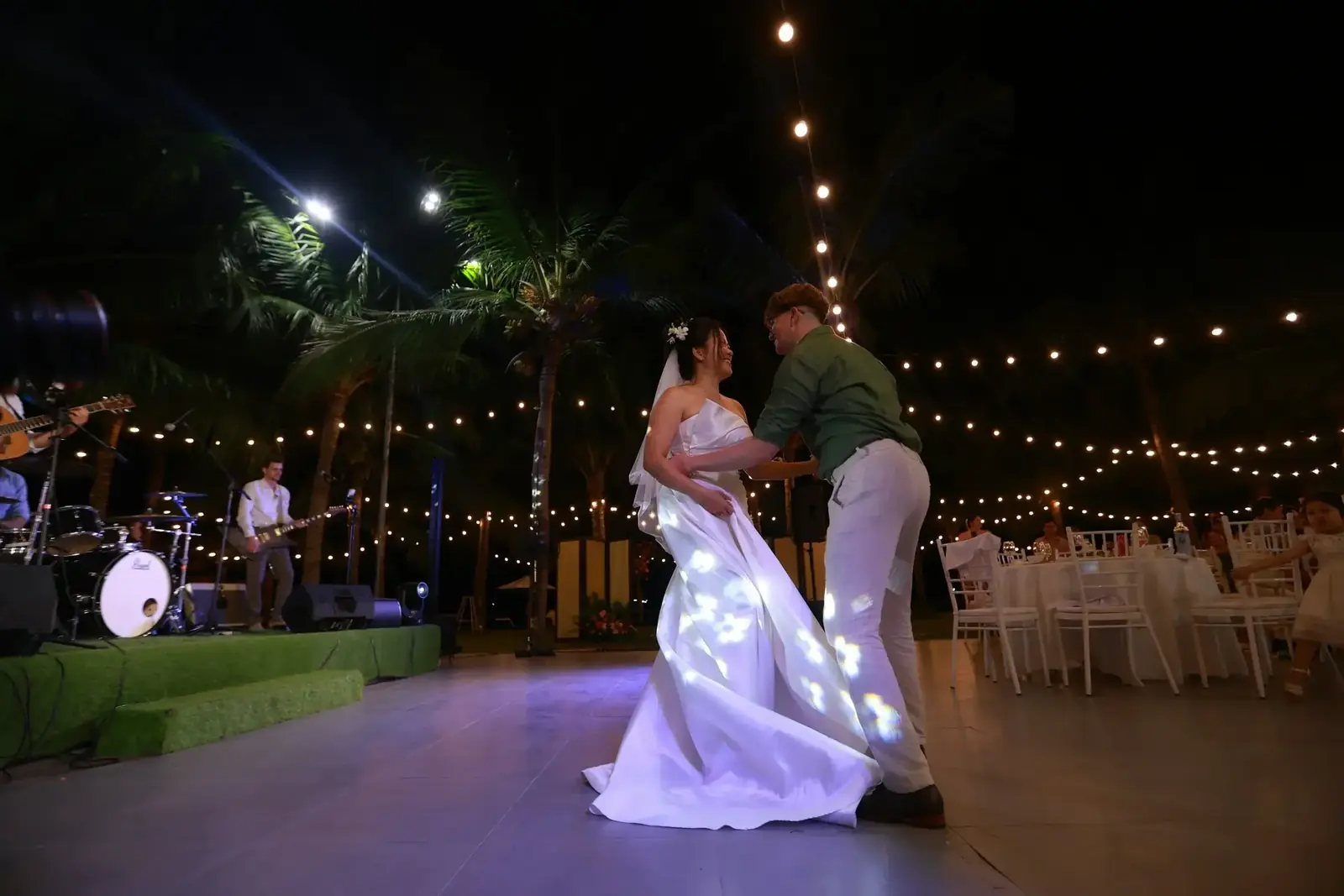
The usual trigger is the first dance. In practice it is bolted to the cake cutting, which most venues and photographers put somewhere between 20:30 and 22:00, largely because photography packages tend to end shortly afterwards. Put the first dance immediately before or immediately after the cake, not half an hour later. That half hour is exactly long enough for the room to sit back down, restart conversations and send a third of your guests outside.
Two mistakes cost couples the whole night. Starting too late is the common one. If the first dance lands at 23:00, the older half of the room has already worked out when the taxis are coming. From around 01:00 you can expect only 20 to 40 per cent of your guests to still be there, so a late start means dancing in a half-empty room. Starting immediately after a heavy main course is the other. Nobody stands up on a full plate of beef.
The sequence that works is unglamorous: clear the dessert or coffee, cut the cake, first dance, then two or three songs chosen purely to get couples up. Only when thirty or so people are standing does the tempo climb. In the UK pattern, where evening guests often arrive around 19:30 to 20:00, those arrivals are a second natural surge; time the first big set to catch them rather than to finish just as they walk in.
3. Size, surface and position
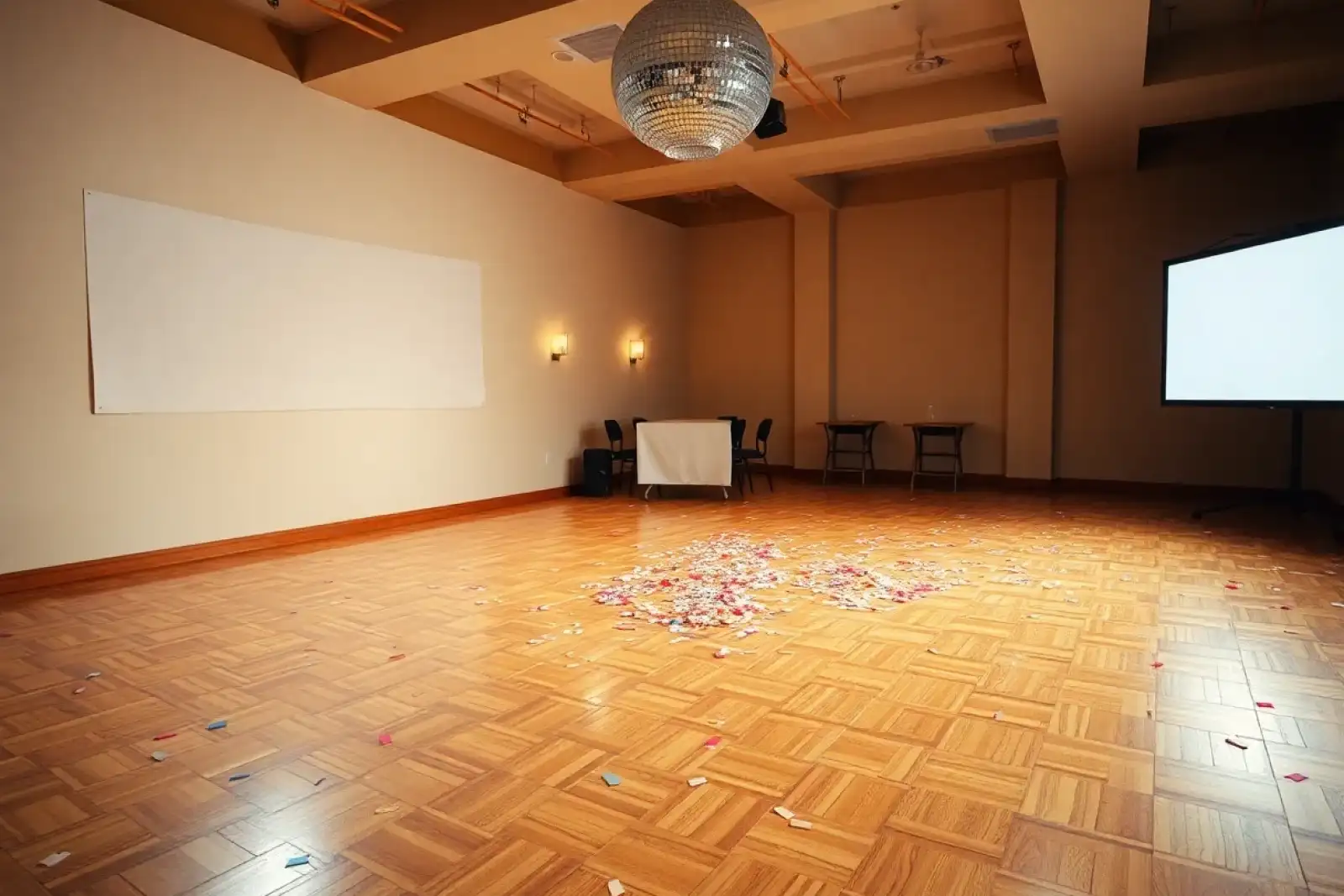
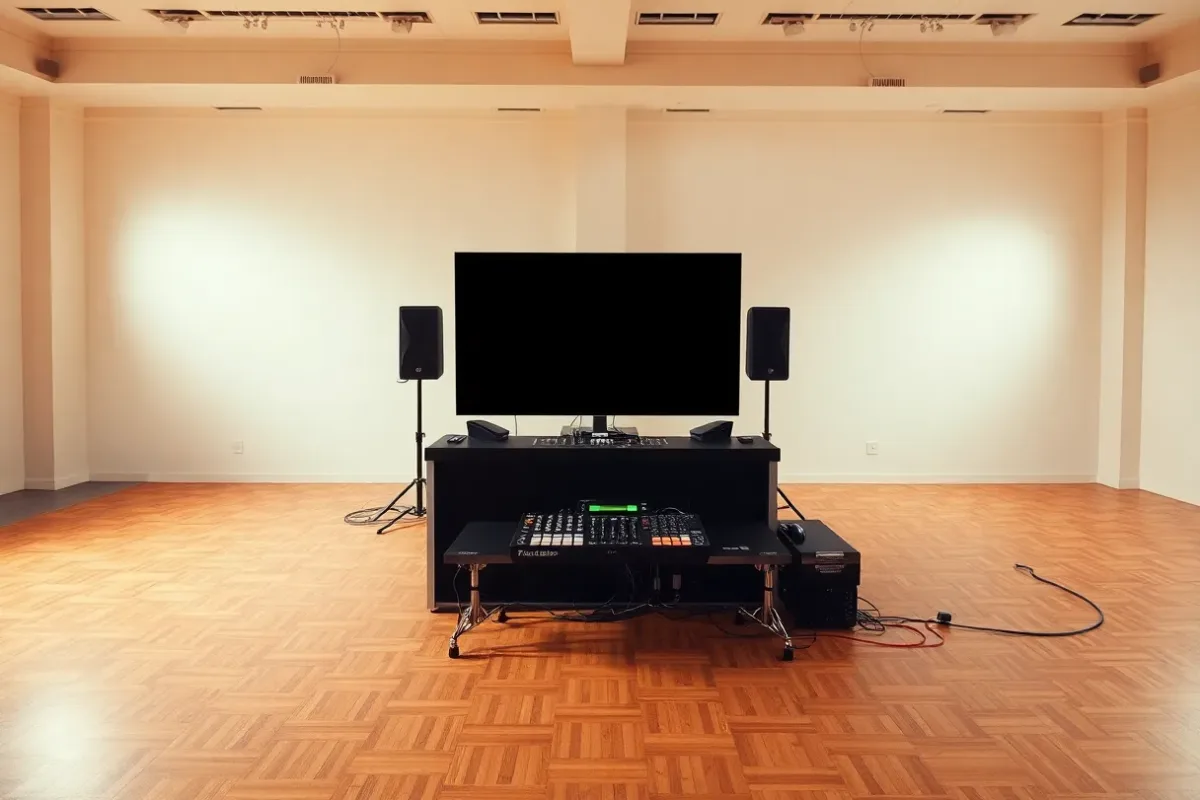
An oversized floor is the most expensive mistake in this article, and it is usually made by accident: the venue simply clears whatever space is left. Work from the guest count instead. The planning figure is 0.4 to 0.5 square metres per invited guest, which means 5 by 5 metres, or 25 square metres (about 270 sq ft), carries roughly 50 to 60 guests. When in doubt, take the lower end. A crowded small floor pulls people in. A half-covered large one pushes them away.
| Item | Figure | Note |
|---|---|---|
| Floor area per guest | 0.4 to 0.5 m² | about 4.5 sq ft each |
| Floor for 80 guests | 32 to 40 m² (345 to 430 sq ft) | roughly 6 by 6 m |
| Floor for 120 guests | 48 to 60 m² (515 to 645 sq ft) | roughly 7 by 8 m |
| Set length | 45 to 60 minutes | no announcements inside a set |
| Recovery after an interruption | about 20 minutes | to reach the same number of dancers |
| Guests still present after 01:00 | 20 to 40 per cent | plan the last set accordingly |
| Bar staff | 1 per 50 guests | 1 per 30 if cocktails are served |
Position beats size. The floor belongs in the middle of the room with tables on at least two sides, so that seated guests can see who is dancing. Surface matters more than people expect: carpet, grass and gravel all kill dancing within two songs, and most venues will rent one in if you ask at the viewing, where you measure the place room by room, rather than the week before. Keep the bar in sight of the floor without putting it in the traffic route.
Related articles
4. Sets, tempo and the handovers
An evening is built from sets, not from songs. A set runs 45 to 60 minutes with nothing spoken over the top of it. Inside a set the tempo climbs: familiar, mid-paced material at the start, singalongs in the middle, the fast end last. Individual tracks rarely run their full three or four minutes, because a mixed transition gives nobody the pause in which they turn away. Two or three sets are plenty for one night.
If you have booked a live band, the handovers are the risk. Most bands play two or three sets and need a break between them, and that break is where floors die. Agree in writing who covers the gap, at what volume, and how long it lasts. Fifteen to twenty minutes of recorded music at the same energy keeps the room standing. Twenty minutes of near-silence while the guitarist packs up a pedalboard sends everyone to the bar.
On selection, there is an uncomfortable rule: recognition beats taste. A song eighty per cent of the room knows will fill a floor more reliably than a song you love. Give your band or DJ a short do-not-play list, which is worth more than a long request list, plus a rough sense of the ages in the room. Requests are easy to gather in advance, for instance through a wedding website where each guest can leave one song they would actually dance to, which also tells whoever is running the music what the room looks like before the first set starts.
5. What empties the floor: interruptions and distance
Every item of programme after the first set costs you the floor twice: once when you stop, once when you restart. The pattern never varies. The music goes off, everyone sits, the three-minute item takes eight, and afterwards half the room is outside. Expect about twenty minutes to get back to the same number of dancers, with more tired guests than before. Three interruptions and you have spent an hour of your own party.
The practical rule is that speeches, games, presentations, thank-yous and gift handovers all belong before the dancing begins. Anyone who wants to contribute later gets a slot in a planned break, not the microphone between two songs. Name somebody to field those requests. A best man who says warmly that there is a window at midnight protects the night better than any playlist.
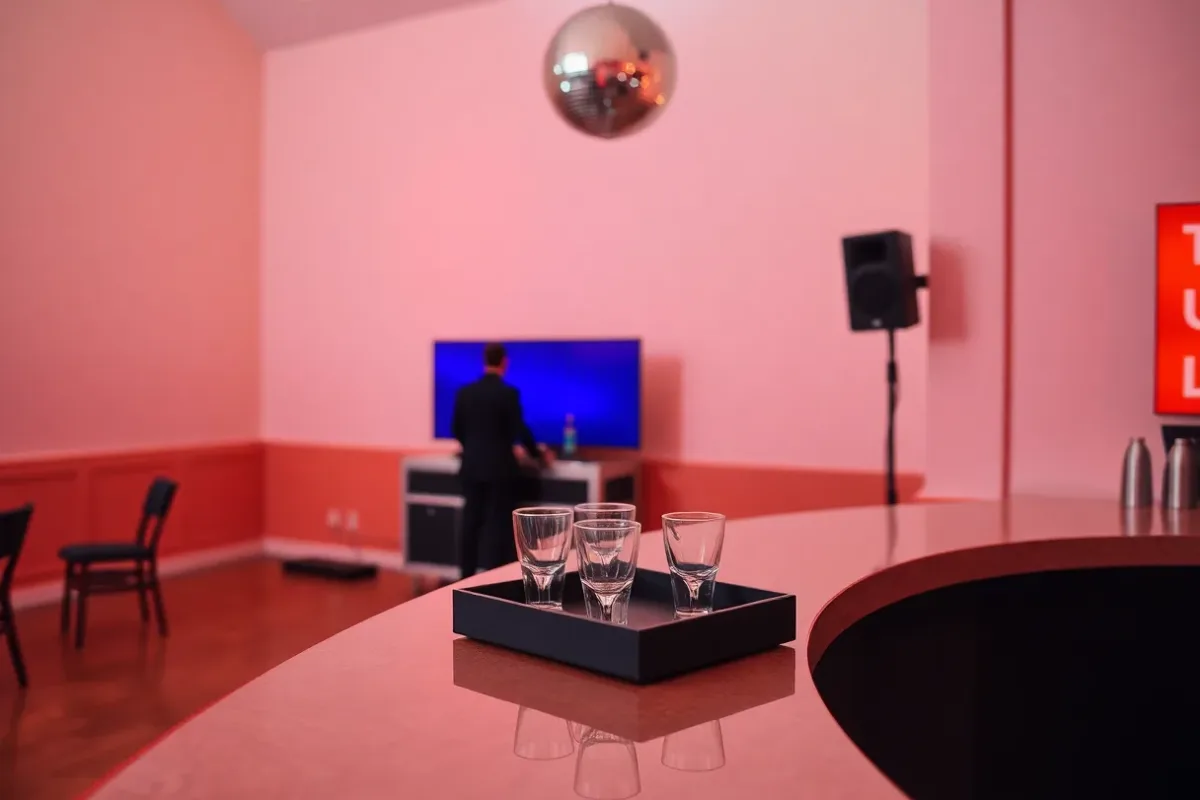
Distance is the other quiet killer. If a drink takes three minutes to obtain, people do not come back. Put pitchers of water and glasses on a table at the edge of the floor, which costs almost nothing and keeps the people who would otherwise be intercepted by a conversation on the way to the bar. Staff to the usual ratio of one bar member per 50 guests, or one per 30 where cocktails are involved. Lastly, if any of the evening happens outdoors, remember that sound carries far worse in open air, so the same guest count needs roughly double the power, while your neighbours hear it better than your guests do.
A full floor is the product of four decisions taken well before the day: a slightly small floor at 0.4 to 0.5 square metres per guest, a start pinned to the cake cutting between 20:30 and 22:00, sets of 45 to 60 minutes with nothing spoken inside them, and drinks within a few steps. Everything else is the band's or the DJ's craft, and they can only apply it if they are not restarting from zero every forty minutes. The figure worth remembering is the twenty minutes each interruption costs you. At your next venue visit, pace out the intended floor, check what it is made of and settle where the bar will stand that night.
All things wedding
Plan your wedding
Bring your tasks, costs and guests together for the day.
Invitations and wording
Find the right words for your wedding invitation.
As a wedding guest
Write a personal message and choose a thoughtful gift.
Wedding anniversaries
Explore anniversary names, traditions and celebration ideas.
Planning your dream wedding?
Create your own wedding website in minutes – with RSVP function, photo gallery, and more.