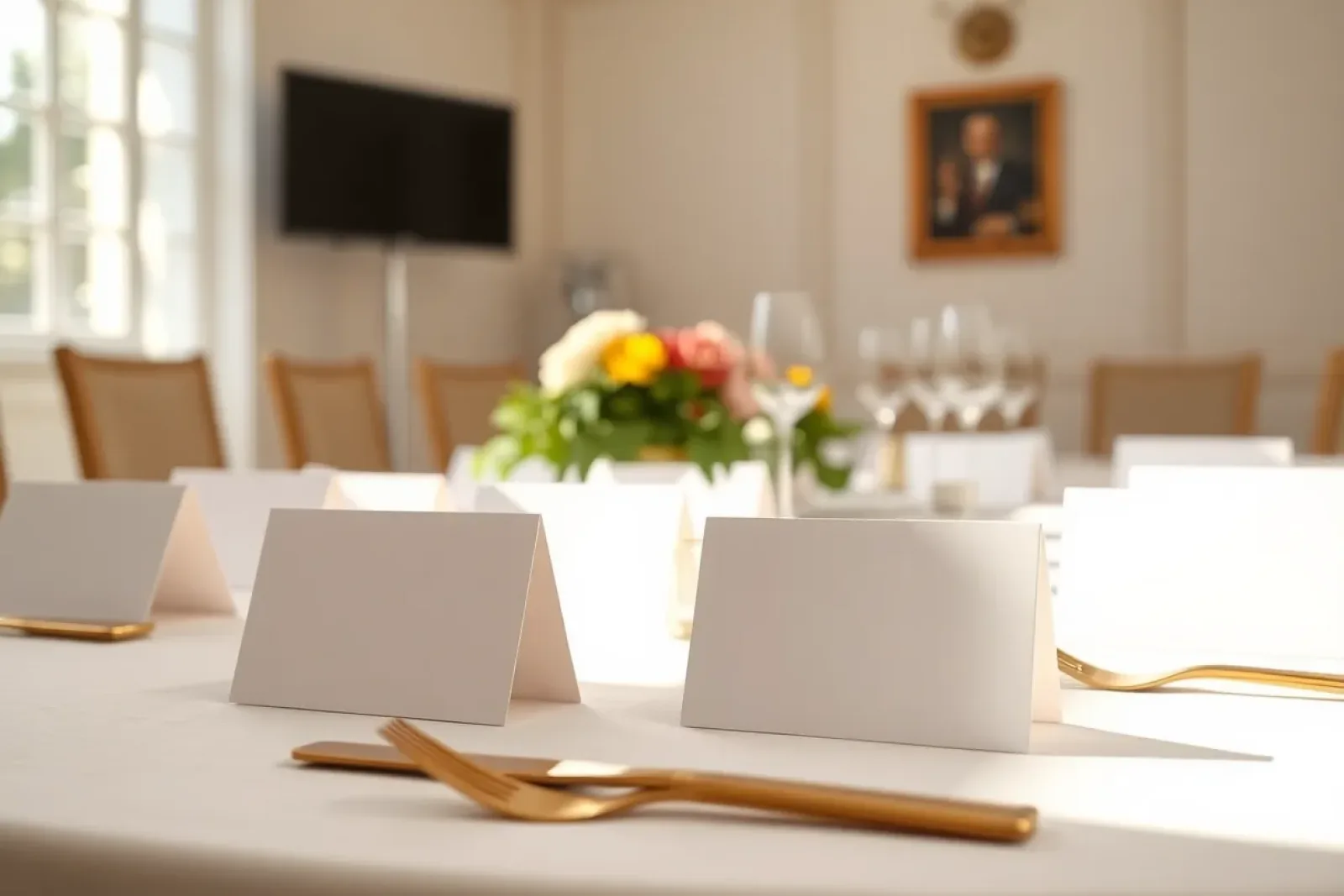
You only need place cards if you are assigning individual seats. Folded tent cards are the most reliable: they stand on their own and show the name from both sides. Allow at least 90 by 50 millimetres, type of at least 14 point, and a reserve of ten per cent.
Place cards are the smallest piece of stationery and the one with the highest error rate. Each carries a single name, and that name is either spelled correctly or it is noticed. They are also the last piece that can be produced, because they depend on the seating plan.
On top of that they have to work in conditions no other card faces: read standing up, from about arm's length, in the dim light of a decorated room, often by someone who has left their glasses at home.
This article ranks the shapes by how well they survive an actual evening, gives the sizes at which a name stays readable, covers getting names right, and describes how to lay eighty cards on the morning without it taking two hours.
1. Do you need place cards at all?
Place cards and a table plan are two different things, and many weddings need only one of them. The plan at the entrance assigns a table; the place card assigns a chair. If guests may sit where they like within a table, you do not need place cards.
Assigned seats earn their keep with a served meal, with speeches, at deliberately mixed tables, and whenever you specifically want particular people next to each other. Without one of those reasons, assigning seats mostly creates work — and you will have the who-sits-where conversation twice.
A middle route works well: assign seats at one or two tables only, usually the immediate family, and leave the rest open. That resolves the delicate arrangements and saves you eighty cards.
If you do decide on assigned seats, decide early. Place cards are the last link in a chain: replies, seating plan, name spellings, printing. Raise the question two weeks out and the whole chain has two weeks.
One more consideration: place cards make it visible when someone does not come. An empty seat with a name on it reads differently from an empty seat. If you expect late cancellations, brief whoever is laying the tables to remove those cards and close the gap.
A place card has one job: a guest walking into the room should find their seat without asking anybody.
2. The shapes compared
Four shapes are in common use, and they differ less in appearance than in how reliably they stay put.
| Shape | Strengths | Weaknesses |
|---|---|---|
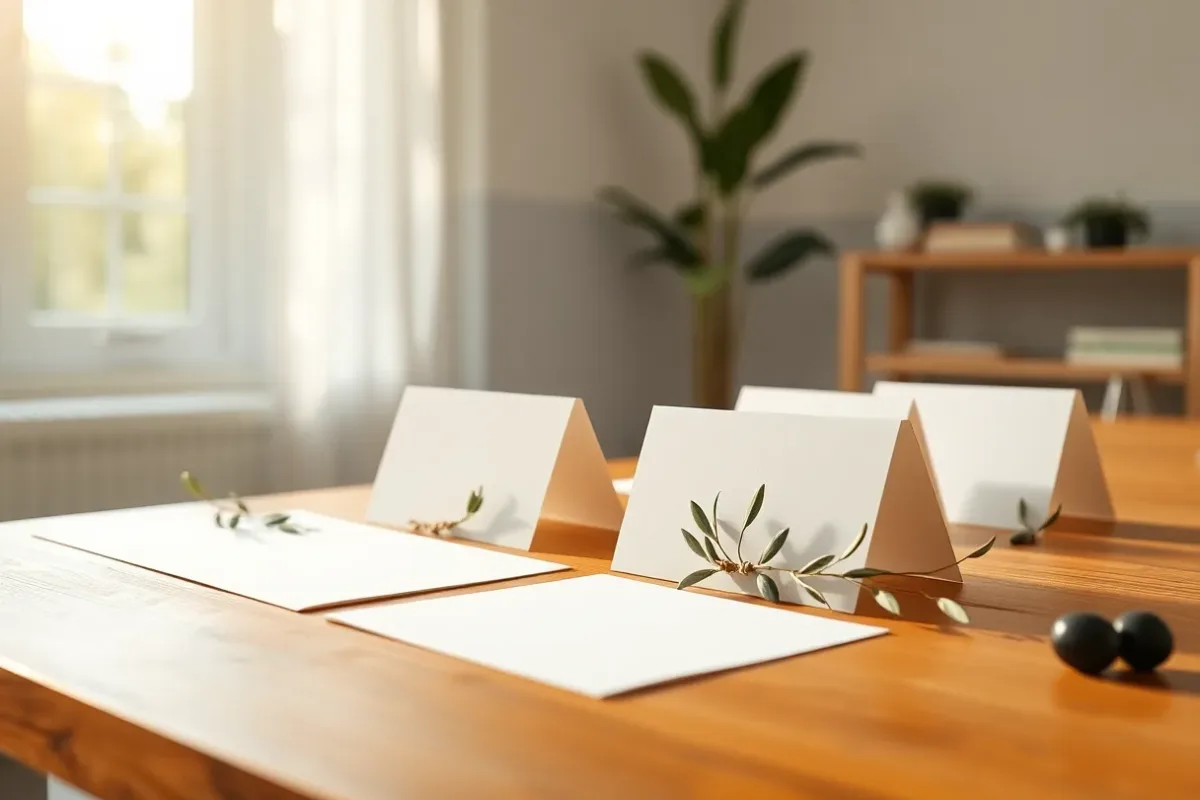
| Folded tent card | Stands unaided, readable from both sides, survives a draught. | Takes space on the setting; looks bulky on small tables. |
| Flat card on the plate | Calm, cheap, easy to post to yourself. | Disappears under the napkin and cannot be read standing up. |
| Tag on a napkin or glass | Pretty, combines decoration and function, good on small tables. | String and hole mean handwork per card; it turns away from you. |
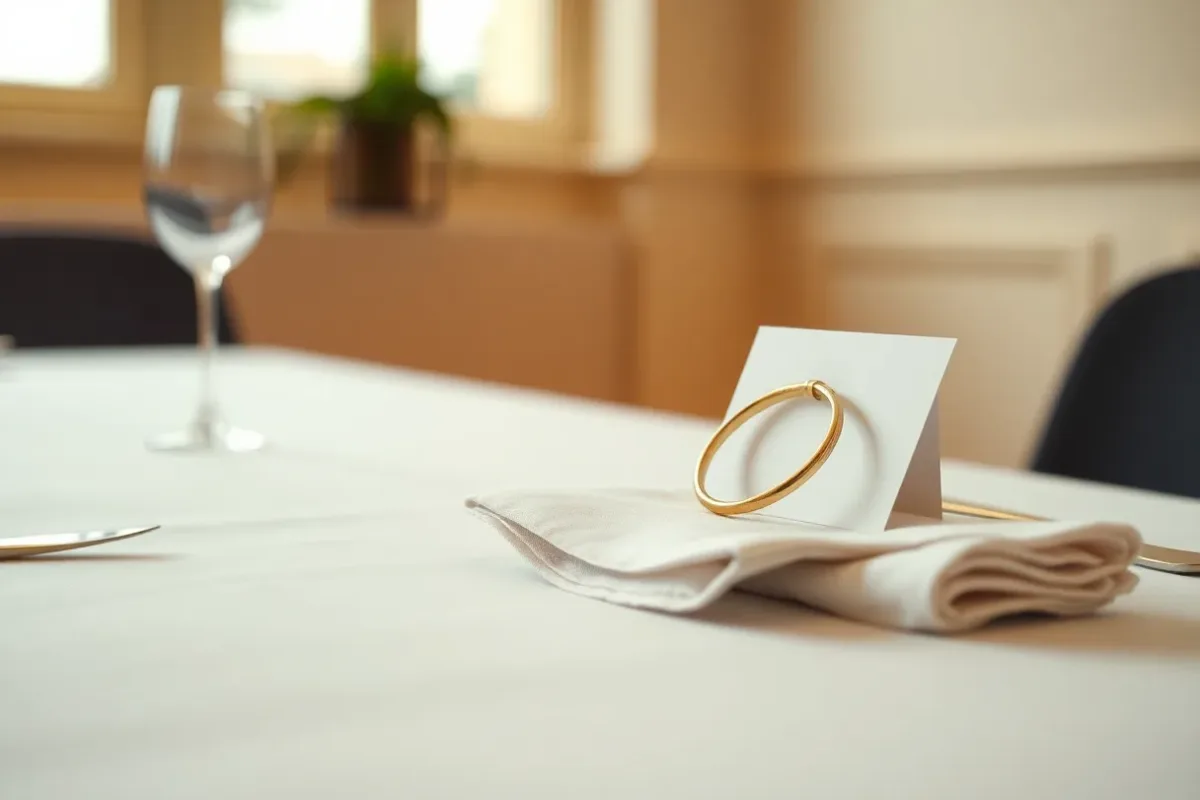
| Card in a holder (wood, brass, stone) | Very readable, looks considered, reusable. | Holders have to be bought, transported and returned. |
Natural materials — leaves, stones, wood slices, sprigs — photograph beautifully and share one weakness: they are hard to write on and they dry, wilt or curl. If you want to use them, test two weeks out with the real material, the real pen and a night's wait.
For most weddings the folded card is the right answer. It is unobtrusive, robust, and still works when somebody knocks the table.
One special case deserves attention: outdoors, the flat card is effectively out. Wind lifts it off the plate, and by the time the tables are laid in the morning the names are in the grass. Outdoors, only held, weighted or tied cards survive.
3. Size, type and readability
The commonest mistake is not the material but the size. A place card is read by a standing person from about eighty centimetres, often in low light.
A folded card of roughly 90 by 50 millimetres has proven a sound minimum — about half the height of a postcard. Set the name in at least 14 point, and at least 18 if you are using a script face, because flowing letterforms read smaller at the same point size.
Contrast beats size. A dark name on light card is markedly more legible by candlelight than a light name on dark board, and gold or copper on white looks better on screen than it performs in the evening. If you want a dark card, test it in a half-dark room before ordering a hundred.
On the name itself: first name plus surname is the safe choice wherever two guests share a first name, and that happens more often than you would think. At small, familiar gatherings the first name alone is fine. Titles do not belong on place cards; they belong on the envelope.
And think about the direction. A card that faces the seat is read by the person sitting there; a card that faces outwards is read by the person looking for their seat. The second is the job that matters, which is another argument for a tent card that does both at once.
Related articles
4. Getting names right
A misspelled name on a place card is noticed and remembered. It is worth its own checking round even though it is only single words.
- Fix the source: spellings come from the guest's own reply, not from an address book five years old.
- Check double-barrelled names: hyphen or no hyphen is not a style choice, it is the person's name.
- Accents and special characters are part of a name, not decoration. Ask if you are unsure.
- Use the name people use: someone who has gone by Bea for thirty years will not enjoy "Beatrice".
- New surnames: guests who married this year may not have the name on your list.
- Separated couples: check the list still reflects the current situation before printing.
Build the name list in the exact form it will be printed — same spelling, same order of first and last name. If the printer expects a file, that is where errors creep in: a list that has to be re-sorted or reformatted for printing gets re-sorted and damaged in the process.
Have the finished list read by somebody who knows the guests but has not worked on the list. That person finds in ten minutes what you have read past twenty times.
5. Laying them without chaos
Laying place cards takes longer than expected: for eighty guests allow forty minutes for two people if the cards are sorted, and twice that if they are not.
Sort them by table beforehand and bundle each table separately, labelled with the table number. On the morning, somebody simply drops one bundle per table; the order within the table comes from a printed plan tucked into the bundle.
Name one person to do it and give them the plan in writing. This is a classic job for a member of the wedding party or a sibling — just not for you, because you are otherwise occupied that morning.
Allow ten per cent reserve, and at least five blank cards. Late changes are guaranteed: a cancellation the day before, a plus-one who does come after all, a card that creases in transit. Take the same pen the cards were written with — a name added in a different colour is spotted instantly.
Finally, decide what happens to them afterwards. Place cards are the one piece of stationery guests routinely take home, which is charming and means you will have none left. If you want a few for your own album, set them aside before the tables are laid.
Folded cards from 90 by 50 millimetres, names taken from guests' own replies, bundled by table and with ten per cent spare: that is place cards handled. The next step is the decision underneath all of it — whether you are assigning individual seats at all.
All things wedding
Plan your wedding
Bring your tasks, costs and guests together for the day.
Invitations and wording
Find the right words for your wedding invitation.
As a wedding guest
Write a personal message and choose a thoughtful gift.
Wedding anniversaries
Explore anniversary names, traditions and celebration ideas.
Planning your dream wedding?
Create your own wedding website in minutes – with RSVP function, photo gallery, and more.