
No law in the United States governs who may marry in a church. Each denomination and each congregation sets its own conditions, and they usually come down to four: some connection to the congregation, premarital counseling, a lead time measured in months, and clergy who are willing to officiate.
Two questions decide whether a particular church can marry you: whether that congregation will say yes, and how long its own process takes. This guide covers both, then adds what the Roman Catholic Church asks for, which is a longer and more formal list than any other tradition.
Note what is absent. The state does not care where the ceremony happens, only that the officiant is authorised and the license is valid, so nothing here is a legal requirement. It is all church requirement, and a church that says no does not stop you marrying.
1. Whether that church will marry you
Most American congregations start from membership. If either of you belongs to the church, has grown up in it, or has been attending for a while, the answer is usually yes and the fee is usually lower. If neither of you has any connection, policies vary from a warm welcome to a flat refusal, and the refusal is not personal: many churches restrict weddings to members precisely so that the pastor is marrying people they know.
Four questions decide most cases, and it is worth asking all four in the first conversation:
- Do we need to be members, and what counts as membership here? Some churches accept regular attendance, some require formal membership for a set period, some accept a family connection.
- Does either of us need to be baptised, or of this faith? Liturgical churches usually require at least one partner to be baptised; some evangelical and nondenominational churches require a profession of faith from both.
- Has either of us been married before? This is the most common obstacle. In the Roman Catholic Church a previous marriage generally requires an annulment before a new one can take place. In the Episcopal Church a remarriage after divorce requires the bishop's consent. Many Protestant congregations leave it to the pastor's discretion, and the answer differs from one church to the next in the same town.
- May our own officiant take part? Some churches insist their own clergy preside; others will allow a visiting minister with the rector's permission, or a shared service.
One legal point sits underneath all of it. Clergy solemnize marriages under state law, and a handful of states and cities require ministers to register with a state or county office before they may do so. An established local church has this in hand. A visiting officiant from another state may not, and it is worth confirming rather than assuming.
None of this is law. It is the congregation's own rule, and the only place it is written down is the church's wedding policy.
2. Notice, counseling and what each tradition asks
Banns are still published as a custom in some Catholic parishes, but they carry no legal weight here and there is no statutory notice period of any kind. What each tradition has instead is its own preparation requirement, and that is what sets your real lead time.
| Tradition | What it typically asks | Usual lead time |
|---|---|---|
| Roman Catholic | Recent baptismal certificate, a prenuptial enquiry with the priest, a formal preparation program, dispensations where one partner is not Catholic or not baptised | Six months is the common diocesan minimum, and often longer |
| Episcopal | Notice to the clergy well before the date, a signed declaration of intention, premarital counseling, and the bishop's consent where either partner has been divorced | Canon law sets a minimum measured in weeks; parishes ask for months |
| Lutheran, Methodist, Presbyterian | Premarital counseling with the pastor, often several sessions, and a congregational wedding policy covering music, photography and alcohol | Three to six months |
| Baptist and nondenominational | Pastoral counseling, sometimes a statement of faith, and building policies set by the church board | Three to six months |
| Jewish | The rabbi's own requirements, a ketubah, and in some movements that both partners are Jewish | Set by the rabbi rather than by a central body |
Premarital counseling is the item couples underestimate. It is rarely a formality: most programs run several sessions over weeks, many use a structured inventory that both of you complete separately, and a few churches will not schedule a date until it has begun. In several states, completing an approved premarital course also earns a discount on the marriage license fee and can waive the state waiting period, so ask whether the church's program qualifies. That is one of the few places where a church requirement and a county rule touch each other.
What none of this replaces is the license. The church does not issue it, does not check it in most cases until the day, and cannot marry you without one. The clergy signs it and files it exactly as any other officiant would.
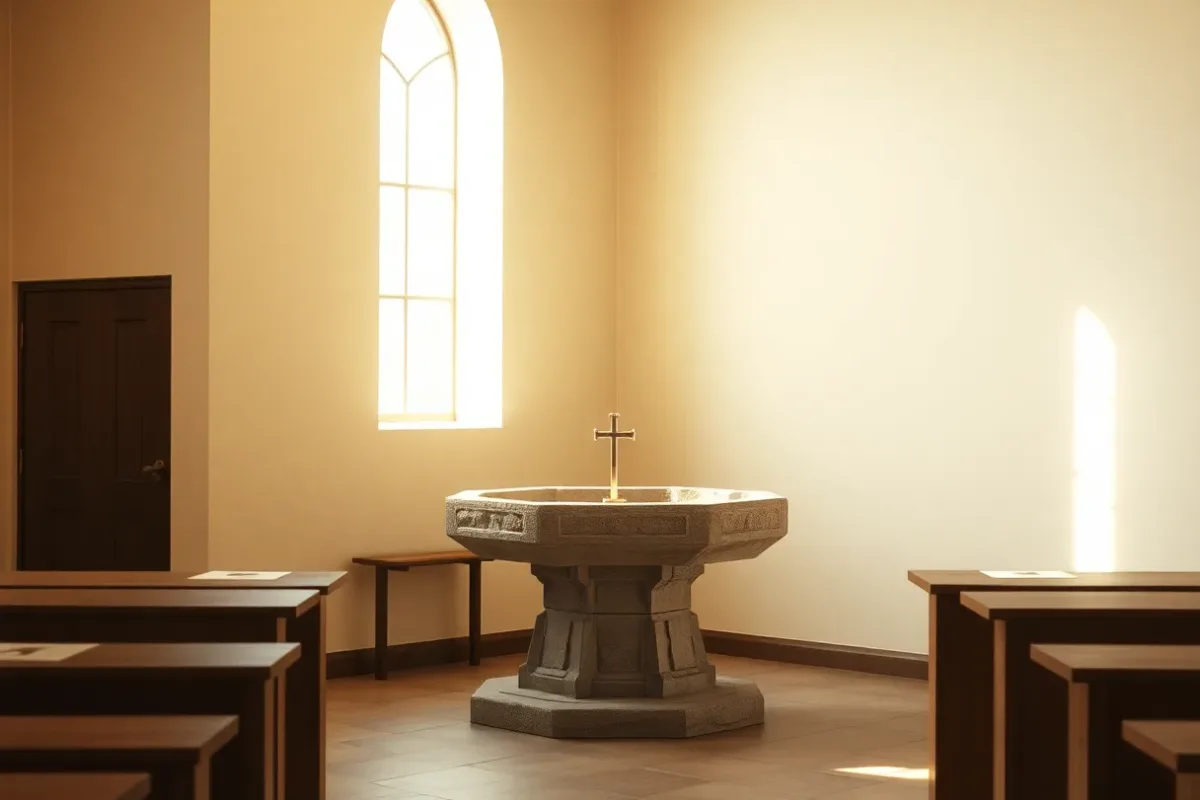
3. What the Roman Catholic Church asks for
A Catholic wedding runs on canon law and diocesan policy rather than on state geography, and the paperwork is the most extensive of any tradition.
- A recent copy of your baptismal certificate, issued by the church of baptism within the last six months, so that later entries such as confirmation are shown
- A marriage preparation program, arranged through the parish or the diocese, commonly beginning six to twelve months before the date and sometimes including a weekend retreat
- A prenuptial enquiry form completed with the priest or deacon, confirming that both of you are free to marry, usually supported by sworn statements from a parent or another witness
- A marriage license from the county, exactly as for any other wedding; the priest signs and files it under state law
Where one partner is not Catholic, a dispensation for a mixed marriage is required, and where one partner is not baptised at all, a further dispensation is needed for the marriage to be valid in canon law. Where either partner has been married before, an annulment must be completed before a date can be set, and that process runs on its own timescale, which can be a year or more and is not something a wedding calendar can hurry. Couples marrying across denominations should also read our guide to interchurch and ecumenical weddings.
Most dioceses in the United States publish a minimum notice period, commonly six months, and parishes apply it. Ask for the diocesan policy in writing at the first meeting, because it is the document that decides whether the date you have in mind is possible at all.
Related articles
4. Fees and how they are set
There is no national fee table for church weddings in the United States. Each congregation sets its own figure, and the same denomination charges very differently two towns apart, so the only reliable source is the church's own written wedding policy.
What arrives is usually not one number but four or five.
| Item | Who sets it | Notes |
|---|---|---|
| Use of the building | The congregation | Frequently waived or heavily reduced for members; the largest single line for non-members |
| Officiant honorarium | Custom, sometimes the policy | Often described as a gift rather than a fee, which does not make it optional in practice |
| Organist or musicians | The musician, through the church | Many churches require their own organist even if you bring other players |
| Custodian or sexton | The congregation | Covers opening, setup and cleaning; charged per event |
| Wedding coordinator | Larger churches | Often mandatory at a cathedral or a large downtown church |
| Premarital program | The church or the diocese | Sometimes a materials fee, sometimes free |
Totals range from a token donation at a small congregation where you are known, to four figures at a downtown cathedral where you are not. Ask for the written wedding policy by name, because that document is where the real total appears, along with the rules that cost money later: whether the church requires its own organist, whether photography is restricted, whether candles or petals are allowed, and whether alcohol may be served anywhere on the property.
Musicians affect the figure directly, and most liturgical churches also limit what may be played during the service itself, so settle that before you get far into choosing the ceremony music.

5. How far ahead to start
The constraint is almost never the paperwork. It is the calendar of a popular church on a Saturday in June, and the preparation program that has to finish before it.
- 12 to 9 months before: speak to the church office, ask whether they will marry you at all, and hold the date.
- 9 to 6 months before: for a Catholic wedding, request the baptismal certificate and start the preparation program; for an Episcopal wedding, begin the counseling and, where a divorce is involved, start the bishop's consent early.
- 6 to 4 months before: counseling sessions, choose readings and music, read the wedding policy end to end.
- 2 months before: confirm musicians, coordinator and any outside officiant permissions.
- Inside the license validity window: apply for the marriage license, which is usually a matter of weeks before the date rather than months.
- 2 weeks before: confirm the rehearsal time, and agree who brings the license to the church.
Where those months sit inside everything else you are arranging is set out in our 12-month wedding timeline. If you are collecting confirmations from a pastor, an organist and a florist, a private page on your wedding website is a more reliable place for them than an email thread.
Two scheduling points catch people out. Church weddings are rarely held on a Sunday, because the building is in use, and Saturday afternoon slots are often bounded by an evening service. And liturgical churches restrict weddings during Lent and Advent, and some will not marry during Holy Week at all. If your date is fixed for other reasons, raise it in the first conversation rather than the fourth, because it can decide whether the church works for you at all.
The requirements are clear once you separate them: the congregation decides whether it will marry you, its preparation program decides how long that takes, and its written wedding policy decides most of the cost. The Catholic route adds canon law, dispensations and the longest lead time of any tradition. None of it is state law, and none of it affects whether you can marry at all.
Call the church office of the church you have in mind and ask two questions in one conversation: whether the date is free, and whether they will marry a couple in your situation.
All things wedding
Plan your wedding
Bring your tasks, costs and guests together for the day.
Invitations and wording
Find the right words for your wedding invitation.
As a wedding guest
Write a personal message and choose a thoughtful gift.
Wedding anniversaries
Explore anniversary names, traditions and celebration ideas.
Planning your dream wedding?
Create your own wedding website in minutes – with RSVP function, photo gallery, and more.