Table of contents
Dress, suit, hair, bouquet and the dress code for your guests look like five separate decisions. In fact four of them hang off the first: settle how the dress is bought and the delivery date is settled — and off that hang the alteration appointments, the styling trial and the moment your guests find out what to wear. This page puts them in order; the detail sits wherever it belongs.
What is here is the overview, not the detailed answer. Every strand has an article of its own; this page is about what a single article cannot show: the order, the dependencies and the few dates where two strands wait on each other.
The order follows the longest strand, and that is usually the dress — not because it matters more, but because it has the longest lead time. If nobody is wearing a dress, put whatever takes longest for you in its place; the dependencies stay the same.
1. The order: what has to be settled first
Five strands run towards the same day, and they do not start at the same time. Each step produces a piece of information the next one needs.
- Date, place and level of formality. Ground, season and occasion rule out whole silhouettes and fabrics.
- A ceiling for the outfit as a whole. Not for the dress alone — alterations, underpinnings, shoes and jewellery come on top.
- How the dress is bought. That fixes the delivery date, and the delivery date fixes everything else. How much lead time each route needs is counted backwards from the wedding date in our article on wedding dress lead time.
- Shoes and underpinnings. They have to exist before the first alteration appointment, or nobody can set the hem.
- Suit, styling and bouquet. Shorter lead times, and all three follow from what is settled above.
- The dress code for the guests. Last in the order, early in the calendar — see section five.
Reverse the order and you lose no quality, only time: whatever is decided without its precondition gets decided a second time.
With the outfit it is not taste that decides the schedule. It is the schedule that decides what you can still choose from.
2. The dress sets the calendar
The dress is the longest strand of the outfit: search, production, alterations and reserve come to seven to thirteen months depending on how you buy. That is why it stands at the beginning.
Inside the strand the same logic applies in miniature — first how you buy, then the appointments, then the dress. Which routes exist, and what the decision finally rests on when several dresses look equally good, is in the article on finding a wedding dress. Two points are regularly underestimated along the way: production starts with the deposit, not with the decision. And a single appointment settles one of the largest purchases of the whole wedding in ninety minutes — what you clear up beforehand and what you bring is a short list, which we have put together for the appointment.
3. The suit follows the occasion
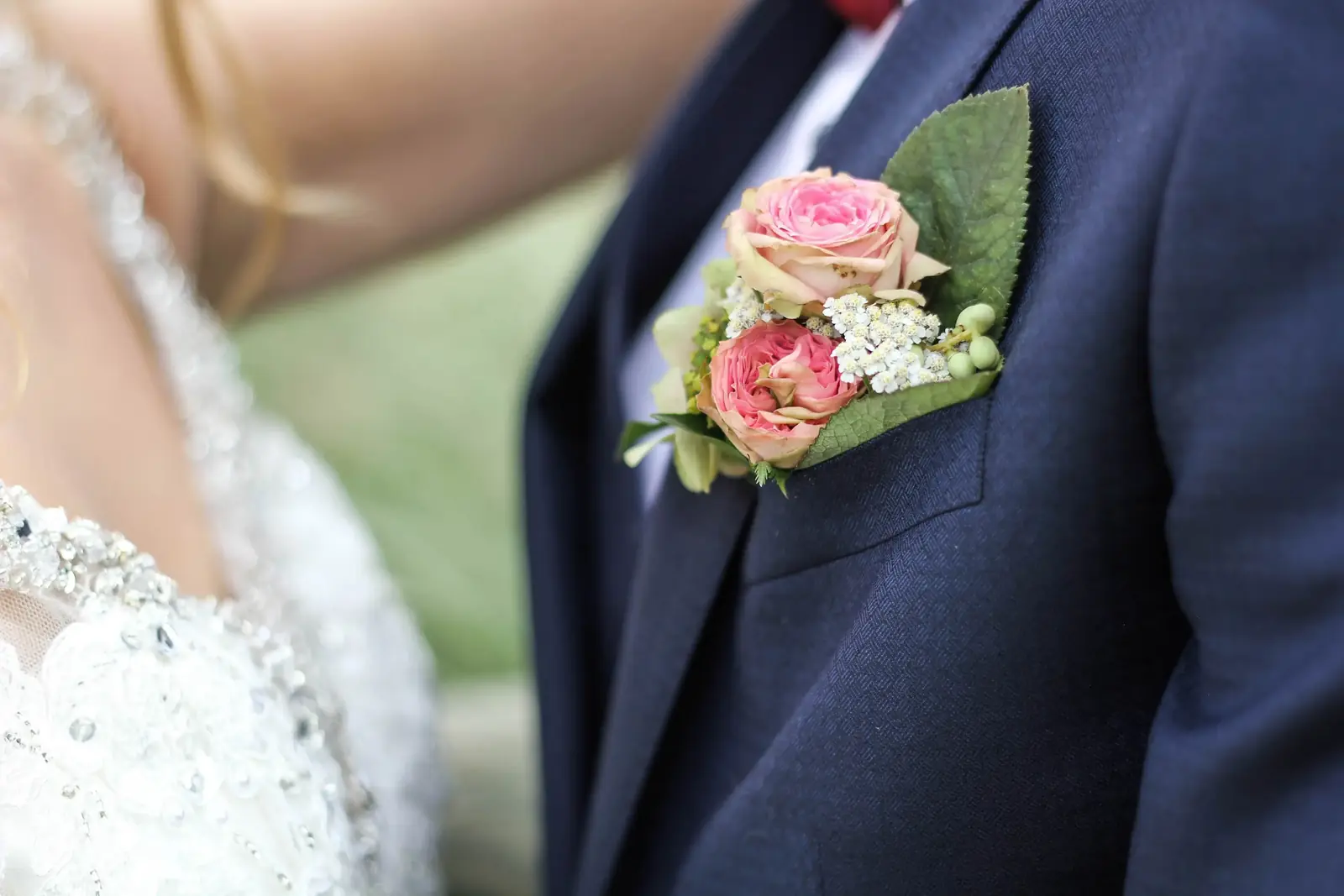
The suit has the shorter lead time — from a few days to about three months depending on the route — and is therefore decided later, but not arbitrarily. The first question is buy, rent, made to measure or bespoke; its answer sets the lead time, the cost, and whether the garment stays in the wardrobe afterwards or comes out again.
Coordination runs through the level of formality of the day, not through colour. That level is a joint decision, both outfits inherit it, and later so do the guests. The four routes in detail are in the article on the wedding suit.
4. The wedding morning: styling, bouquet and the clock
On the wedding morning three strands come together and between them produce the time you get up. Hair and make-up are less a question of taste than a question of scheduling: which of you gets styled at all, who does the work, whether at a salon or where you are staying, and when it starts. Only those four details produce a time; the article on wedding hair and make-up works it through with the duration per person.
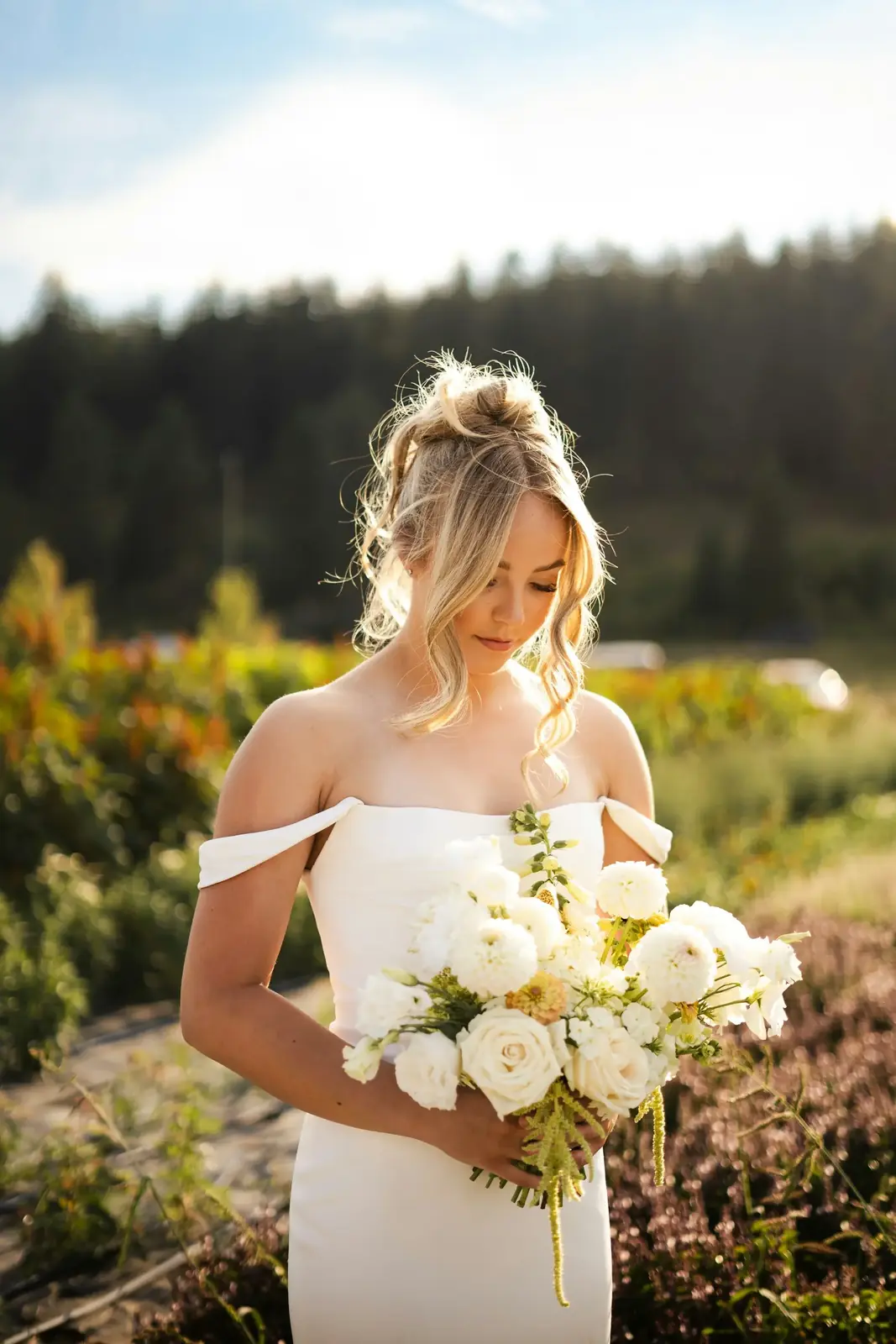
The styling trial links two strands: it needs the finished dress and the final hair colour, which puts it between the last colour and the last alteration to the dress. Whether it is worth it hangs on three conditions that do not apply to every couple — which ones those are is settled in the article on the styling trial. The bouquet is decided last and still ordered early, because the season governs availability and price; size and weight come before the variety of flower, as the article on the bouquet shows.
5. What the guests are told — and when
The dress code is the only piece of outfit information you send outwards, and it is not invented from scratch: it is your own level of formality, translated into something a guest can actually put on. A single word will not do that, because the same term produces very different pictures in different guests. How to word it so that twenty follow-up questions never arrive is shown in the article on explaining the dress code.
The conflict in the calendar is real: the invitation goes out months before your last alteration appointment. So the information belongs somewhere you can still change after printing. You can build your wedding website for exactly that and keep the dress code there, instead of committing it to paper.
Outfit and styling are not a problem of taste but a problem of order. Date, place and level of formality first, then how the dress is bought, then everything that hangs off its appointments: suit, styling, bouquet, and last of all the information for the guests. Work that way and you make every decision exactly once.
The next step is a single number: count back from the wedding date to see how many months are left until the last alteration to the dress. That decides which routes to a dress are still open — and how much calm the rest of the outfit gets.
Planning your dream wedding?
Create your own wedding website in minutes – with RSVP function, photo gallery, and more.