Hair and make-up are less a question of taste than a question of scheduling. Four decisions hang together: which of you gets styled at all, who does it, whether it happens at a salon or where you are, and when it starts. Only those four produce a time, and that time decides when you get up on the wedding morning.
Most articles on this subject show hairstyles. That helps with choosing, but not with the questions that are actually pending and still open a week beforehand: is somebody coming to you or are you going to them, how long does it take per person, who pays for the people coming with you, and what happens if the person you booked falls ill.
This article answers exactly those questions. It applies to everyone being styled, regardless of which of you is wearing the dress and which the suit: an appointment is often booked for the second half of the couple too, and it regularly falls off the plan.
1. Four decisions that hang together
These four questions cannot be answered separately. Every answer changes the other three, so they belong to one sitting.
| Question | What hangs on it |
|---|---|
| Who gets styled? | One person, the couple, or the wedding party, parents and children too. Every extra person adds half an hour to an hour to the morning. |
| Who does it? | Your own salon, somebody who specialises in weddings, two separate professionals for hair and make-up, or you yourselves. |
| Where does it happen? | At a salon, at your accommodation, at home or at the venue. That decides travel time, light and space. |
| When does it start? | It follows from the three answers above and from the time of the ceremony, not the other way round. |
The most common bad decision is the first one. Agree on the spot that a mother, a sister and two attendants will be styled too, and you have added two and a half to four hours to the morning and now need either a second professional or a much earlier start. Both are perfectly workable when they are decided. They get unpleasant when they emerge the evening before.
So decide first who is included, and then say so plainly. A sentence like: we are booking styling for the two of us, everyone else is very welcome to use their own hairdresser, is not unfriendly. It is a basis for planning, and an easier one for everybody else as well.
A styling appointment is not a service you book. It is a block in the schedule of the wedding morning.
2. Salon or mobile: the difference is not only the journey
Both work. They differ in time, in cost, and in one thing you only notice on the morning itself: the light.
| Point | At a salon | Where you are |
|---|---|---|
| Time | Getting there and back is added, usually thirty minutes each way or more | no journey for you, but set-up time for the stylist |
| Cost | no travel fee, often a lower base price | a travel fee, sometimes a surcharge for early starts |
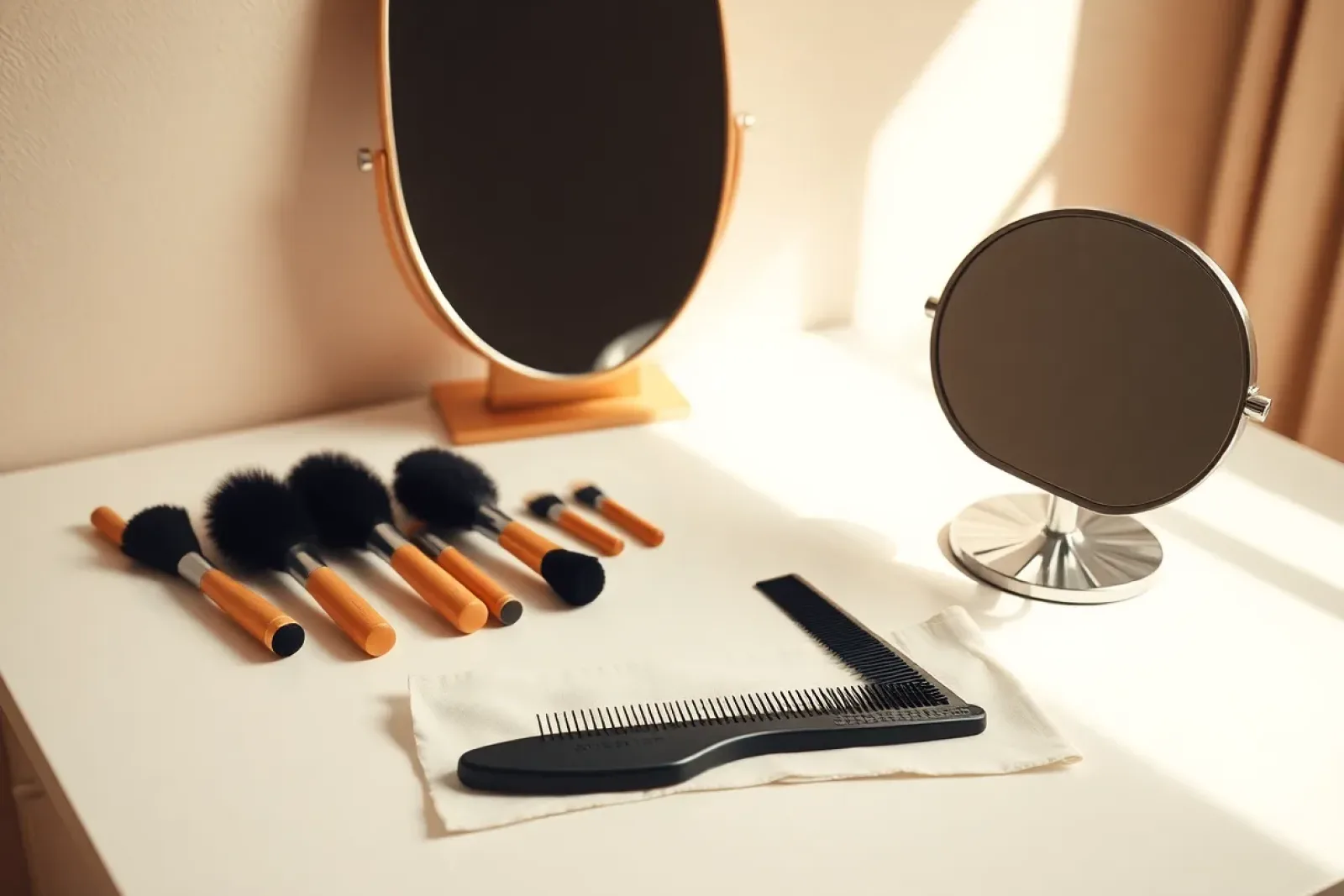
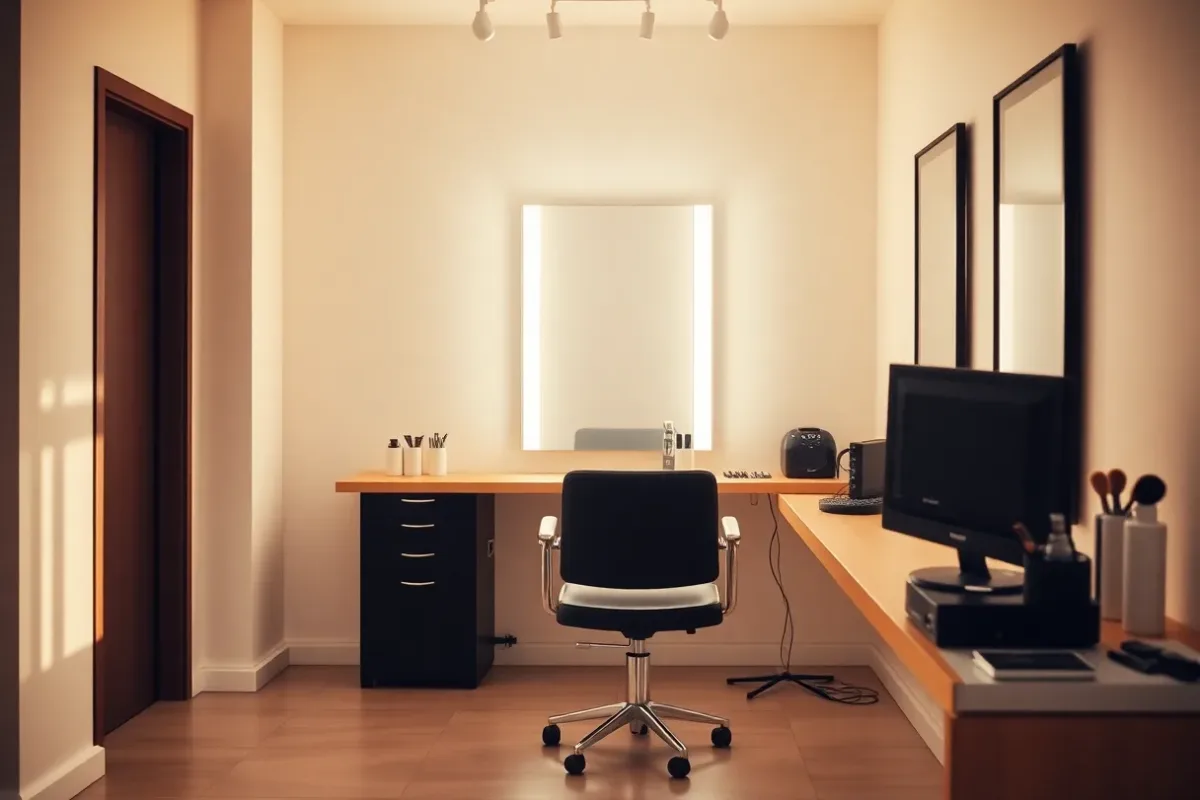
| Equipment | everything is there, basin included | you have to provide power, a table, a chair, a mirror and space |
| Light | even, and designed for the job | daylight at a window is better, any ceiling light is worse |
| Photos | rarely suitable | the getting-ready room is a photo subject, so tidy it accordingly |
If you book mobile, settle three things in advance that nobody thinks of unprompted: where there is a table by a window, where the nearest power socket is, and who makes sure the room is free and tidy at that hour. Ask as well about the travel fee and from what time an early surcharge applies. Both are common practice in most markets, the amounts vary a great deal, and neither tends to appear on a first price list.
Your own salon is a special case. It knows your hair, but on a Saturday morning it is often fully occupied with normal trade and rarely travels. Ask anyway: some salons offer wedding appointments before opening hours, and that is frequently the most relaxed solution of all.
3. Order and timings on the wedding morning
The decisions turn into a schedule, and the schedule counts backwards from the ceremony. These figures are per person and deliberately generous, because a morning that finishes too early harms nobody.
| Step | Duration |
|---|---|
| Hair for the person who has to be ready first | 60 to 90 minutes |
| Make-up for the same person | 45 to 60 minutes |
| Each further person, hair and make-up together | 45 to 60 minutes |
| Getting dressed with help | 20 to 30 minutes |
| Buffer before leaving | at least 30 minutes |
Two workable rules on the order. First: whoever finishes last should be the person who is seen first, so the result is fresh. Second: dressing happens after the make-up, not before, and with help rather than over the head. Anyone wearing something that only goes on over the head should say so in advance, and the make-up is planned around it.
The veil or the hairpiece is fixed in place by the professional before they leave. Settle that explicitly, or somebody who has never done it before will be pinning it an hour later. If you are planning photographs before the ceremony, the whole block moves forward: allow another sixty to ninety minutes and set the start earlier accordingly. How to bring the whole day into a sequence is in our article on the running order, and what is worth having ready for the morning photographs is collected in the photography checklist.
Related articles
4. What belongs in the quote before you say yes
Styling appointments are often agreed verbally, and that is exactly where they come unstuck. Ask for a written confirmation carrying these seven points.
- Time and place, not just the day. And with it the amount of time allowed for.
- The number of people and what is charged per person.
- Travel and surcharges, itemised separately, including from what hour an early surcharge applies.
- The trial: whether it is included, what it costs extra, and whether it is credited back.
- Staying or leaving: some will stay for a fee until after the first photographs and touch up. Decide whether you want that.
- Cover arrangements: who comes if the person you booked falls ill. A stand-in within their network is a good sign, not an excuse.
- Deposit and cancellation terms, for both sides. Including the case where you postpone.
Point six is the most important one and is almost never raised. On the wedding morning there is no substitute for a professional who does not turn up, and the chance of somebody calling in sick over twelve months is not small. Ask in a tone that makes clear this is about planning rather than about distrust.
Add up the cost for everyone being styled and put the total in the budget as its own line, rather than filing it under miscellaneous. Two people styled plus a trial quickly comes to something in the order of a good dinner for half the wedding party. How much room you have for that is shown by our article on the wedding budget breakdown by percentage.
5. What you prepare yourselves
The smaller part, but the one with the nastier surprises. Five things you handle yourselves in the weeks beforehand.
- Nothing new at the last minute. No new hair colour, no new cut, no first-ever facial in the week before. Whatever you want to change, change it at least four weeks ahead so there is still time to correct it.
- Wash your hair the day before, not on the morning itself. Freshly washed hair holds a style less well. Ask anyway, because some professionals want the opposite.
- Test new products, including the ones you are given as presents. A reaction to an unfamiliar product is rare, but it cannot be repaired on the wedding morning.
- Be careful with tanning, whether from the sun or from a bottle. Both change the skin tone and with it the colour matching, and a line at the neckline shows in every photograph.
- Pictures rather than words. Collect three photos of what you want and three of what you definitely do not. The second group is the more useful one and is almost never brought along.
For the day itself, powder, a lipstick or gloss in your shade and a few hairpins belong in the bag of somebody who stays close by. What else belongs in it is collected in our emergency kit checklist.
Whether a trial beforehand is worth it depends above all on whether the person already knows you and your hair, and on how far you are departing from your everyday look. We treat that decision in its own article on the styling trial, because it hangs on cost and on the calendar rather than on taste.
Hair and make-up are decided as soon as four answers exist: who, by whom, where and from when. Those four produce a time, and that time is the only number that really counts on the wedding morning. Everything else, from the cover arrangement to the powder in the bag, hangs off it.
The next sensible step is a short list: write down who is being styled and add up the timings from section three. If that produces a start before seven in the morning, it is time for a second professional or for a shorter list.
All things wedding
Plan your wedding
Bring your tasks, costs and guests together for the day.
Invitations and wording
Find the right words for your wedding invitation.
As a wedding guest
Write a personal message and choose a thoughtful gift.
Wedding anniversaries
Explore anniversary names, traditions and celebration ideas.
Planning your dream wedding?
Create your own wedding website in minutes – with RSVP function, photo gallery, and more.