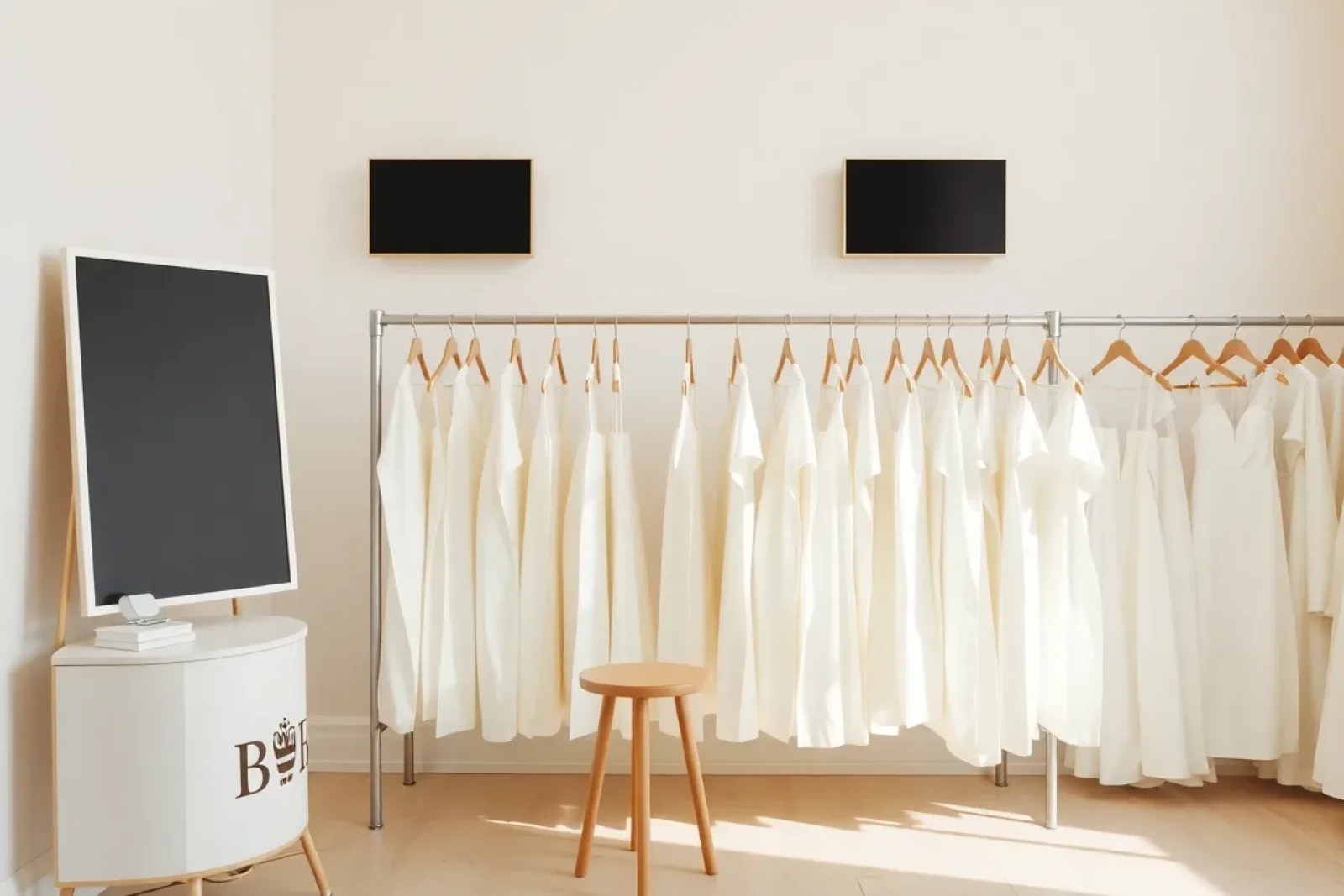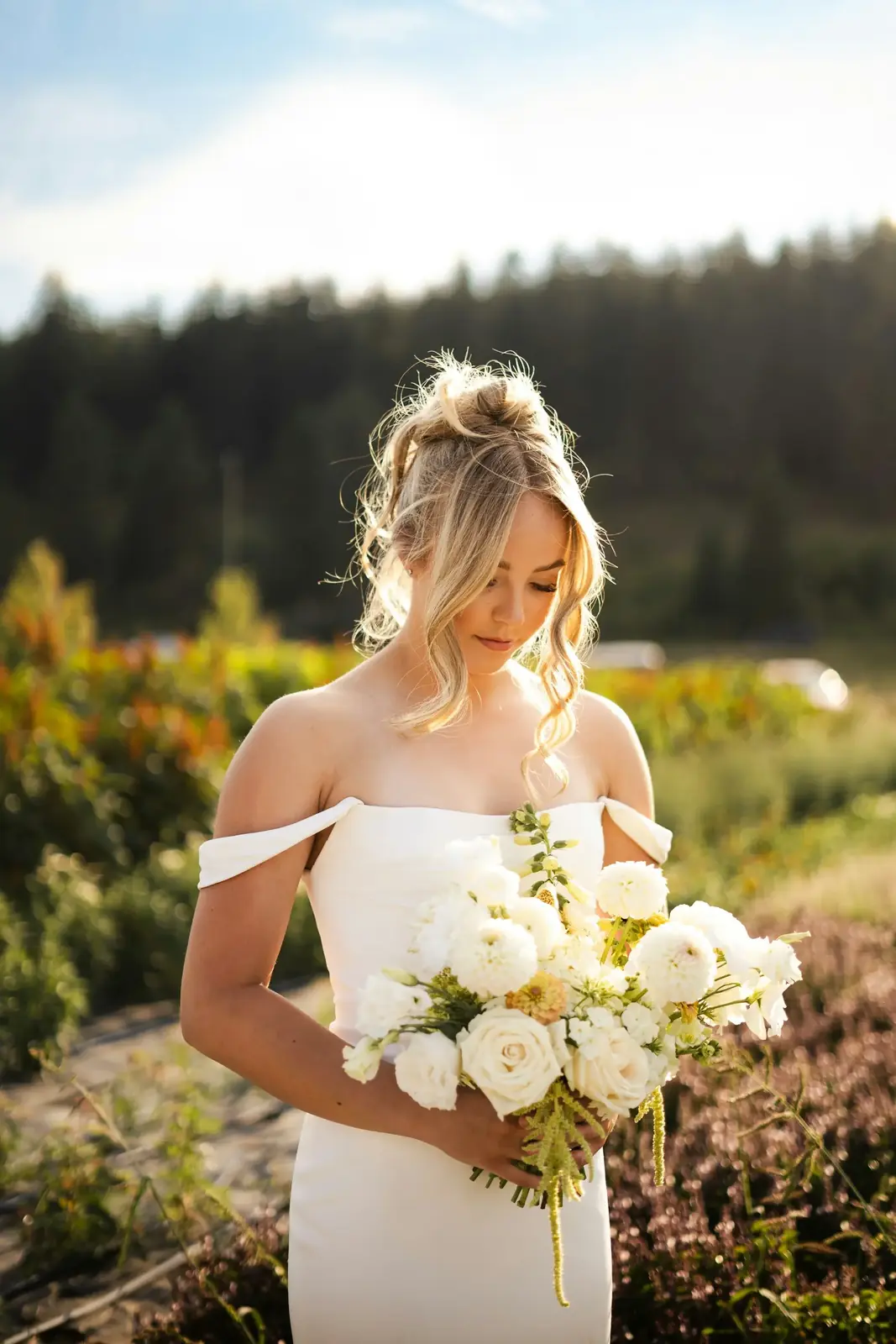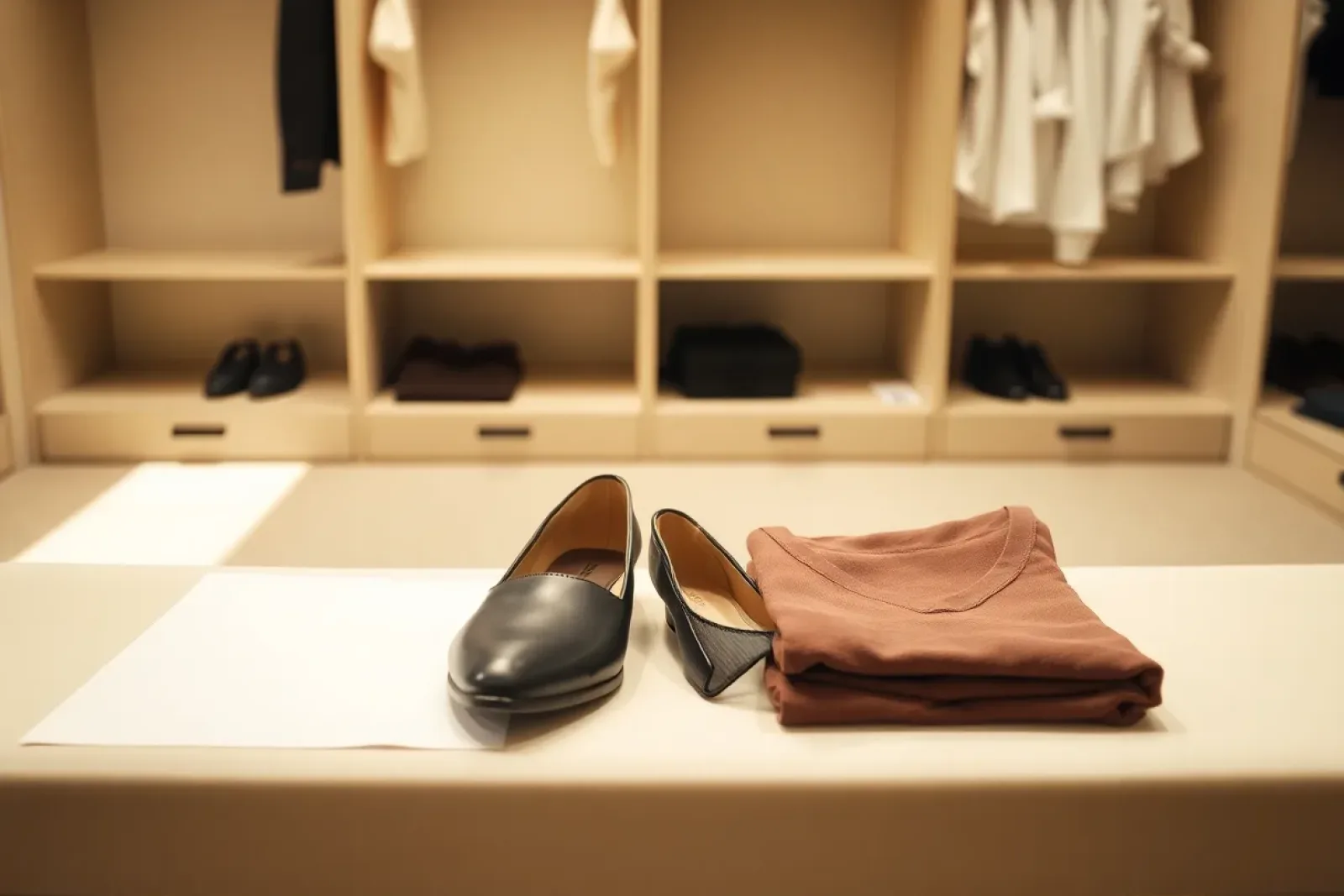
A wedding dress appointment usually runs an hour to ninety minutes and settles one of the largest single purchases of the whole wedding. Four things belong in the phone call already: the wedding date, the price bracket, your usual dress size and the number of people coming with you. For the appointment itself you need shoes at the heel height you are planning, plain underwear, and a way of recording every dress the same way.
The difference between a good appointment and a wasted one almost never comes down to what the shop stocks. It comes down to whether you still know afterwards what you saw. After eight dresses in ninety minutes nobody remembers the details, and without notes the order decides: the last dress wins.
This article walks through the appointment from the booking to the goodbye. It will not make the decision for you, but it makes sure you are making it on a basis that still holds up the next day.
1. The phone call before the appointment
Almost every bridal shop works by appointment, and the conversation that books it is more than a formality. Four pieces of information from you and three questions to them decide whether the appointment fits.
What you tell them:
- The wedding date. It determines which dresses can still arrive in time at all. A shop that knows early will show you different models.
- The price bracket. Name a ceiling and say whether alterations are meant to sit inside it. Withholding both reliably produces dresses you are never going to buy.
- Your usual dress size. Sample gowns are normally held in only one or two sizes. If none of them fits, the appointment is lost before it starts.
- The number of people coming with you. Many shops have limited space and cap the number of guests explicitly.
What you ask them: Which sizes are the sample gowns held in? Are alterations done in house, and roughly what do they cost? How long is the appointment, and how many dresses does it allow for?
The third question is the one that pays off most. A sixty-minute slot with four dresses is a different thing from ninety minutes with eight, and both are common. If you are visiting two shops in one day, leave at least an hour between the appointments so the second one is not under time pressure. How many appointments make sense in total is in our article on finding a wedding dress.
Without notes it is not your judgement that decides but the running order: the dress tried on last almost always wins.
2. What to bring
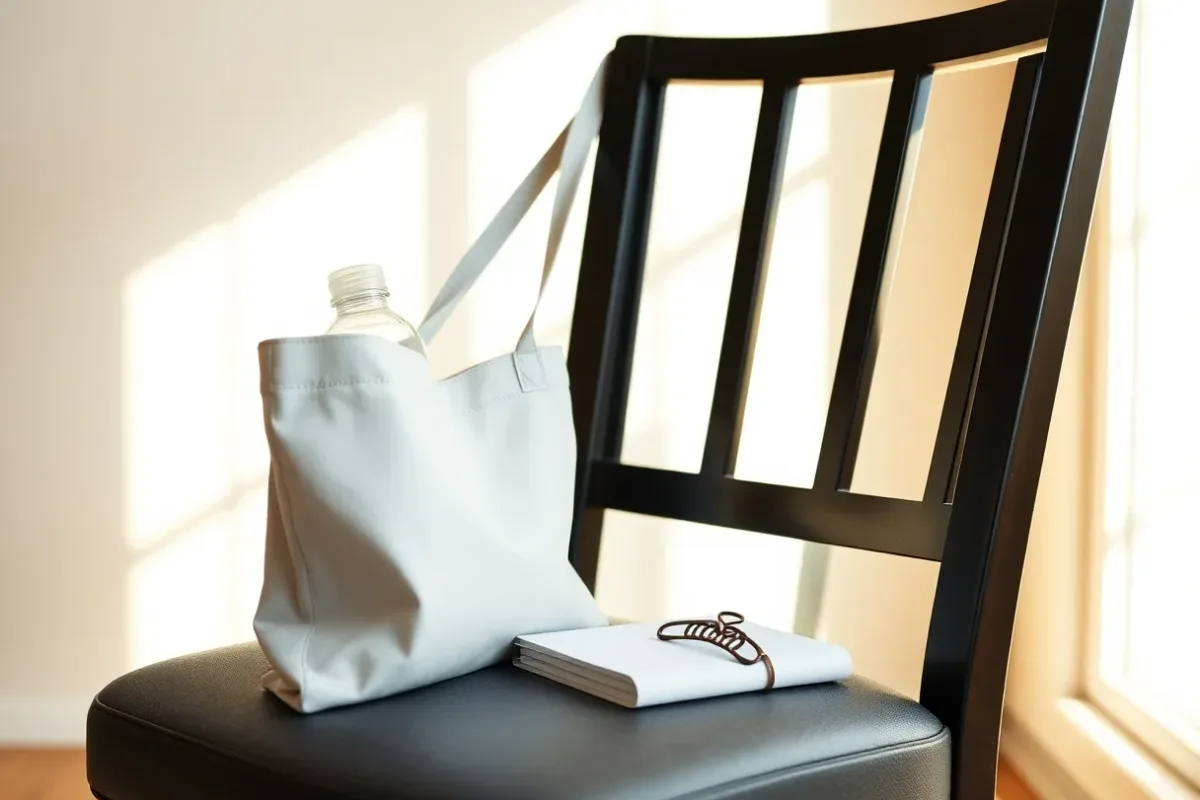
The list is short, and still something on it is almost always missing. The first three items are the important ones: they change how a dress looks and how it sits.
| Bring | Why |
|---|---|
| Shoes at the heel height you are planning | The length of the dress changes by an inch or more with the heel. At a pinch, shoes of a similar height will do. |
| Plain, seam-free underwear in a skin tone | It does not show through and does not distort the silhouette. Dark underwear makes any pale dress impossible to judge. |
| Hair roughly as you plan to wear it | Loose hair hides the back and the neckline. A hair tie is enough to compare the two. |
| Little make-up, no dark lipstick | Some shops require it, and in every case you are liable for marks on a sample gown. |
| A note with your ceiling written on it | A number on paper holds up better in conversation than a number in your head. |
| A charged phone | For photos and notes. You need both from the second dress onwards. |
What you do not need to bring is a large stack of inspiration pictures. Two or three are enough to show a direction. Bring twenty and you are usually bringing twenty different directions, and you only notice in the shop.
And do not book the appointment for a day when you are not feeling well. That sounds trivial, and it is the most common reason an appointment achieves nothing: nobody who is tired, hungry or fresh from an argument about the budget judges a dress fairly. Eat beforehand and take water with you.
3. Who comes with you, and what their job is
Company is the most underestimated part of the appointment. Two people is ideal, three is the ceiling, and from four upwards the group decides rather than you.
It helps to give each person a job in advance. It sounds fussy and it prevents exactly the confusion that makes so many appointments useless:
- One person takes the photos. Always the same three angles, always in the same spot in the shop, always in the same light.
- One person minds the numbers. They write down the price, the estimated alteration cost and the delivery time while you are looking at the dress.
- Everybody else speaks only when asked. An unguarded face in the mirror carries more weight than any argument.
Choose your company by this question: who can say what they see without saying what you ought to want. That is not automatically the person closest to you, and it is rarely the person contributing to the budget. If both of those are the same person, at least name the two roles out loud.
If somebody important cannot make it, do not move the appointment — send photos and bring them to the second fitting instead. A video call in the middle of an appointment is rarely useful: the picture distorts colours, and the person on screen cannot see how the dress moves.
Related articles
4. How to record dresses so they stay comparable
Comparable means: same photos, same details, same order. One sheet per dress is enough, and it should always carry the same six fields.
| Field | Example |
|---|---|
| Shop and date | so you can go back and ask later |
| Maker and style number | the only unambiguous name a dress has |
| Price | the dress alone |
| Estimated alterations | quoted by the shop, not guessed |
| Delivery date | as a date, not as a month |
| One sentence from you | what struck you, good or bad |
The three photos matter more than any description: one from the front, one from the side, one from the back, all standing and without posing. Add a fourth sitting down if the shop allows it. Always shoot in the same spot, because otherwise light and background make more difference than the dress does.
Some shops do not allow photographs. That is their right and you should accept it, but it has a consequence you need to be aware of: without pictures, comparing across several appointments is close to impossible. Take more notes in that case, decide sooner, and treat the ban as what it is — an argument for not signing anything that day.
Transfer the estimated alteration costs into your budget the same evening. That is the line that grows most reliably between the fitting and the invoice. How the outfit fits into the overall total is shown in our article on the wedding budget breakdown by percentage.
5. The sales situation, and what a yes commits you to
A dress appointment is a sales conversation in a highly emotional setting, and both sides know it. That is not underhand, but it should change how you decide.
Three patterns turn up regularly. The dress is a one-off and will be gone tomorrow. The price is valid today only. Or a dress well above your ceiling is brought out first, so that the cheaper ones feel cheap afterwards. All three are ordinary sales technique. The answer is always the same: you decide not in the shop but after a night's distance, and an offer that cannot survive that was not an offer.
Before any signature, ask a question that rarely gets answered on its own: under what conditions can you get out, and what does it cost. The answer depends on the country and on how you are buying, and it is not what most people expect from online shopping. In most markets a purchase made in a shop carries no automatic right to cancel; the cancellation rights people know attach to distance and off-premises sales, so a withdrawal from a boutique order is only possible if it was agreed. Check what applies where you are buying rather than assuming, and get the agreed rule in writing.
The same goes for the deposit. A part payment on ordering is usual. Get written confirmation of how large the balance is, when it falls due, and what happens to the deposit if the delivery date is missed. A reputable shop has no problem with any of that.
And if you are sure during the appointment: buy. The night's-distance rule is protection against pressure, not a ban on being happy. It applies when you notice you are being talked into something, not when you have found the dress.
A good appointment is not a matter of luck but of preparation: the right details on the phone, shoes and underwear in the bag, two people with clear jobs and one sheet per dress. That gives you something by the evening that is still worth having the next morning.
The next sensible step is the phone call: book two appointments in the same week and give the date, the price bracket and your size while you do. Everything else is decided in the room.
All things wedding
Plan your wedding
Bring your tasks, costs and guests together for the day.
Invitations and wording
Find the right words for your wedding invitation.
As a wedding guest
Write a personal message and choose a thoughtful gift.
Wedding anniversaries
Explore anniversary names, traditions and celebration ideas.
Planning your dream wedding?
Create your own wedding website in minutes – with RSVP function, photo gallery, and more.