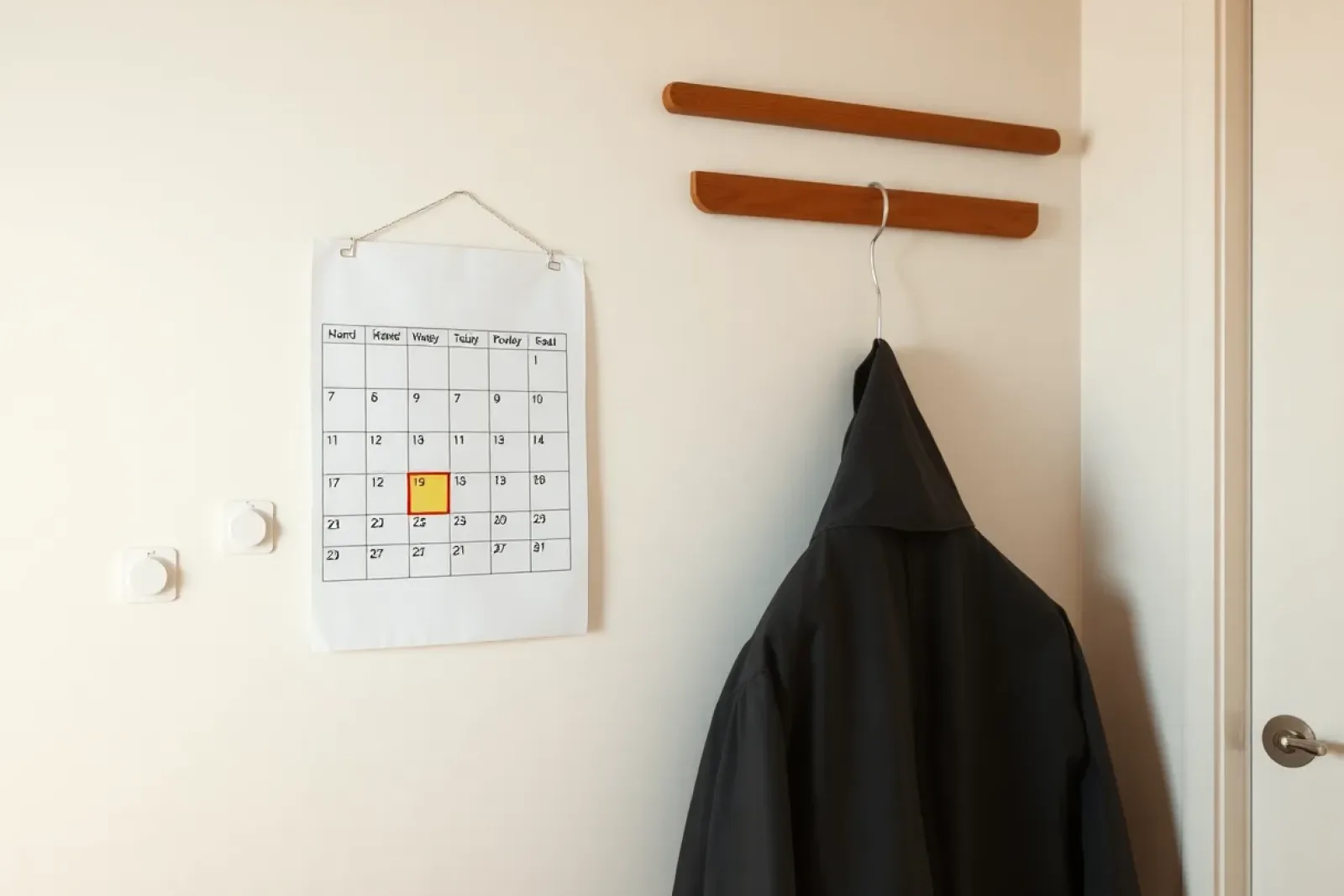
From the first fitting to the last alteration, a special-order wedding dress takes somewhere between seven and thirteen months: one to three months of searching, four to seven months of production, six to ten weeks of alterations and two weeks in reserve. Twelve months is therefore the comfortable target. It can be done faster, but only by changing how you buy, never by hurrying.
Lead time is the one part of the dress search that can actually be calculated, and that is exactly why it is so often misjudged. Almost every couple counts the production time. The time is lost in three other places: in the search, in the alterations, and in the things that have to be settled before the first alteration can start.
Below is the count backwards from the wedding date, then the routes that shorten it, and finally four cases for the moment when time is already short. The figures are typical rather than fixed, and production times move with the season and the maker — ask for the current number where you are buying instead of adopting these.
1. The four blocks lead time is made of
Lead time is a sum of four blocks. Each one on its own is harmless; together they come to almost a year.
| Block | Duration | What stretches it |
|---|---|---|
| Searching and deciding | 1 to 3 months | Appointments only on Saturdays, more than three shops, long journeys |
| Order to delivery | 4 to 7 months | The maker producing in batches, seasonal peaks, special colours and sizes |
| Alterations | 6 to 10 weeks for 2 to 3 appointments | Waiting time between appointments, elaborate lace, corsetry |
| Reserve until the wedding day | 2 weeks | nothing, and that is the point: these two weeks are the buffer |
Added up, that is a good seven months in the best case and nearly thirteen in the worst. Allow twelve months and every variant is relaxed. With six months you can still marry as planned, but you have to change how you buy, and that is what section three is about.
Two misunderstandings are stubborn. First: production does not start with the fitting, it starts with the deposit. A dress you have decided on in your head is not on order. Second: alterations are not a single appointment but a chain, with sewing happening between the appointments. Two weeks between two alteration appointments is normal, and three appointments two weeks apart is already a month and a half.
It is not the production time that decides your date. It is the day you finally buy shoes.
2. Counting backwards from the wedding date
Do not count forwards from today, count backwards from the date. That is the only way to see which step has already slipped past you.
| Point in time | What is done by then |
|---|---|
| 12 months before | First appointments booked, ceiling for the outfit set |
| 10 months before | Dress chosen, deposit paid, delivery date in writing |
| 3 to 6 months before | The dress arrives, first fitting at the shop |
| 3 months before | Shoes, underpinnings and underwear bought |
| 8 weeks before | First alteration appointment, with shoes and underpinnings |
| 4 weeks before | Second alteration appointment, hem and waist final |
| 2 weeks before | Last fitting, collection, dress hanging ready |
The most important entry is the third from the bottom. Without shoes nobody can set a hem, and without underpinnings no waist sits right. Bring the shoes only to the second appointment and you pay for the first one twice. So put the shoe purchase deliberately before the first alteration, even though it feels like the unimportant errand.
How this strand fits into the rest of the planning is laid out in our twelve-month plan. And if you have no date at all yet and want to know how much run-up a wedding needs in total, that is in the article on how far in advance to plan. The dress is the longest strand in it, but not the only one that occupies a year.

3. What actually shortens the lead time
Lead time cannot be shortened by hurrying, only by making a different decision. Five options, sorted by how much time they save.
- Buy a sample gown or trunk-show piece. Saves the entire production time, so four to seven months. You take home the dress you tried on and only need alterations.
- Buy off the rack. Also saves the production time. Budget more alteration work in exchange, because the dress is not cut to bridal sizing.
- Buy pre-owned. Available immediately, but with no returns and no advice. Allow generously for alterations, because nobody stands behind the result.
- Rent. Available at short notice, but alterations are usually limited. Reserve early: stock in popular sizes runs out first.
- Rush production for a surcharge. Some makers offer it. Ask before you switch routes entirely, but do not build the plan on it: it is a promise from the maker that the shop only passes on.
What does not save time: starting the search earlier. Begin eighteen months out and you try on collections that will no longer be available by the wedding, and you lose the overview instead of gaining it. The search is the only block that compresses sensibly: three well-prepared appointments in two weeks lead to a decision more reliably than ten appointments over six months. How to structure the search is in the article on finding a wedding dress.
Related articles
4. What has to be decided in parallel, or the alterations stop
The alterations workroom is the bottleneck, and it is waiting on decisions that look like they have nothing to do with the dress. These five block it most often.
- Shoes at the final heel height. The hem is sewn to the shoe. Going from flat to high changes the length by an inch or more.
- Underpinnings and underwear. They change the silhouette and with it the waist. A dress with built-in cups will not take an additional bra.
- Veil, hair jewellery and jewellery. These do not change the fit, but they do change what you decide about the back of the dress, and that decision is easier at a fitting where everything is present.
- Planned changes in weight. Say so rather than keeping it quiet. A seamstress plans seam allowances differently when she knows, and can keep adjusting up to the last appointment.
- A pregnancy. Not a problem, but a schedule: the last alteration appointment then moves as close to the wedding as possible, often to within a few days of it.
Also allow for a seasonal wait that nobody plans for. In the months with the most weddings, alteration workrooms are fully booked, and two weeks between appointments becomes four. Ask at the first appointment how full the calendar is in your wedding month, and fix the appointments there and then instead of arranging them later.
Remember that other appointments hang off the same days: if you are being styled, you need the finished dress for the trial too, and if you are planning photographs before the ceremony, the whole morning moves forward. Which decisions come up there is set out in our article on wedding hair and make-up.

5. When time is already short
Four starting positions, four answers. In all four the rule is the same: you change how you buy, you do not increase the speed.
| Time left until the wedding | What is realistic |
|---|---|
| about 6 months | A special order is tight but possible. Ask for the maker's current production time before every fitting, and only try on what will arrive in time. |
| about 3 months | Sample gown, off the rack or pre-owned. Book the alterations immediately and buy shoes the same week. |
| about 6 weeks | Only dresses that already exist. Buy where the alterations are done in house, and expect a surcharge for the short turnaround. |
| less than 2 weeks | Rental, or a dress that fits without alteration. Accept that the choice is small rather than risk the date. |
In all four cases one piece of information helps, and it should be the first thing you say on the phone: the wedding date. A shop that learns early how little time is left will show you different dresses and spare you the appointment where you fall in love with something that takes six months to make.
And keep the two weeks of reserve even when time is short. They are not a comfort but the reason short searches still end well: those fourteen days are when somebody fixes what nobody noticed at the last appointment.
Twelve months is comfortable, seven is enough, and anything below that is a question of how you buy rather than how fast you move. The two dates where planning actually fails are unremarkable ones: the deposit, because only that starts the production clock, and the shoe purchase, because no alteration can begin without it.
The next sensible step is a number: put the delivery date and the three alteration appointments into the same calendar that holds the ceremony and the party. Only there will you see whether the two weeks of reserve are still there.
All things wedding
Plan your wedding
Bring your tasks, costs and guests together for the day.
Invitations and wording
Find the right words for your wedding invitation.
As a wedding guest
Write a personal message and choose a thoughtful gift.
Wedding anniversaries
Explore anniversary names, traditions and celebration ideas.
Planning your dream wedding?
Create your own wedding website in minutes – with RSVP function, photo gallery, and more.