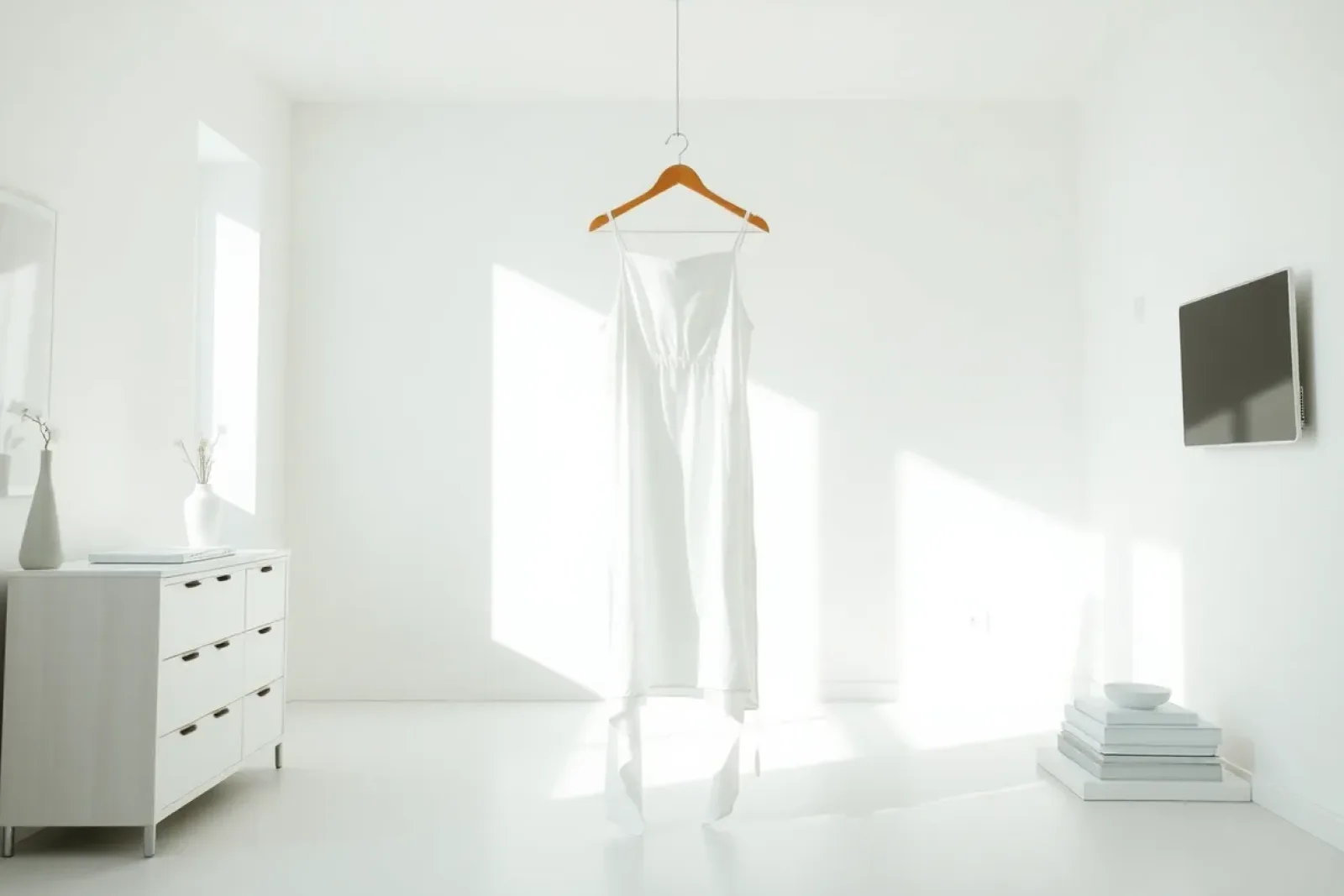
Get the dress to a specialist cleaner within two to four weeks. The reason is the stains you cannot see: perspiration, sugar, white wine and champagne oxidise over months and then appear as yellow-brown marks. After cleaning, store it flat, in the dark, in acid-free tissue — never in the plastic bag it came home in.
Almost everything that ruins a wedding dress happens not on the day but in the eighteen months afterwards, in a garment bag in a bedroom wardrobe. The three enemies are time, light and plastic. This article explains which stains are actually urgent, what a specialist clean does, how to store a gown properly, and how to tell a cleaner you can trust from one you cannot.
1. Why it is urgent: the invisible stains
Visible marks are the smaller problem. Soil on the hem, red wine, lipstick — unpleasant, but all of it obvious and therefore treatable. The dangerous residues are colourless:
- Perspiration on the back, under the arms and inside the bodice. Salts and oils attack fibres and yellow with time.
- Sugar from champagne, white wine, soft drinks and cake. It effectively caramelises slowly and browns over months.
- Deodorant, body lotion, hairspray and make-up residue. These leave greasy films that then attract and hold dust.
- Clear drinks in general. What dries invisibly on the night is invisible the next morning and clearly visible in a year.
Hence the order: clean first, then store. Never the other way round. An uncleaned dress in a preservation box is not preservation, it is preservation of the damage.
Two weeks is the target, four is still fine. From around three months the residues begin to set; after a year many of them can only be partly removed. If you are leaving for your honeymoon straight after the wedding, drop the dress off first or ask someone to do it — cleaning takes one to three weeks and does not need you there. It is one of the very few things after a wedding where waiting genuinely costs money.
The stain you cannot see is the one that ruins the dress. All it needs is time.
2. What specialist cleaning involves
Bridal cleaning is not ordinary dry cleaning. The difference is hand pre-treatment, a gentler process, and separate treatment for beading, sequins, tulle and lace.
Get two written quotes rather than relying on a published price — costs vary widely by country and by how much handwork a gown needs. When you drop the dress off, ask three things:
- Is my dress cleaned on its own, or in a batch with other garments? Batch cleaning is cheaper and carries a real risk of colour transfer from anything darker.
- How are detachable embellishments handled? Good cleaners remove beaded belts and appliqué flowers and reattach them afterwards. That is where the labour cost comes from.
- Is there a written commitment on beads and sequins? Some finishes dissolve in standard solvents. A cleaner who has seen this before will tell you straight away.
Tell them what was spilled and where, even if nothing shows. That information is worth more than any home remedy, because it determines which solvent is used. And on the day itself: water and rubbing make almost everything worse, particularly on silk. Blot dry, remember the spot, and report it.
Ask about accessories too. Veil, gloves, bolero and shoes are often quoted separately but belong in the same job — they carry the same perspiration and sugar. The veil is the most delicate item, because fine tulle shrinks if treated too warm.

3. Storing it: flat, dark, acid-free
Storage decides the next twenty years. Four rules, all simple:
- Flat, not hanging. A heavy gown stretches at the straps over the years, and beadwork can tear out. If it must hang, hang it by the sewn-in support loops rather than the shoulder straps.
- Acid-free tissue in every fold. Layer paper between the fabric, and pad out sleeves and bodice. A fold left untouched for twenty years breaks along the crease.
- No plastic. The bag from the bridal shop is for transport, not storage. PVC off-gasses and yellows fabric. Use cotton or an acid-free box.
- Dark, dry, evenly tempered. No loft (heat), no cellar (damp), nowhere near a window. In an ordinary home the best place is a wardrobe in an internal room.
Plan to look inside every two or three years, refold the dress along different lines and replace the tissue. It takes ten minutes and prevents exactly the break lines that everything else is designed to avoid.
On vacuum-sealed presentation boxes: they look impressive but have a flaw. A sealed dress cannot be inspected without destroying the seal, and any residual moisture inside has no way out. Textile conservators mostly recommend the breathing alternative — acid-free box, acid-free tissue, closed but not sealed. Watch metal parts as well: zips, hooks and eyes can leave rust spots on pale fabric, so slip an extra sheet of tissue between them and the cloth.
Related articles
4. If something has already happened
You may be reading this two years after the wedding, with a dress that already has yellowed patches. That is not automatically lost.
Yellowing from oxidised sugar or perspiration can often be reduced, though rarely removed completely. The work involved is well beyond a normal clean and the price reflects it. Ask specifically about experience with yellowing, not just about wedding dresses — they are different skills, and the answer will be immediate either way.
What you should absolutely not do: bleach, a washing machine, sun-bleaching on the line, or remedies from forums. Chlorine-based products destroy silk irreversibly and turn synthetics permanently yellow. Sunlight bleaches unevenly and damages fibres, and the damage is not visible until the dress is out of the light again.
And there is an honest alternative. If the dress is never going to be worn, sold or passed on, a different outcome is perfectly legitimate. Some couples have the fabric made into a cushion, a christening blanket or a memory box. A dressmaker will quote a modest sum for that, and the result gets looked at far more often than a box in a wardrobe does.
One garment that gets forgotten in all of this: the suit. It carries the same perspiration and sugar, and on pale fabric it shows just as much. Rented outfits go back anyway; a bought one belongs in the same round as the dress, only it is far cheaper to clean and unproblematic to store on a hanger.

5. Decide first: keep, sell, or remake
Before you spend a significant sum on preservation, answer one honest question: what is this dress for now?
| Intention | What to do |
|---|---|
| Keep as a memento | clean, store acid-free, check every 2 to 3 years |
| Pass it to a daughter | the same, plus a note of size and every alteration made |
| Sell it | have it cleaned and keep the receipt — it visibly raises the price |
| Have it remade | clean, then to a dressmaker; no preservation package needed |
| Donate it | hand it over cleaned; most organisations will not take it otherwise |
Notice that cleaning appears in every row. It is the shared first step whichever way you decide, and that is why it is the only part that genuinely has a deadline.
Record what you know about the dress while you still remember it: label, size, the alterations made at the fittings, purchase price, cleaning receipt. You will want all of that for a later sale, and it is forgotten astonishingly quickly. If you already gathered your wedding paperwork in one place — alongside the details behind your wedding website, for instance — add it there.
Two to four weeks to the cleaner, then flat and acid-free in the dark, and a look inside every couple of years. That is all a gown needs to still be white in twenty years time. Prices vary by country, so get two quotes rather than trusting a single figure. The next sensible step is deciding whether the dress is staying at all — that determines how much effort is worth spending.
All things wedding
Plan your wedding
Bring your tasks, costs and guests together for the day.
Invitations and wording
Find the right words for your wedding invitation.
As a wedding guest
Write a personal message and choose a thoughtful gift.
Wedding anniversaries
Explore anniversary names, traditions and celebration ideas.
Planning your dream wedding?
Create your own wedding website in minutes – with RSVP function, photo gallery, and more.