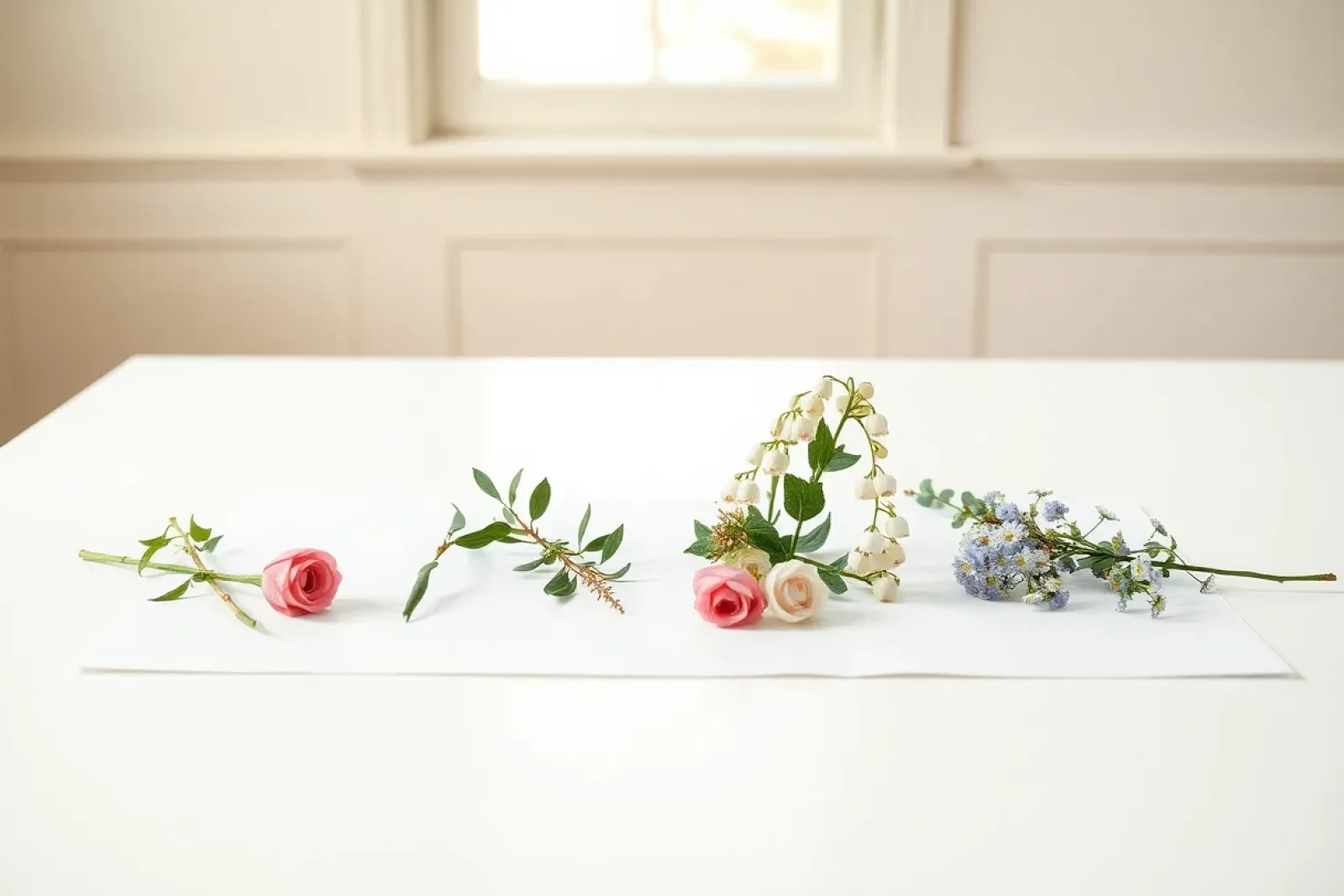
Red roses mean love, white roses innocence, myrtle marriage, ivy fidelity, forget-me-nots remembrance and lily of the valley returning happiness. These meanings come from Victorian floriography, a nineteenth-century parlour code rather than an ancient tradition, and different sources disagree on the details.
Flower meanings are the most decorative piece of wedding folklore and the least binding. Nobody at your wedding will read your bouquet, which is precisely why choosing on meaning is enjoyable: it is a private layer.
This article gives the traditional meanings of the flowers most used at weddings, explains where the language of flowers came from and how reliable it is, and covers the practical side: what is in season, what survives a warm room, and which flowers carry associations you may want to avoid.
1. Where flower meanings come from
The language of flowers, or floriography, was a Victorian craze. Dictionaries assigning a sentiment to each flower were published from the 1820s onward, first in France and then across Britain and America, and were used as a parlour game and a courtship device.
Three things follow from that, and they are the reason this article hedges.
First, the meanings are not ancient. A few flowers carry genuinely old associations, myrtle and rosemary among them, but most of the list was assembled in the nineteenth century by writers with a market for gift books.
Second, the dictionaries disagree. The same flower has different meanings in different volumes, and a confident single answer online usually means somebody picked one source. Where sources conflict, either meaning is as good as the other.
Third, the tradition is culturally specific. These meanings are English and French; the same flower may carry an entirely different association elsewhere, and in several cultures white flowers are for funerals rather than weddings.
Used lightly, it is a lovely way to choose. Used as a rule, it produces a bouquet nobody can read anyway.
A bouquet chosen for meaning looks exactly like a bouquet chosen for colour. The difference is entirely yours to keep.
2. The traditional meanings
The flowers below are the ones most used in wedding work, with the meaning most commonly attributed to each.
| Flower | Traditional meaning | Season in the UK |
|---|---|---|
| Red rose | Love | Available all year |
| White rose | Innocence, new beginnings | All year |
| Myrtle | Marriage and fidelity | Foliage, all year |
| Rosemary | Remembrance and loyalty | All year |
| Ivy | Fidelity, attachment | All year |
| Freesia | Trust | All year |
| Peony | A happy marriage, prosperity | May to June |
| Lily of the valley | Returning happiness | April to May |
| Forget-me-not | True love, remembrance | April to June |
| Sweet pea | Departure, a fond farewell | June to September |
| Hydrangea | Gratitude, or heartlessness | July to October |
| Anemone | Anticipation, or forsaken love | October to April |
The last three rows show the problem with taking any of this too seriously. Hydrangea and anemone both carry contradictory meanings depending on the source, and sweet pea, one of the most popular wedding flowers there is, traditionally means goodbye.

3. Myrtle, rosemary and the flowers with real history
A handful of plants have associations that predate the Victorian dictionaries and are better documented.
Myrtle. Associated with Venus and with marriage in classical antiquity, and used in bridal wreaths across Europe. In Britain it is best known through royal bouquets, which have included myrtle grown from a sprig planted at Osborne House in the nineteenth century. It is also a Welsh family custom in its own right, with a cutting passed between brides.
Rosemary. Carried by brides in England from at least the sixteenth century, for remembrance and fidelity, and often given to guests. It survives well out of water, smells good in a warm room and costs almost nothing, which is why it keeps returning.
Orange blossom. Strongly associated with brides in the nineteenth century, and worn by Queen Victoria. Traditionally read as purity and fertility. Real orange blossom is difficult to obtain in Britain and is usually substituted.
Ivy. Old, and among the few plants whose symbolism is fairly consistent across sources: it clings, and it was read that way.
If you want the layer of meaning to be genuinely old rather than Victorian, these four are the reliable ones. A sprig of rosemary tucked into a bouquet is the cheapest piece of wedding history available.
Related articles
4. Using meaning without wrecking the bouquet
Meaning is the last filter, not the first. A bouquet built only from symbolism tends to be an odd shape and out of season.
- Start with the season. Peonies in October cost several times what they cost in June, if they are available at all. Locally grown seasonal flowers are cheaper and last better.
- Then the palette and the venue. A dark church and a bright tent want different things.
- Then the meaning. Add one or two significant stems rather than rebuilding the whole arrangement around a list.
- Tell your florist what it is for. A good florist will find a way to include a specific plant, including something from a garden, if they know in advance.
- Check how it holds up. Some of the most symbolic flowers are the most fragile. Lily of the valley and sweet pea both wilt quickly out of water.
Two ideas that work particularly well. A cutting from a family garden, wired into the bouquet, carries more meaning than any dictionary. And a single stem given to a specific person during the day, a grandmother or a mother, says something a whole arrangement cannot.
On cost, a bridal bouquet in the US typically runs between 150 and 350 dollars depending on the flowers and the size, with seasonal and locally grown blooms at the lower end.
5. Flowers to think twice about
A few have associations worth knowing before they appear in a photograph on a mantelpiece for thirty years.
- Lilies, particularly white stargazer types, read as funeral flowers to many people in Britain and Ireland. They are also strongly scented and their pollen stains fabric permanently.
- Chrysanthemums, which are funeral flowers across much of continental Europe. Fine in Britain, and worth a thought if your guests are not.
- Yellow roses, which in the Victorian language meant jealousy or infidelity, though almost nobody now reads them that way.
- Heavily scented flowers in a small warm room. Hyacinth, lily and some freesias can be overwhelming over a long meal.
- Anything toxic within reach of children, including foxglove, delphinium and lily of the valley. Beautiful, and not for a table with toddlers at it.
Allergies are the practical version of the same point. On any guest list of a hundred there will be several people with hay fever, and lilies are the usual culprit; asking the florist to remove the stamens takes two minutes and solves most of it.
None of this needs explaining to guests. If a particular flower matters to you, it is worth a line in the order of service or with the day's details on your wedding website, and otherwise the meaning can stay where it is most enjoyable, which is between the two of you.
Choose for season, colour and how the flowers will hold up, then add one or two stems that mean something. The meanings themselves are Victorian and contradictory, so pick the reading you like and ignore the rest. A cutting from a family garden will outweigh every entry in every flower dictionary.
If you are ordering soon, the two questions to put to a florist first are what is in season on your date and what will survive the temperature of your room. Both answers narrow the choice faster than any list of meanings. A flower can do the same work as an object in the something old, new, borrowed and blue sequence.
All things wedding
Plan your wedding
Bring your tasks, costs and guests together for the day.
Invitations and wording
Find the right words for your wedding invitation.
As a wedding guest
Write a personal message and choose a thoughtful gift.
Wedding anniversaries
Explore anniversary names, traditions and celebration ideas.
Planning your dream wedding?
Create your own wedding website in minutes – with RSVP function, photo gallery, and more.