Wedding planning arguments are almost never about the thing being argued over. Behind a disagreement about the venue there is usually a question about control, money or family. Separate the subject from the cause and the row takes twenty minutes rather than three evenings — and produces a better decision.
There is an experience almost every couple has during planning and almost nobody mentions beforehand: shouting at each other about napkins. Not about something large, but about a colour, a start time, a name on a list. Afterwards you stand there rather baffled, aware that it was not really about napkins.
It is not a sign of a bad relationship. It is a feature of these particular months. A wedding forces two people to make an unusual number of joint decisions in a short space of time, and every one of them is also a statement about how you want to live and what you owe to whom. The subject keeps changing; the underlying argument does not.
Why the subject is almost never the cause
Nearly every planning row has two levels. On top sits the practical question — which venue, how many guests, what food. Underneath sits something only indirectly connected to the wedding: who decides, whose family gets its way, whose idea of a life becomes visible. The argument happens on top and is about the bottom.
There is a simple tell. The intensity does not match the subject. When a discussion about place cards reaches the volume of a discussion about moving house, it is not about place cards. Noticing that out loud gets you halfway to the end — not because the problem disappears, but because you are both suddenly discussing the same thing.
The second tell is repetition. A subject that comes up three times has never been settled. It was postponed, cut short, or overruled. Recurring arguments are therefore more useful than new ones: they point precisely at where the real question sits.
There is also a matter of sheer volume. In an ordinary year a couple makes perhaps a dozen decisions that genuinely affect them both — a vacation, a large purchase, a move. A wedding compresses dozens of them into a few months, each requiring agreement. It would be surprising if nothing grated. Seen that way, an argument stops being a symptom and becomes what it usually is: friction caused by frequency. It also explains why the small things get hit. On the big questions you are both alert and careful; the napkin colour arrives in a doorway, unprepared for, and carries everything else.
If you are arguing about the same thing for the third time, you are not arguing about the thing.
The four conflicts hiding behind wedding subjects
In the overwhelming majority of cases it comes down to one of four questions. Knowing them helps, because you no longer have to go looking.
| The argument sounds like | It is actually about | The question that ends it |
|---|---|---|
| Guest list, seating, invitations | Family — who is entitled to make claims | Whose expectation are you trying to meet right now? |
| Venue, styling, what to wear | Visibility — how you want to appear to others | Is this meant to be lovely for us or for the guests? |
| Budget, quotes, extras | Security — how much risk each of you tolerates | At what figure do you start to feel uneasy, and why that one? |
| Deadlines, tasks, pace | Control — who holds the overview and who complies | Do you want to decide this with me, or just be told? |
The right-hand column is not a rhetorical trick. Those questions work because they take the other person out of defence: they no longer have to justify being right, only describe what they want.
One warning about using them. Asked flatly in the middle of a row, they sound like a technique, and being handled is worse than being argued with. They work when asked with genuine curiosity, and they work best the following morning rather than at the peak.

Timing is half the cause
A startling proportion of planning arguments are not disagreements at all. They are tiredness. Wedding conversations almost always happen in the evening after work, because that is when there is time — which is precisely when both of you have the least patience and are most likely to say the wrong thing.
Two rules take most of the edge off. First, planning conversations get a start and a finish; forty-five minutes is plenty. A conversation with no end expands until one person can no longer cope. Second, no decisions after nine in the evening. Whatever is settled at ten gets reopened the next morning anyway.
A third helps even more: two planning-free days a week when the subject simply does not come up. Not as a prohibition, but as protection. Couples who manage it report almost unanimously that the arguments do not become rarer, but they do become shorter — because they no longer land on an already frayed mood.
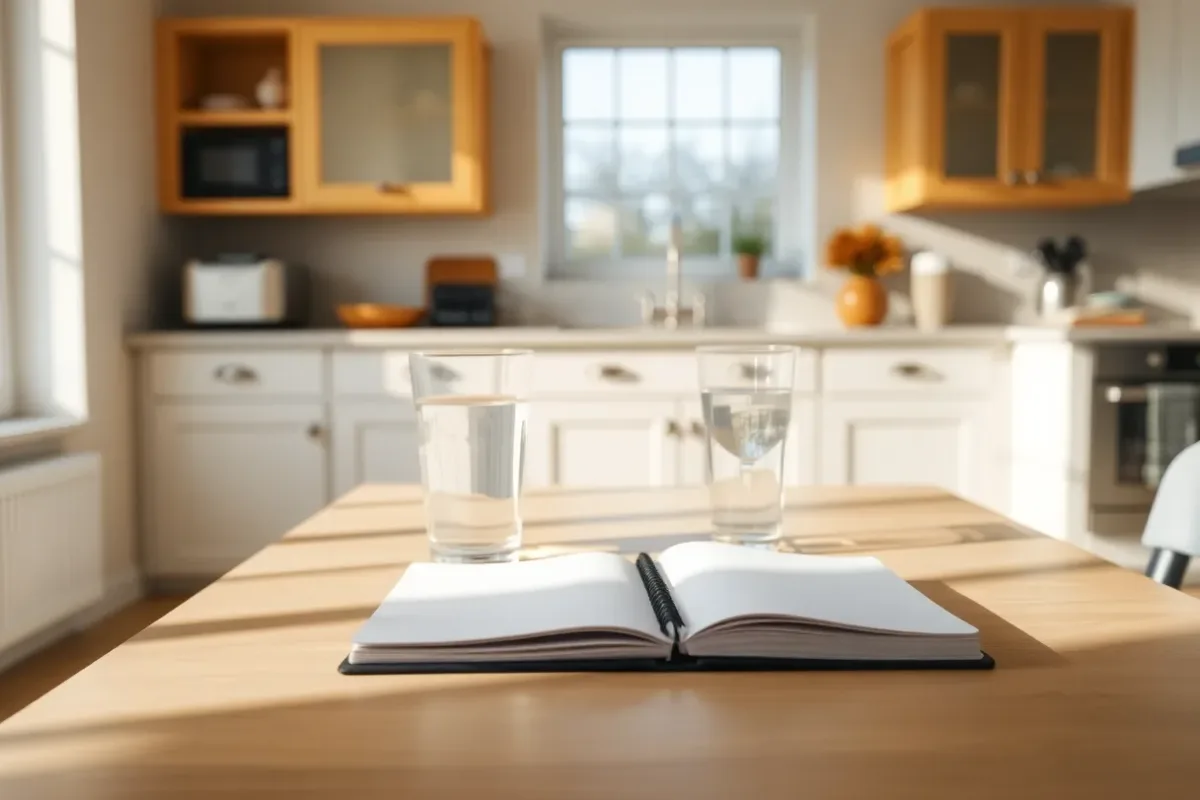
Then there is the place. Wedding conversations tend to happen exactly where you do everything else: on the sofa, at the kitchen table, in bed before sleep. That leaves the subject sitting in the middle of your life and never finished. Couples who give these conversations a different spot, even just the table instead of the sofa, notice the difference immediately. A conversation with its own place also has an ending. Nothing good has ever been decided just before sleep; worries only grow there.
Related articles
Three sentences that shrink an argument
Some phrasings reliably de-escalate, and they share one property: they concede something before they ask for anything.
I can see this matters to you. I just do not yet understand why. The other person is no longer in the wrong, only obliged to explain — and explaining is considerably easier than defending. That is your thing, so you decide it. Deliberately handing over a subject costs less than you expect and pays back for weeks. Can we finish this tomorrow at seven? An argument with an appointment is not an abandoned argument, and that is the entire difference.
What never works is invoking a third party. My mother thinks so too turns a discussion between two people into one between two camps. From that sentence onwards the subject is no longer the subject; it is who is standing alone.
The same applies to comparisons with other weddings. Nobody has ever been persuaded by hearing what somebody else's sister did. It reads as pressure, and it invites the obvious reply about how much that cost or how it turned out.
When it happens more rather than less
A certain amount comes with the territory. It becomes worth attention at three points: when arguments stop ending and only break off; when one of you starts deciding things alone in order to avoid them; or when you can no longer discuss the wedding at all without it tipping over.
That is rarely a sign that the relationship is not sound. Usually it means too many decisions have met too little time and nobody has any slack left. A weekend with no wedding subject at all, phones off if necessary, restores a surprising amount.
If it does not, couples counselling is a booked hour rather than a large event, and most services offer it independently of any faith. Going once, early, is a very different thing from going after a year of it.
For everyday use, one small measure helps more than it sounds: keep everything you have decided in one place, so that you are not arguing about the state of play instead of the question itself. Whether that is a shared list or a wedding website of your own makes no difference — what matters is that you are both looking at the same thing. And one last observation, because it is nearly universal: the worst argument comes in the final two weeks and is, in hindsight, the silliest. Knowing that is often enough to recognise it while it is happening.
Separate the subject from the cause, change the time of day, then ask the question that takes the other person out of defence. When something surfaces for the third time, deal with it deliberately — on a Saturday morning rather than a Tuesday night.
All things wedding
Plan your wedding
Bring your tasks, costs and guests together for the day.
Invitations and wording
Find the right words for your wedding invitation.
As a wedding guest
Write a personal message and choose a thoughtful gift.
Wedding anniversaries
Explore anniversary names, traditions and celebration ideas.
Planning your dream wedding?
Create your own wedding website in minutes – with RSVP function, photo gallery, and more.