
Twelve to eighteen months is the usual gap between proposal and wedding: long enough to get the date you want, short enough that planning does not become a way of life. Shorter works well if you are flexible about the date. Beyond two years, longer rarely means better.
The question is nearly always asked from outside rather than inside. Very few couples sit down and decide how long they would like to be engaged; most work backwards from a date that arose for entirely different reasons — a free Saturday, an anniversary, whenever a particular room was available.
It is still worth thinking about, because the length changes the character of the thing. A short engagement is a sprint with a visible finish. A long one is a distinct chapter of your life, which can be a good chapter — or can feel like a waiting room.
What the numbers do and do not tell you
The figures in circulation come overwhelmingly from wedding industry surveys, whose respondents are by definition people planning elaborate weddings and answering a supplier's questionnaire. They cluster a little above a year. No registrar records when you got engaged, so there is no official statistic anywhere.
What that means in practice is that twelve to eighteen months describes availability rather than a norm. If you want a sought-after venue on a Saturday in summer, that is roughly how far ahead you have to book. If you want neither of those things, the arithmetic does not apply to you.
There is also no evidence that a particular engagement length makes a marriage more durable. Anyone presenting a number as a recommendation is worth a follow-up question about where it came from — in most cases, from the experience of people who sell weddings.
A more reliable calculation comes from the thing itself. Two factors set your lead time: the availability of whatever you refuse to compromise on, and how much notice your guests need. Popular venues and in-demand photographers are often booked a year ahead for Saturdays between May and September, and only a few months ahead on a Friday or in winter. Guests who have to travel and take time off want roughly six months' warning; guests who live locally need far less. Those two numbers give you your answer, and it is different for every couple. A small winter wedding on a weekday with local guests can be planned properly in four months with nothing missing.
An engagement made only of planning is too long, however many months it happens to be.
What short and long actually mean
Rather than a recommendation, an honest comparison. Every length makes one thing easy and something else hard.
| Length | What gets easier | What gets harder |
|---|---|---|
| under 6 months | No fatigue, little time for outside interference, decisions stay decisive | Preferred dates and venues usually gone; guests get short notice |
| 6–12 months | Enough lead time for the essentials, momentum stays noticeable | Very little slack if something falls through |
| 12–18 months | Free choice of date and venue, costs can be spread out | The middle drags; decisions get deferred simply because there is time |
| over 24 months | Saving is possible, circumstances can settle first | The engagement loses its occasion; anticipation cannot be stretched |
The fourth row is the one least often discussed. Very long engagements rarely come apart over planning and frequently come apart because nobody can remember what is being waited for.
The boundaries are also softer than the table suggests. What makes a short engagement difficult depends almost entirely on three variables: how many guests, how far they travel, and how attached you are to one specific place. Give ground on all three and every row of that table moves six months earlier.

The reasons couples extend
When an engagement runs longer than intended, one of four reasons is usually behind it — and they are not equally good.
Money. A sound reason as long as it has a target. We will marry once we have saved X works. We will marry when things look better financially has no end, and it produces exactly the waiting-room feeling.
Circumstances. A degree, a move, a pregnancy, an ill relative. The best reason of all, because it comes with a natural finish.
The date. A particular place or day that is not free for two years. Worth testing honestly: is it the place, or the idea of the place?
Unease. The reason nobody names. When a date keeps slipping and the explanation keeps changing, it is not usually logistics. That is not a catastrophe, but it needs saying out loud — between the two of you, not with the family.
Related articles
An engagement is a chapter, not a corridor
The most useful thing to say about length has nothing to do with length: give this period some content that is not the wedding. An engagement made only of planning feels long after six months, whatever the actual figure.
It can be almost anything — a trip, a project in the flat, something you take on together that has no guest list. The only requirement is that it has its own reason to exist. Couples who later describe a good engagement almost never talk about the planning; they talk about something else that was happening at the same time.
Practically, this also means not every free hour belongs to the wedding. Twelve months available does not mean twelve months of planning. Six to eight covers everything that matters, and the rest is not wasted lead time — it is the point of the exercise.
Anyone facing a long engagement also does themselves a favour by writing the state of play down rather than carrying it. After eighteen months nobody remembers what was agreed in month three and what was merely considered. A list does the job, or a wedding website of your own, where the information for guests ends up anyway. The benefit is not tidiness; it is being able to put the whole thing down for two weeks with a clear conscience.
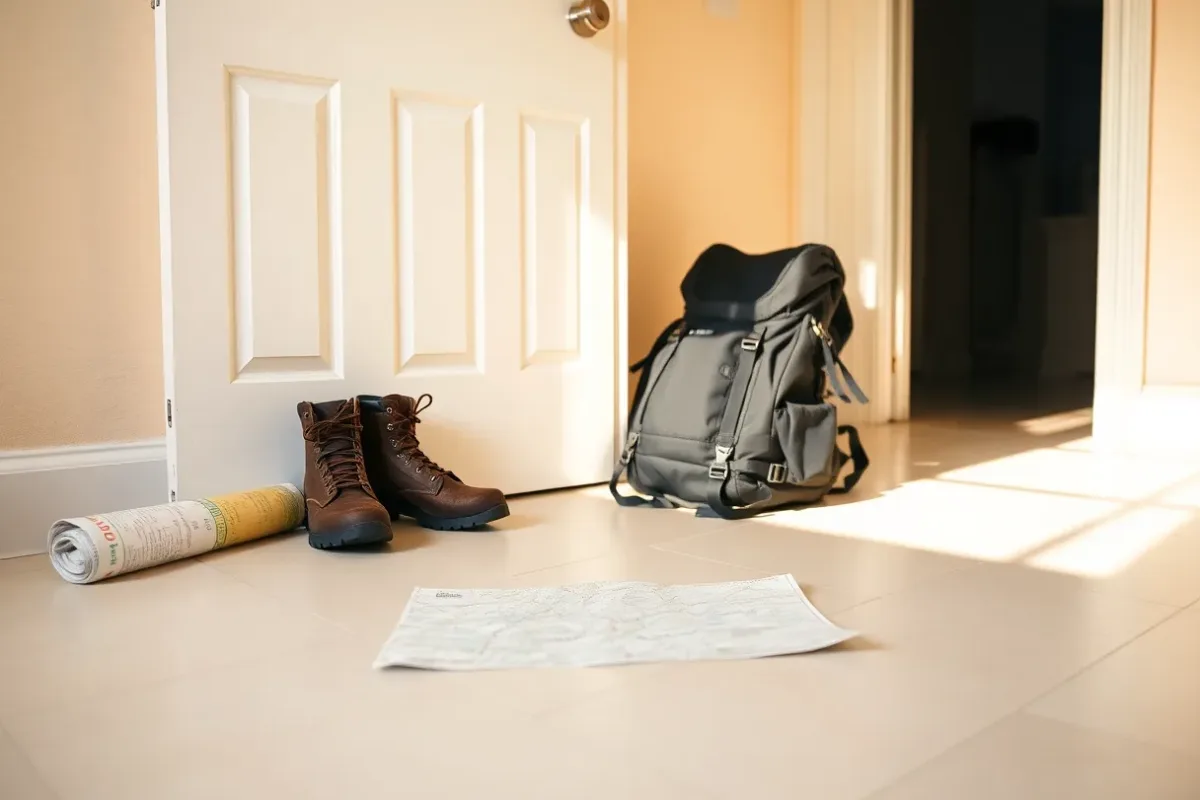
When no date can be found
Some couples stay engaged for a year without fixing a date even though nothing stands in the way. The reason is nearly always the same: a date makes everything after it binding, and while none exists, nothing has to be decided.
Shrinking the task helps. Not which date shall we marry, but which quarters can we rule out. Two possibilities usually survive that, and choosing between two is a different kind of job from choosing between all of them.
If it becomes clear the delay is not about the calendar, that is worth a conversation and is not a bad sign in itself. An engagement is not a deadline. It is a state you are allowed to extend, provided you know why.
The reverse case is commoner than people think and deserves a mention. Some couples marry faster than they intended because a date came free or because a relative cannot wait much longer. That is a good reason, and it is still worth saying aloud. A wedding in four months is a different undertaking from one in fourteen: quicker decisions, fewer comparisons, and a willingness to take the second-best option. Knowing that in advance stops it feeling later like something was given up.
Twelve to eighteen months if you want a particular date; less if you are flexible; more only for a reason that knows how to end. A good next step is unexpectedly small: rule out together the quarters that clearly will not work.
All things wedding
Plan your wedding
Bring your tasks, costs and guests together for the day.
Invitations and wording
Find the right words for your wedding invitation.
As a wedding guest
Write a personal message and choose a thoughtful gift.
Wedding anniversaries
Explore anniversary names, traditions and celebration ideas.
Planning your dream wedding?
Create your own wedding website in minutes – with RSVP function, photo gallery, and more.