A photo booth earns its place if you want the pictures your photographer will never take: six guests crammed onto one bench, plus a print somebody pockets before midnight. As decoration it is money wasted. Budget roughly $500 to $900 in the US for an evening, a footprint of about six feet square and a spot beside the bar.
The booth is one of the few things you buy for the evening that still exists the next morning, in an envelope, in somebody's jacket pocket. That is why so many couples book one. It is also why the disappointment is so sharp when the thing stands untouched in a side room for three hours.
A booth produces nothing on its own. It produces when three conditions line up: a position on a route guests already walk, an interface a tired guest can operate at one in the morning, and a visible result within seconds. So the real question is not whether to have a booth. It is which pictures you want that nobody else in the room is going to take.
1. What a booth actually gives you
Three things, none of which you get elsewhere. First, group shots in combinations no photographer would ever assemble: your gran with the ushers, four cousins who last met eight years ago, the entire work table at midnight. Second, an object the guest takes home. Paper in a hand behaves differently from a file in a shared folder nobody opens. Third, coverage of the second half of the night. Photographers are often contracted to finish after the cake cutting, which typically happens between 20:30 and 22:00, so everything after that is either photographed by the booth or by nobody.
What a booth does not do is equally clear. It does not replace a photographer chosen for the way they see a day: no reportage, no portraits, no one lighting your faces properly. It does not produce a group photo of everybody, because six people fit in front of a backdrop, not eighty. It is not self-starting either. Thirty guests who stay seated all evening will leave most of the prints in the box.
As a rough threshold, a booth carries its cost from about fifty guests upwards. Below that an instant camera and three spare film packs usually do the same job. Above it, the queue becomes a planning question of its own.
A photo booth is not furniture. It is an unannounced part of the programme, and it only works where guests are already standing.
2. Prints or digital only
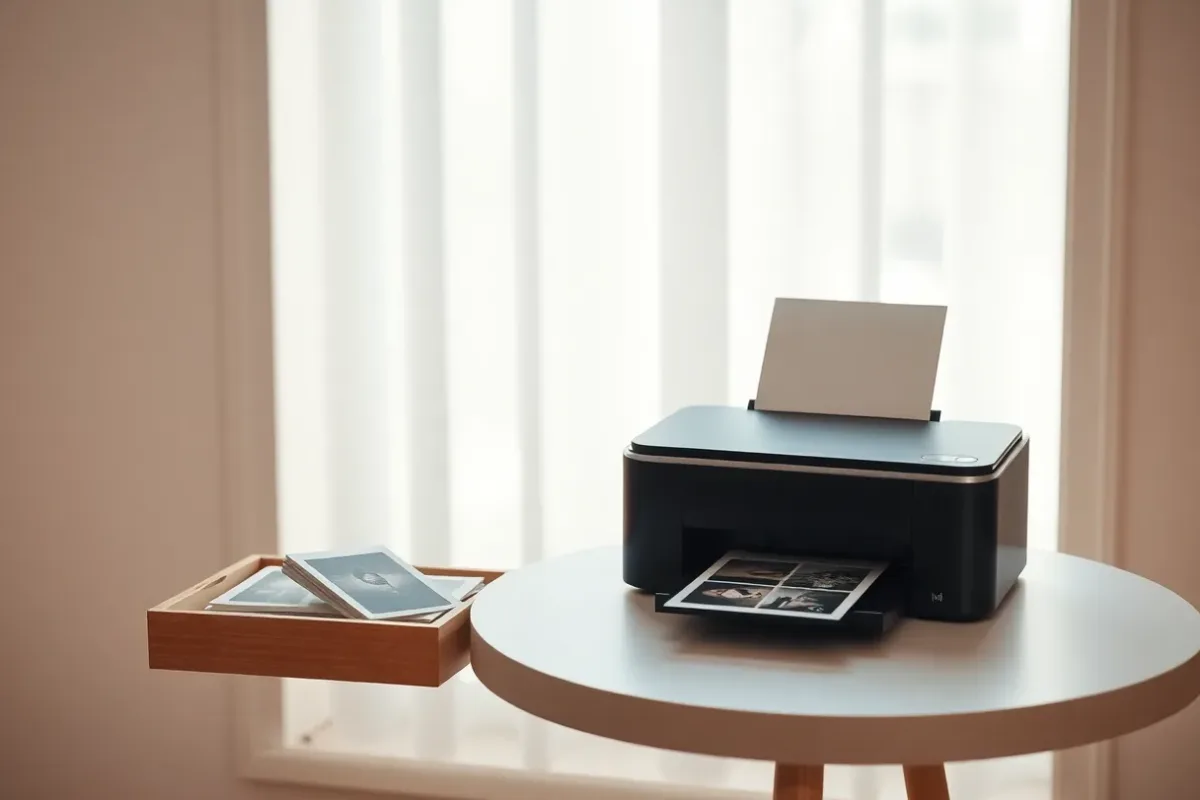
The printer is the most expensive single component of a rental package, and it is the whole difference between a photo booth and a camera on a tripod. A dye sublimation printer takes 8 to 20 seconds for a 4 by 6 inch print. Media arrives in packs of roughly 400 prints and costs somewhere between 25 and 40 cents a sheet. Most suppliers charge a flat fee, but ask anyway whether prints are unlimited or capped at a number you will pass by half past ten.
Digital-only setups are the cheaper tier on every price list, because the printer and its media are the expensive part, and they save most of the waiting. They also remove the exact effect people book a booth for: the immediate result. A gallery link that lands two days later gets opened by a fraction of your guests, and never by the ones who are not on their phones.
If you do print, print every frame twice. One copy goes in a pocket, the other into an album sitting beside the booth with a glue stick and a fine pen next to it. That gives you the simplest possible keepsake without asking anyone to compose a paragraph. If the budget tightens, cut the prop box before you cut the printer.
3. The numbers to check before you book
Almost every disappointing booth fails on one of five measurements, and all five can be checked before you sign anything. Walk the room with a tape measure at your venue visit: the wall beside the bar is usually the right one. Note where the nearest socket sits, how far the speakers are, and whether the queue would stand in a service route. Ceiling height matters too: anything under about 2.3 metres and the taller half of the group loses its head to the crop.
| Item | Figure | Note |
|---|---|---|
| Booth footprint | 2.0 by 2.0 m (about 6.5 ft square) | plus 1.5 m of space for the line |
| Backdrop width for six people | 2.5 m (about 8 ft) | beyond six, somebody gets cropped |
| Power draw with printer | under 1 kW | a standard 15 A outlet supplies roughly 1.8 kW |
| Print time per photo | 8 to 20 seconds | this sets the queue, not the camera |
| Set-up on site | 45 to 60 minutes | finished before guests arrive |
| Standard rental period | 3 to 4 hours | extra hours charged separately |
| Prints for 100 guests | 150 to 250 | keep one spare media pack on site |
Power is rarely the constraint. Camera, screen, lighting and printer together stay under a kilowatt, which any ordinary socket handles. Position and space for the line are the constraints, every time.
Related articles
4. Rent, build your own, or neither
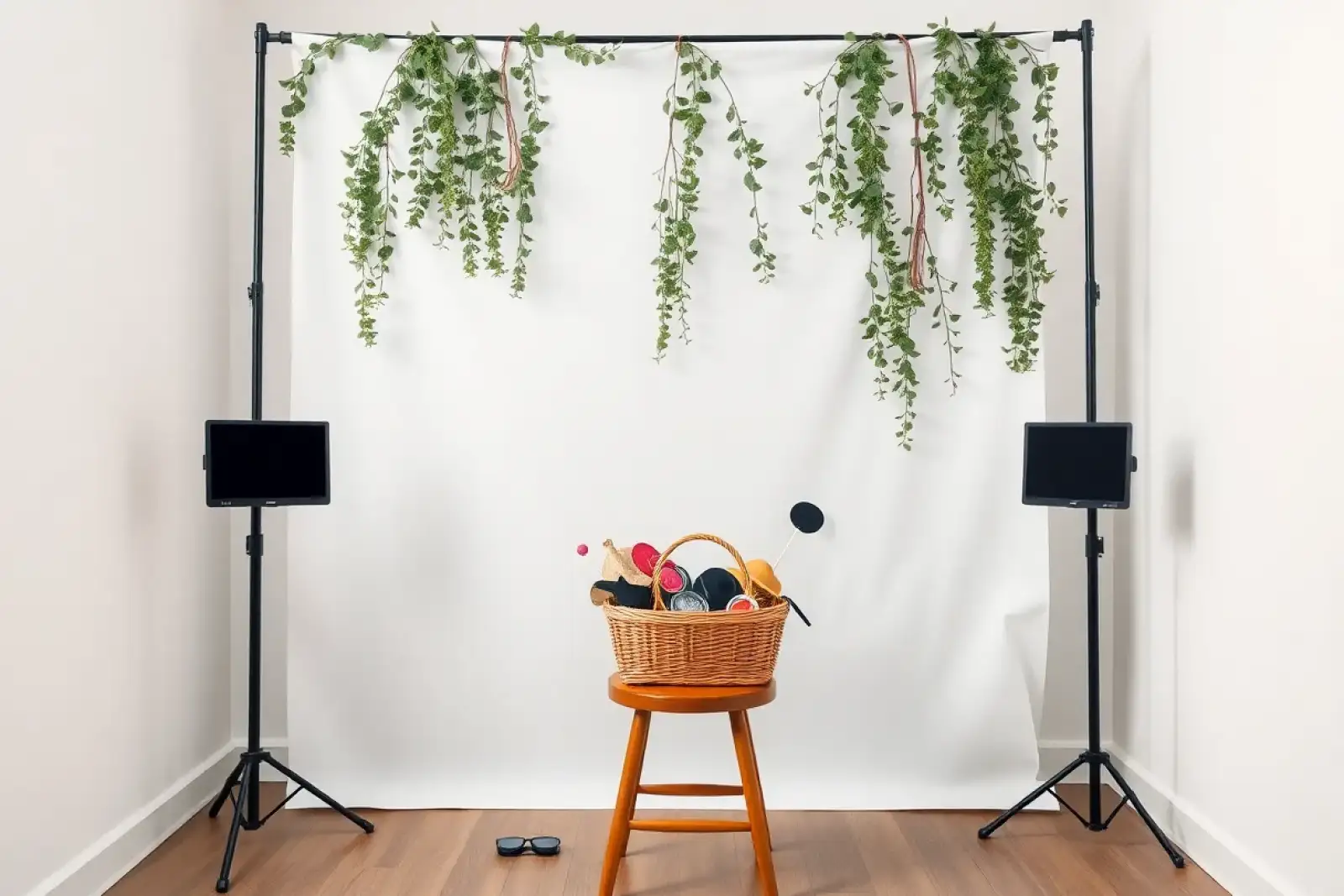
A rental package normally covers the booth or mirror, camera and flash, a touchscreen, a printer, a box of props, delivery within roughly 30 miles, set-up, and the take-down at the end of the night. That lands at about $500 to $900 for an evening, with additional hours around $100 to $150. An attendant, a mirror rather than an enclosure, and custom print layouts all push the figure upward. Check whether delivery and take-down are inside the quoted price or sitting underneath it as a separate line, and whether travel beyond the included radius is billed per mile.
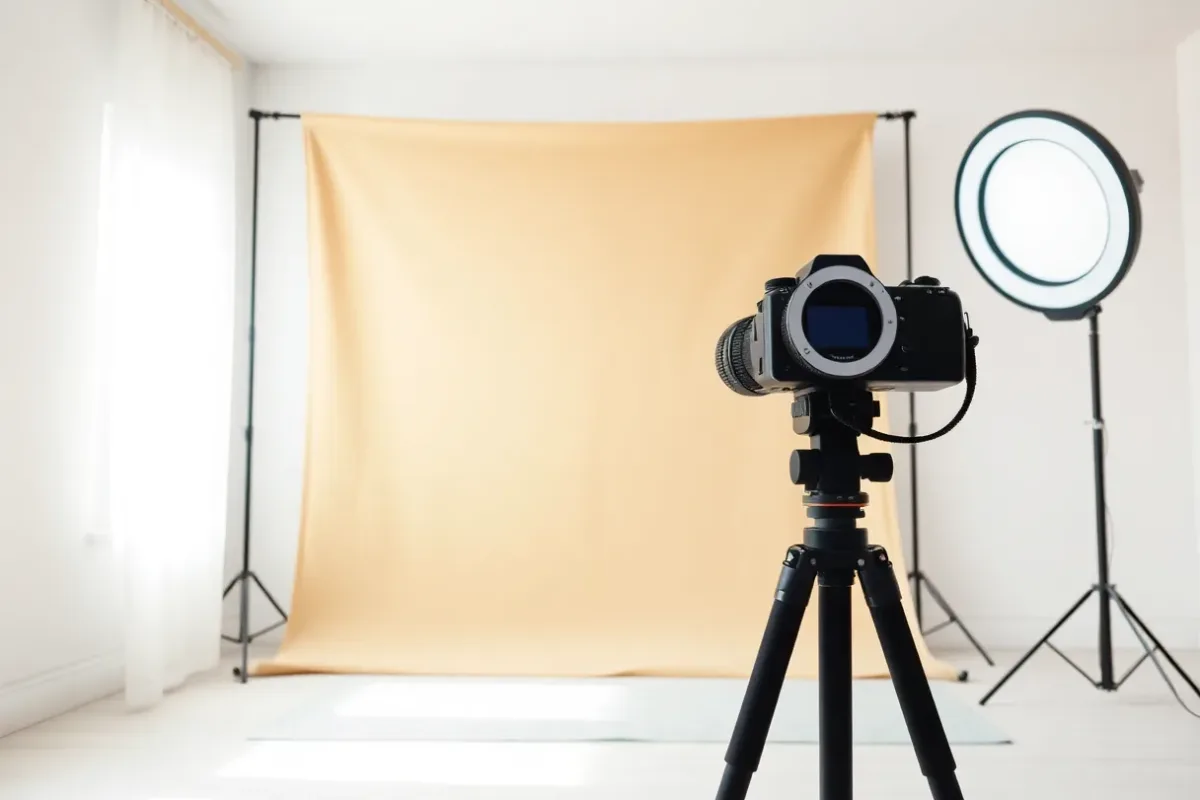
Building your own is cheaper without being free. A tripod, a ring light, a second-hand tablet running a shutter app, and a fabric backdrop with a stand come to roughly $150 to $300 if you own none of it. The printer is what you cannot improvise: a dye sublimation unit runs from a few hundred dollars for a compact model up to about a thousand for the event-grade machines rental companies use, plus media. What is missing most, though, is ownership of the problem. Somebody has to reload paper, unlock the tablet and pack it all away at two in the morning, and that somebody should not be a guest who came to celebrate.
An attendant is the other lever. With one person working the booth, far more pictures happen, because somebody walks over to a table and asks. Without one, name a friend who will check on it twice during the evening.
5. Consent, copyright and where the files end up
Settle three things before you sign. Do you receive every file at full resolution, without watermarks or a later invoice? How long does the supplier keep the images, and are they deleted afterwards? Four to eight weeks is a common retention period. May the supplier use your guests' pictures in their own advertising? That clause appears in contracts more often than couples expect, and it can almost always be struck out if you ask before booking rather than afterwards.
Your guests deserve the same clarity. A small sign at the booth does it: pictures taken here are printed and kept in the couple's gallery. Parents decide for children. Resist posting the pictures publicly without asking, because not everyone wants their two-in-the-morning self on a public timeline. A quick message the next day settles it in a minute and saves a much longer conversation later.
Afterwards the files need a home. A group chat overflows within a week and an open cloud folder is unfindable by the following spring. Somewhere calmer works better, for instance a wedding website where the evening's pictures sit behind a link only your guests have, which also keeps the images away from anyone who was never in the room.
A booth is justified by its position far more than by its price. Put it between the bar and the dance floor and it is busy for half the night; put it in a side room and the rental fee was a donation. The figures worth writing down are a 2 by 2 metre footprint plus 1.5 metres of queue, under 1 kW of power, 45 to 60 minutes of set-up, and 150 to 250 prints for 100 guests. At your next venue visit, measure the wall beside the bar and find the nearest socket before you request a single quote.
All things wedding
Plan your wedding
Bring your tasks, costs and guests together for the day.
Invitations and wording
Find the right words for your wedding invitation.
As a wedding guest
Write a personal message and choose a thoughtful gift.
Wedding anniversaries
Explore anniversary names, traditions and celebration ideas.
Planning your dream wedding?
Create your own wedding website in minutes – with RSVP function, photo gallery, and more.