Build the morning backwards from the time you leave. Hair takes 60 to 90 minutes, makeup 45 to 75, and every extra person adds 30 to 45. Add getting dressed, detail photos and a 30-minute cushion. The order rarely changes: hair, makeup, details, dress. Leaving at 11 means starting around 7.
The morning is the one stretch of the day you control almost completely, and it is also the stretch that slips most often. That is not down to the people in the room. It is down to arithmetic: nearly everyone plans forwards from the alarm and hopes to land on time, instead of planning backwards from the door and arriving early.
The second problem is estimation. A wedding updo is nothing like a blow-dry, and detail photos are a scheduled item rather than something that happens in the background. Fix those two things and you get a morning with room for breakfast in it. This is about the hours between waking up and leaving, not the rest of the day.
1. Count backwards from the door
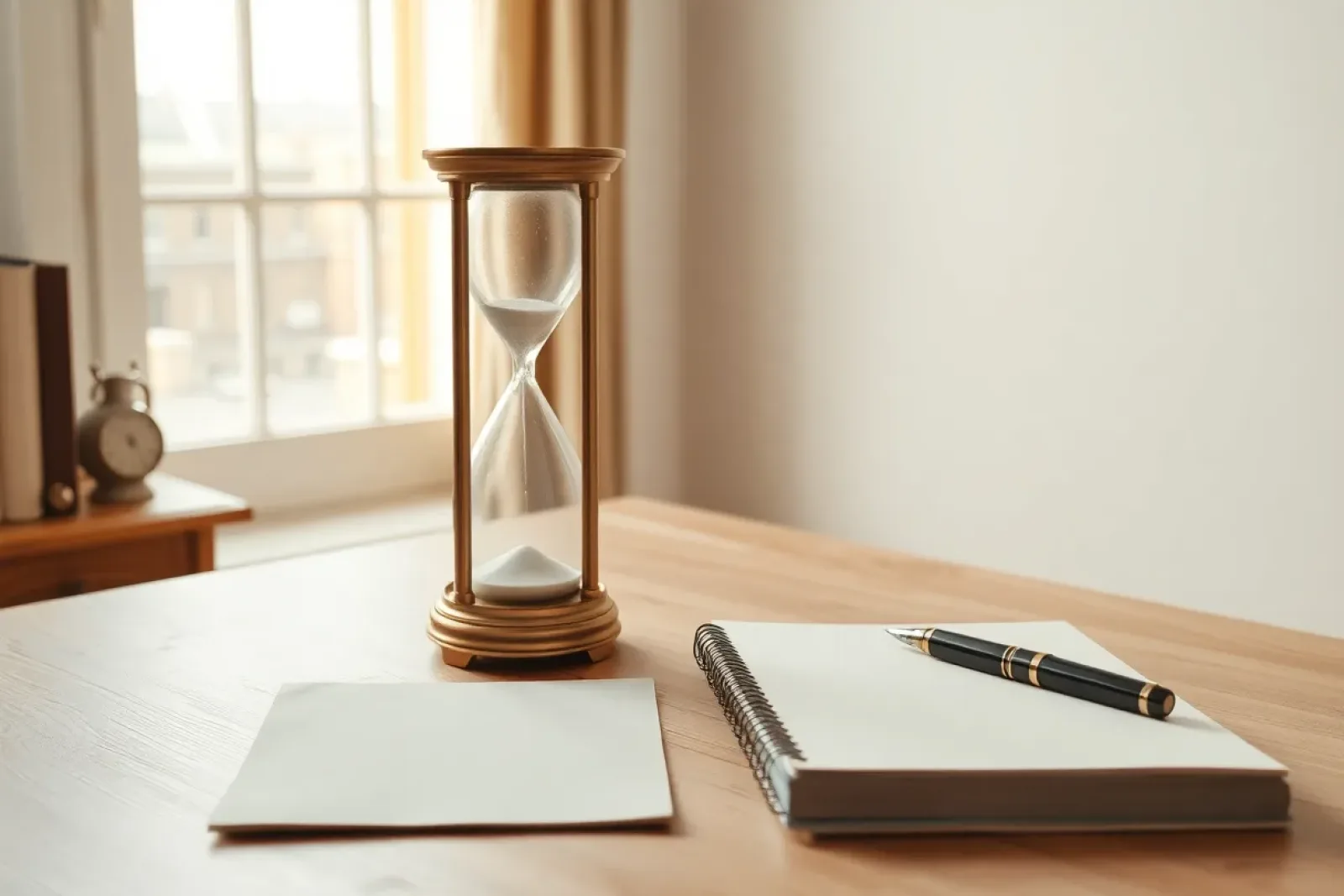
There is exactly one fixed point in the morning, and it is not when you wake up. It is the moment the car pulls away. Start there. Subtract the drive, then add fifteen minutes to it, because nobody drives calmly on a wedding morning and traffic is never as predicted. Then subtract a thirty-minute cushion with nothing planned in it. That cushion is not indulgence; it is the reason you arrive composed rather than breathless.
Only then do you fill in the items, still working backwards: dressing, detail photos, makeup, hair. If the number you land on alarms you, you have two honest options — get up earlier or cut something. What never works is shaving the estimates. A face that takes seventy-five minutes does not take fifty because the schedule says fifty.
Keep arrival time and start time separate. If you are marrying in a church or a licensed venue, you usually want to be on site well before guests are seated, while a bride arriving deliberately last needs a different number entirely. Write down both: the time you want to be at the venue, and the time the ceremony begins. Collapsing the two is how couples accidentally spend the same cushion twice.
A wedding morning does not have a start time you choose. It has an end time you count back from.
2. How long each step really takes
These are working estimates from the trade rather than measurements. They describe a straightforward bridal preparation with no extras — the version that follows from the four decisions behind hair and make-up. A trial, very long hair, extensions or an elaborate veil push them up, never down.
| Step | Typical duration | What drives it |
|---|---|---|
| Bride's hair | 60–90 minutes | Updos and veil placement sit at the top of the range; hair worn down is quicker |
| Bride's makeup | 45–75 minutes | Schedule it last so nothing is pulled over a finished face |
| Each additional person | 30–45 minutes | Bridesmaids and mothers cost real time; a second stylist helps but does not halve it |
| Detail photos | 30–45 minutes | Rings, shoes, dress, perfume, stationery, jewellery — gather them in one box the night before |
| Getting into the dress | 20–30 minutes | Corset backs and long button plackets need a second pair of hands and patience |
| First portraits in the room | 15–30 minutes | Only if the light and the space allow; otherwise move them to the venue |
| Cushion before leaving | 30 minutes | Leave it empty. Touch-ups, a missing earring and one last phone call live here |
| Travel to the ceremony | Drive time plus 15 minutes | Parking, a dress in a car, and a second vehicle trying to follow the first |
Do not simply add the rows together. Much of this runs in parallel: the photographer can shoot details while the bride is in the makeup chair, and the bridesmaids can be finished long before. Those overlaps are where you win back an hour — but only if you write them into the plan rather than hoping for them on the day.
3. Who is actually in the room
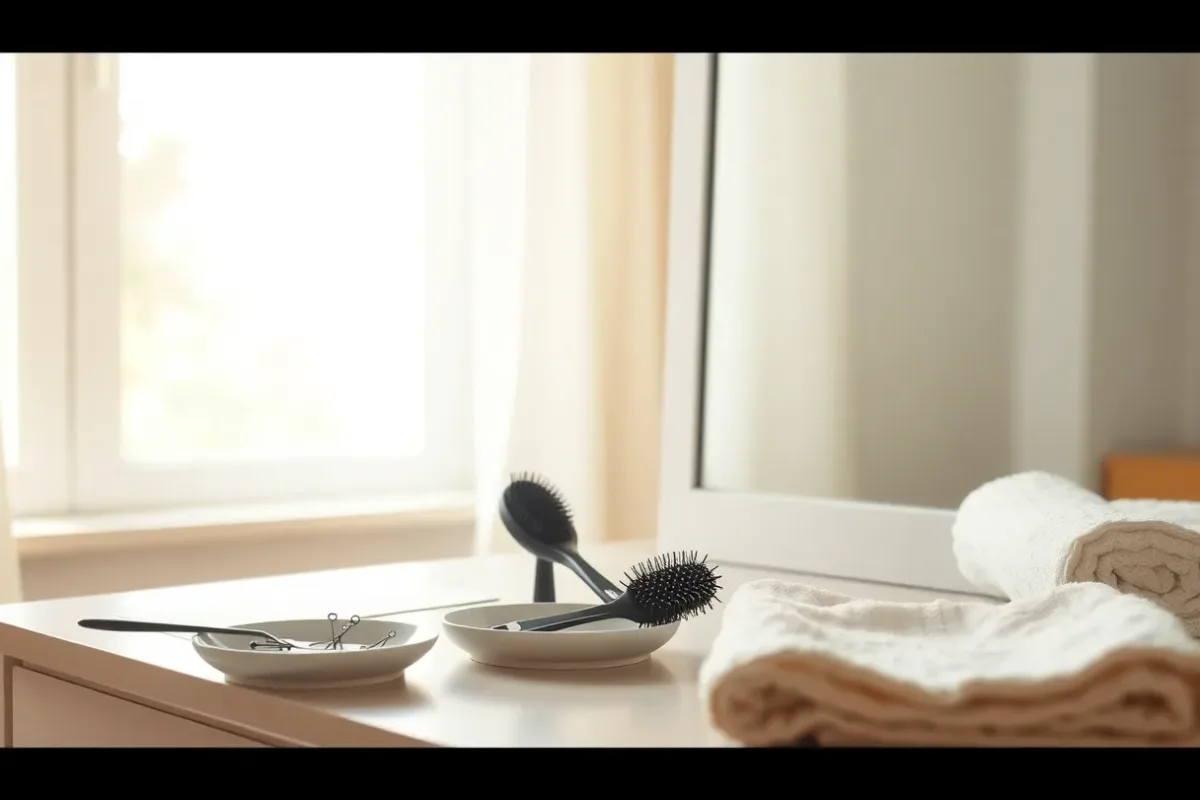
The other reliable cause of a slipping morning is people in the wrong place. A suite holding eight people, six of whom are watching, costs concentration, floor space and time. Decide in advance who is genuinely part of the morning and who joins later.
- Together or apart: if you do not want to see each other beforehand, you need two rooms, two schedules, and a slot for the photographer to travel between them.
- One point of contact: one person holds the phone and answers guest questions. Not either of you.
- Children: they do best arriving already dressed, shortly before you leave, rather than three hours early.
- Flowers: confirm whether bouquets are delivered to the getting-ready room or straight to the venue. This is one of the most commonly muddled handovers of the day.
- Bags and keys: agree who locks up and who takes the luggage onward. Otherwise the question surfaces in the exact minute you meant to leave.
If you are preparing at two addresses, build the photographer's travel time in deliberately. Twenty minutes between locations is normal, and during those twenty minutes one side of the wedding is simply not being documented. A second shooter solves that; a tighter schedule does not.
Related articles
4. Details and the dress: the part everyone underestimates
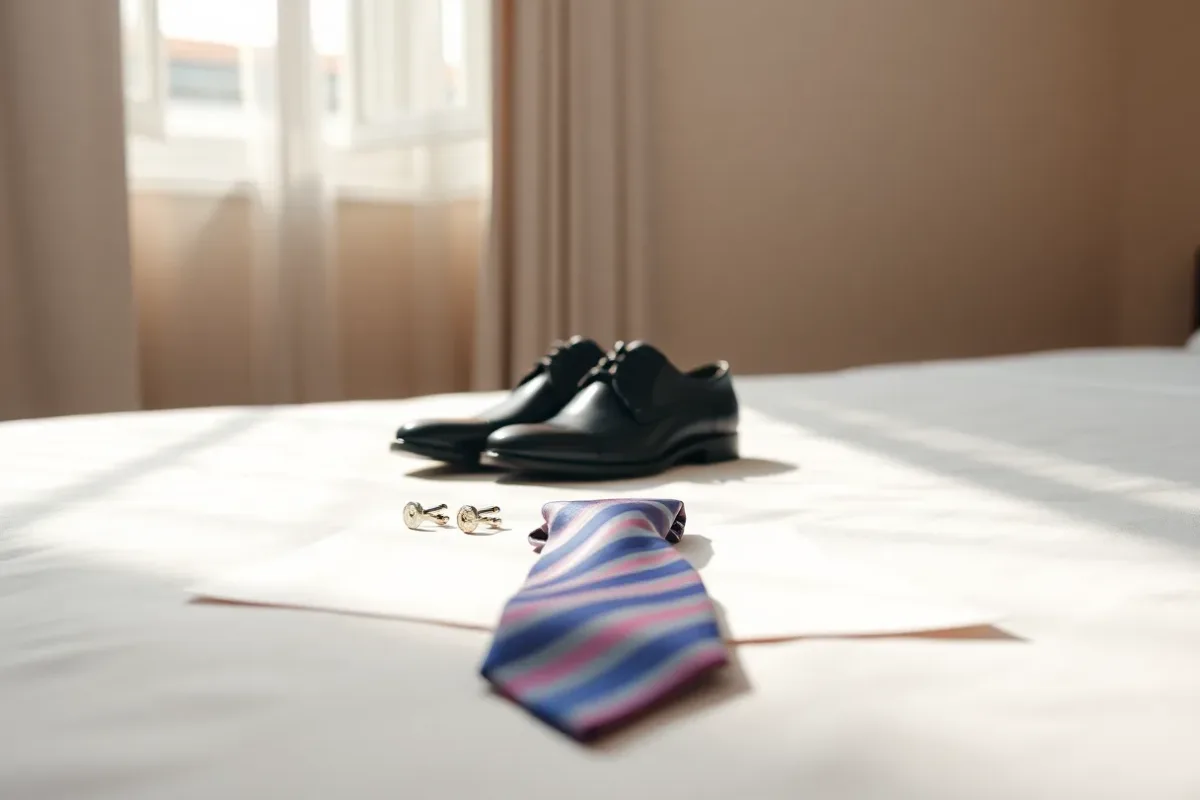
Detail photos eat time not because the shooting is slow but because the gathering is. Rings are in three different bags, the invitation is at home, the perfume is still packed. Put everything in one box the night before: both rings, shoes, jewellery, perfume, an invitation suite, cufflinks, a watch, boutonnieres, and the vow books if you have written your own. That single step turns forty-five minutes into twenty-five.
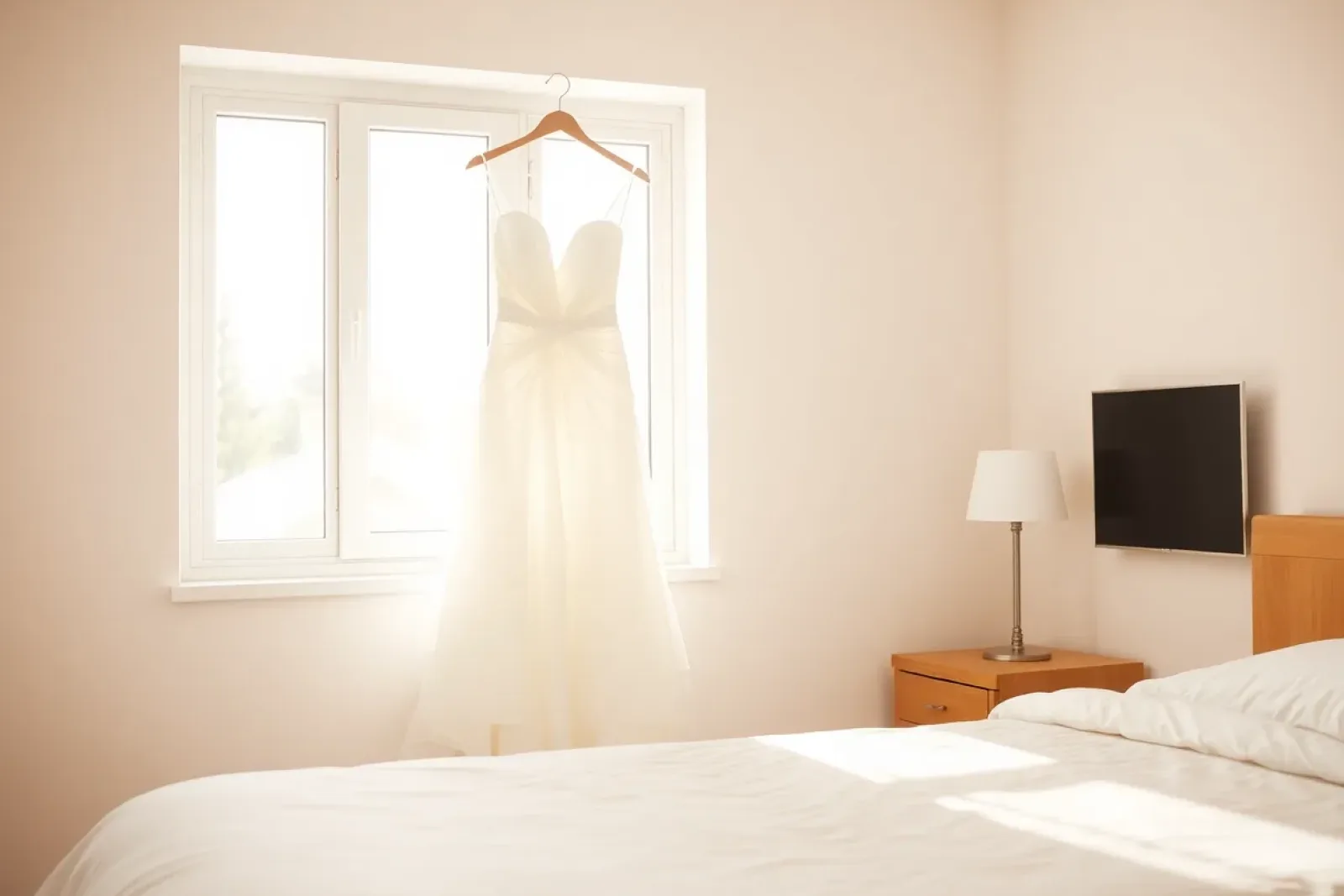
With the dress, the fastening decides the duration. A zip closes in ten minutes; a laced corset needs a calm twenty and someone who knows how tight is tight enough. Agree in advance who does it, and make sure that person is not simultaneously the one who still needs photographing. Suits are faster, though a bow tie is not — nobody should be learning that knot on the morning itself.
Confirm when your photographer actually starts, too. Some packages begin with preparations, others only at the ceremony, and that is a question for four weeks out rather than the day itself. Keeping arrival times and addresses in one place everyone can see, such as your wedding website, saves a dozen messages before nine in the morning. Tell them, too, which shots genuinely matter to you. Two sentences there save the photographer twenty questions and spare you the feeling of being needed every five minutes.
5. Food, water and the half hour worth protecting
Very little gets eaten on a wedding morning and even less gets drunk, and both catch up with you by mid-afternoon. On a typical wedding day, eight to ten hours pass between breakfast and dinner, with only canapes in between. Plan a real breakfast rather than coffee alone, and put out water that someone is responsible for refilling. Something savoury and already cut works better than a cake nobody wants to be the first to slice.
Then there is the half hour marked as cushion. If the morning runs to plan and you do not need it, it is not wasted space — it is the only stretch of the day when you are alone, or alone together, before a hundred people want something from you. Couples routinely say afterwards that those minutes stayed with them, and that they very nearly scheduled them away.
Finally, put music on. A room where three people stare at the clock in silence manufactures nerves that nobody needs. The morning should feel like the beginning of a celebration rather than the countdown to an appointment.
Take a sheet of paper, write down the time you leave, and build everything above it. Then send the draft to your stylist and your photographer and ask whether the durations are realistic — they know their own pace better than any list does. Get the morning right and the rest of the day tends to follow, because you start on time instead of spending the afternoon catching up.
All things wedding
Plan your wedding
Bring your tasks, costs and guests together for the day.
Invitations and wording
Find the right words for your wedding invitation.
As a wedding guest
Write a personal message and choose a thoughtful gift.
Wedding anniversaries
Explore anniversary names, traditions and celebration ideas.
Planning your dream wedding?
Create your own wedding website in minutes – with RSVP function, photo gallery, and more.