The classic British charms are a silver horseshoe carried by the bride, a silver sixpence in her shoe, a lucky black cat and, at the church door, a chimney sweep. Each is a small keepsake rather than a real gift, usually given by a close friend or relative on the morning of the wedding.
Good luck charms sit oddly in a modern wedding. Almost nobody believes in them, and almost everybody still likes receiving one, which is a good description of how folklore survives.
This article sets out the main charms used at English, Scottish, Welsh and Irish weddings, what each is supposed to mean, who traditionally gives it, and what they cost. It also covers the ones with an unpleasant history, and what to do if you would rather give something with a meaning you chose yourself.
1. The main charms
Five objects account for almost all wedding charms in Britain and Ireland, and each has a settled meaning even where the origin is murky.
| Charm | Traditional meaning | Typical cost in Britain |
|---|---|---|
| Silver horseshoe | Luck, held points upwards so it does not run out | 8 to 25 pounds |
| Silver sixpence | Prosperity, worn in the left shoe | 5 to 20 pounds |
| Lucky black cat | Good fortune, in British usage specifically | 5 to 15 pounds |
| Chimney sweep | Luck, from a story about a sweep and a king | Rented, 150 to 350 pounds |
| Wooden spoon or lovespoon | Welsh, a token of care and provision | 15 to 60 pounds |
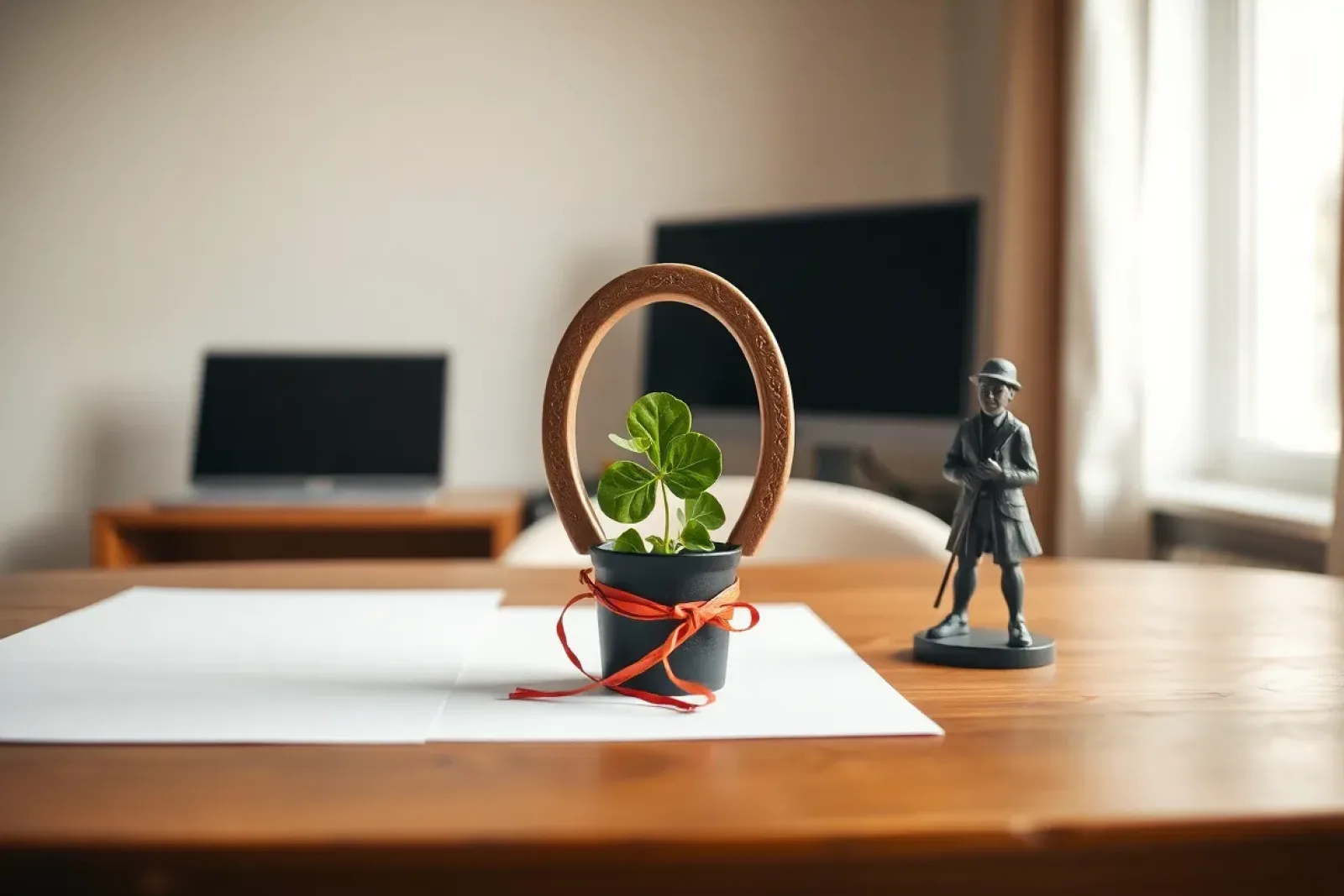
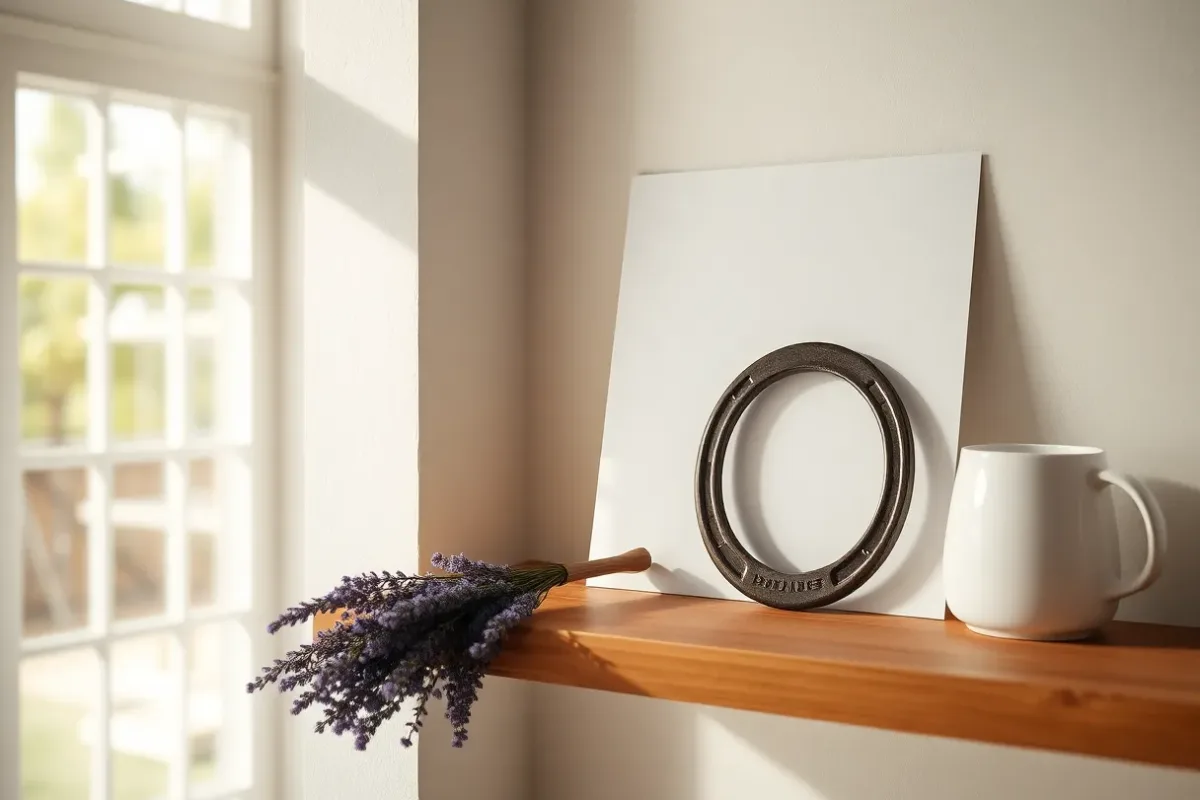
The horseshoe is the most common and the most misunderstood. Real horseshoes are heavy and are not carried; what brides carry is a small silver or fabric one on a ribbon, hung from the wrist or tucked into the bouquet. The convention that it must point upwards, so the luck does not pour out, is well established in British folklore, though the reasoning is decorative rather than ancient.
The sixpence belongs to the same rhyme as something old and something new. Since the coin left circulation in 1980 it has been sold specifically as a wedding keepsake, often mounted or boxed.
American couples meet these objects as imported keepsakes rather than as living custom, so the prices above are the British ones. A silver horseshoe or a boxed sixpence sells through US bridal retailers for roughly 12 to 35 dollars, a carved lovespoon for appreciably more once shipping is counted, and the lucky black cat is not an American superstition at all — in much of the US a black cat crossing your path reads as the opposite. The hired chimney sweep has no US equivalent to price: where one appears at an American wedding it is a novelty booking arranged privately, not a trade with a wedding rate.
Nobody gives a horseshoe because they expect it to work. They give it because somebody gave one to them.
2. Where the charms come from
The origins are less solid than the objects, and it is worth being honest about which is which.
The horseshoe. Iron and horseshoes appear as protective objects across European folklore, often connected to a legend about a saint and the devil. The version told at weddings is a simplification of something genuinely old, so it can safely be described as a long-standing folk belief without claiming a precise origin.
The chimney sweep. The usual story is that a sweep saved a British king from a runaway carriage, and that sweeps have been considered lucky ever since. It is often said to be George III. The story is told everywhere and documented nowhere, which is a fair description of most wedding folklore. Sweeps in full costume are still hired to appear at the church door, shake hands and kiss the bride.
The black cat. Distinctively British. In much of continental Europe and North America a black cat is unlucky; in Britain and Ireland it is the opposite. This is a good example of a charm being local rather than universal, and it is worth knowing if you are marrying into another culture.
The lovespoon. Welsh, and better documented than most. Carved wooden spoons were given as courtship tokens from at least the seventeenth century, with symbols carved into the handle carrying specific meanings.
3. Who gives them and when
Charms are not wedding presents. They are small, they are given in person, and they belong to the morning rather than to the gift table.
- From a mother or grandmother: usually the sixpence or an heirloom horseshoe, handed over while the bride is dressing.
- From bridesmaids or close friends: a horseshoe, a charm for the bouquet, or something with a private joke attached.
- From guests at the door: in some parts of Britain and Ireland, small charms are pressed on the couple as they leave the church.
- From the couple to each other: increasingly common, and it is where the more personal versions appear.
- Rented for the day: the chimney sweep, booked weeks in advance and usually appearing for twenty minutes at the ceremony exit.
Two practical notes. A horseshoe on a ribbon has to be carried, which means one hand is occupied for the whole ceremony; most brides hang it on the bouquet instead. And a sixpence in a shoe is genuinely uncomfortable for a twelve-hour day, so the usual solution is to tape it inside the arch of the shoe or to keep it in a bag.
If you are giving a charm, give it in a small box with a note explaining what it is. Half the recipients will not know, and the note is the part that gets kept.
Related articles
4. The ones with a history worth knowing
A few traditional charms carry meanings that a modern couple may not want attached to their marriage. None of them is a scandal, but it is better to know than to find out afterwards.
- Fertility symbols. Grain, rice, nuts and certain flowers are all wishes for children. That is a warm thought for many couples and an unwelcome one for others, particularly anyone who has been asked about it repeatedly.
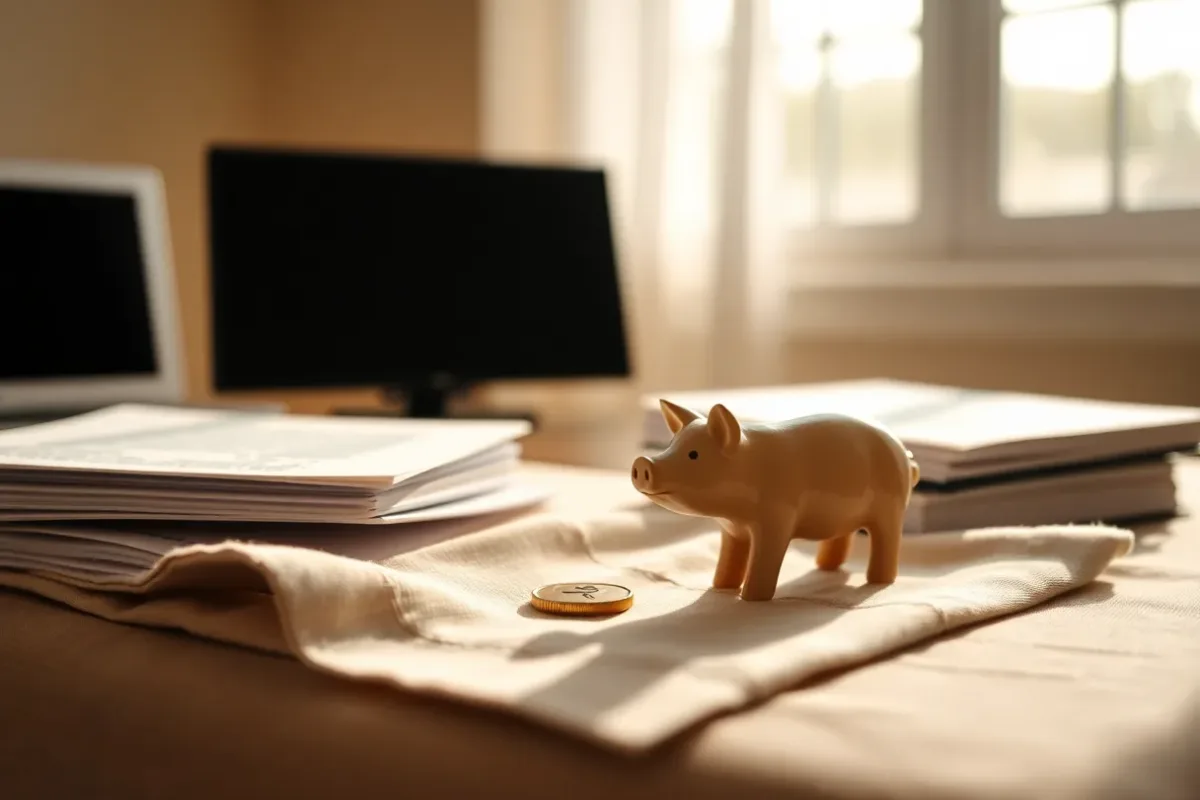
- The pig. A luck symbol in German and Austrian tradition rather than a British one, and it does not read the same way in English.
- Charms about a wifes duties. Some older tokens, including certain spoon and key symbols, carried meanings about the household that sit awkwardly now. If a family piece comes with an explanation, it is fine to keep the object and quietly retire the explanation.
- Anything involving throwing hard objects. Coins thrown at a couple leaving a church is a real custom in parts of Scotland and northern England, and it is a genuine hazard at close range.
The general principle is that you can accept a charm graciously without adopting its meaning. Nobody hands over a horseshoe expecting a theological discussion, and a thank you is a complete response.
5. Charms that mean something to you
The traditional objects are inherited rather than chosen, which is exactly why couples increasingly make their own. A charm works if it is small, portable and attached to a story.
- A coin from the year you met, drilled and hung from the bouquet.
- A charm from a place that matters to both of you, bought on the trip rather than online.
- Something belonging to a grandparent, carried rather than worn.
- A tiny photograph in a locket pinned inside a jacket or a dress.
- A pressed flower from a first bouquet or a garden.
Two of these tend to outlast the traditional ones, because they carry a specific memory rather than a general wish. That is worth saying to anyone who feels obliged to buy a plastic horseshoe from a wedding shop: the object matters less than whether it means anything.
Whatever you carry, decide where it goes afterwards. Charms accumulate on the morning of a wedding and are then found in a hotel drawer three days later, along with the cufflinks. One box, one named person, and a note of what came from whom, because the thank-you letters will need it.
If several people are bringing things, that is also the sort of detail worth capturing alongside the rest of the day's arrangements on your wedding website, where whoever is helping you can actually see it.
The horseshoe, the sixpence, the black cat and the sweep are the classic four, and all of them are folklore rather than fact. Give them in person with a note saying what they mean, and put anything you are given into one box on the day so it survives the week. A charm you chose yourself will usually be the one still in a drawer in thirty years.
All things wedding
Plan your wedding
Bring your tasks, costs and guests together for the day.
Invitations and wording
Find the right words for your wedding invitation.
As a wedding guest
Write a personal message and choose a thoughtful gift.
Wedding anniversaries
Explore anniversary names, traditions and celebration ideas.
Planning your dream wedding?
Create your own wedding website in minutes – with RSVP function, photo gallery, and more.