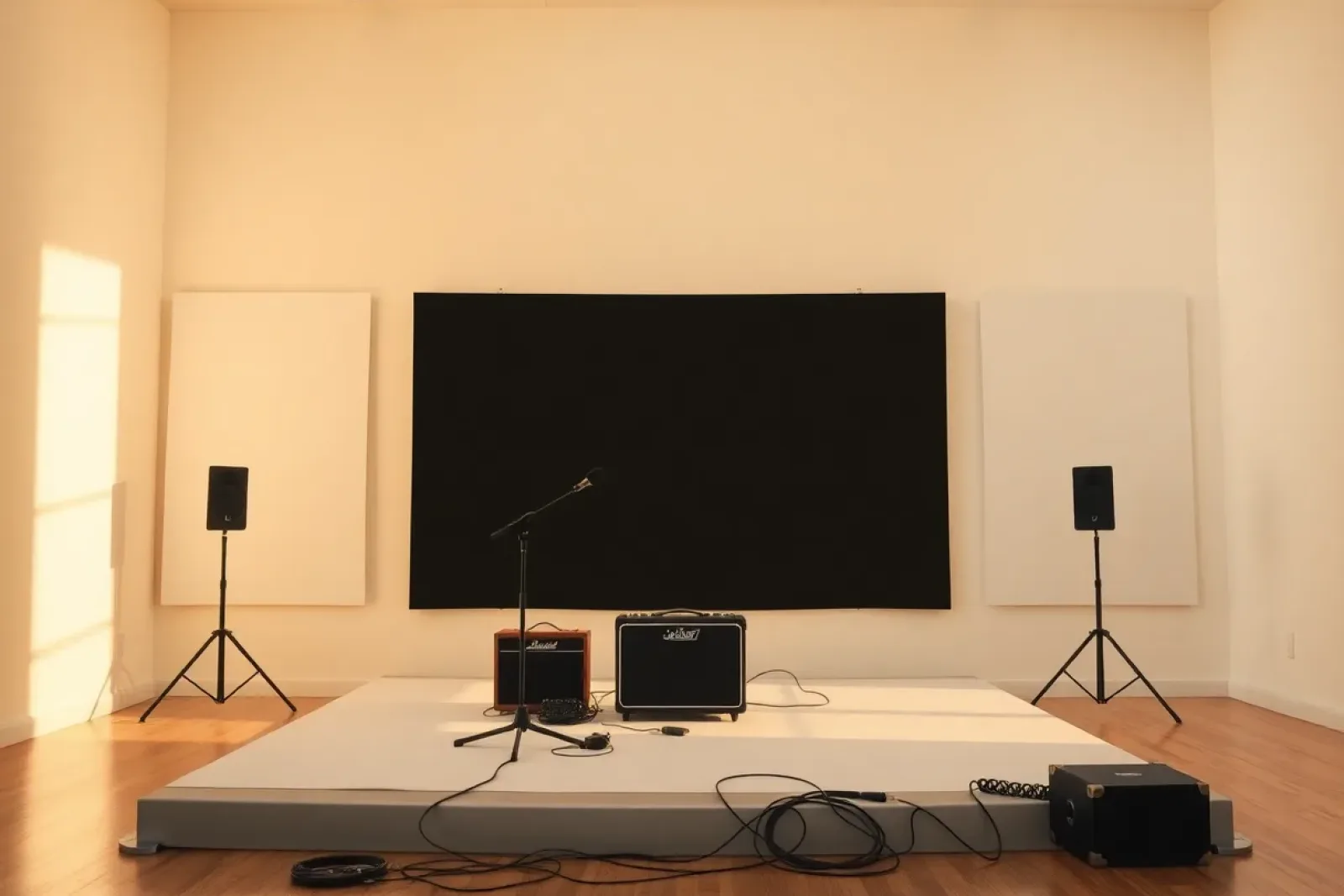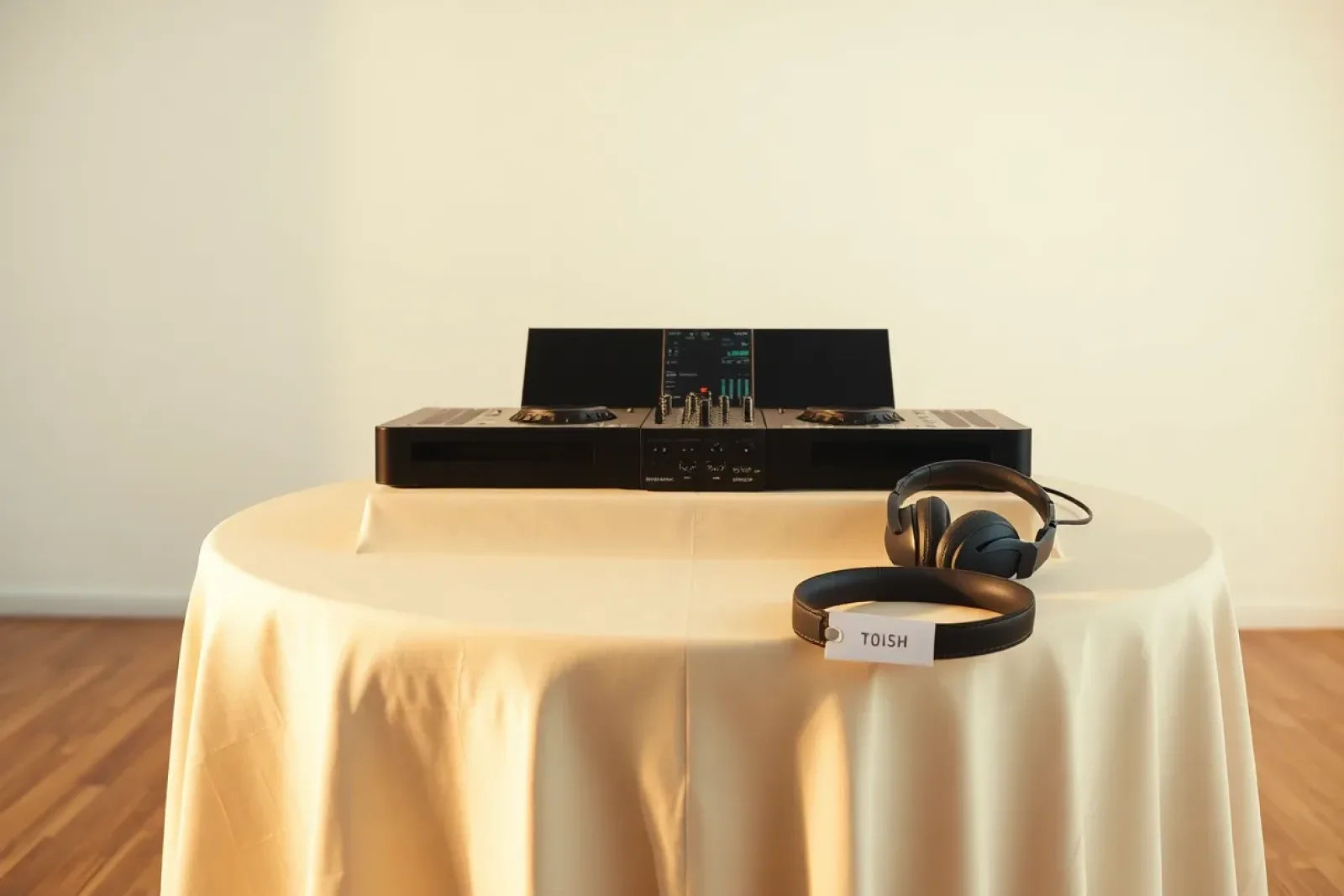
Settle five things before you commit: who supplies which equipment, how much power the room can give, how the request and do-not-play lists are handled, how much hosting you want, and what happens if the DJ cannot come. Everything else can be negotiated later; these five cannot.
A DJ quote is often one line and one number. That is convenient, but it hides the fact that the line can cover wildly different things — from two speakers on stands to a lit set-up with backup equipment and a planning call.
The questions below make the difference visible. They are ordered so that you can get through them on the phone in twenty minutes. If you have not yet decided whether you want a sound system at all rather than live music, settle that first under band or DJ.
1. Equipment and room: who supplies what
The commonest confusion is not about the music but about the gear. Some venues have a permanent system, some have an unusable one, some have none. Go through the list once with the DJ and once with the venue, and write the answers side by side.
| Item | Who supplies it? | What else to settle |
|---|---|---|
| Sound on the dance floor | DJ or venue | Is it enough for your room size and guest count? |
| Sound for the drinks reception or ceremony | Often not included | Second system needed? Different room, different building? |
| Microphone for speeches | Usually the DJ | How many, wireless, who passes it along? |
| Lighting on the dance floor | DJ, at extra cost | Is the rest of the room lit as well, or dark? |
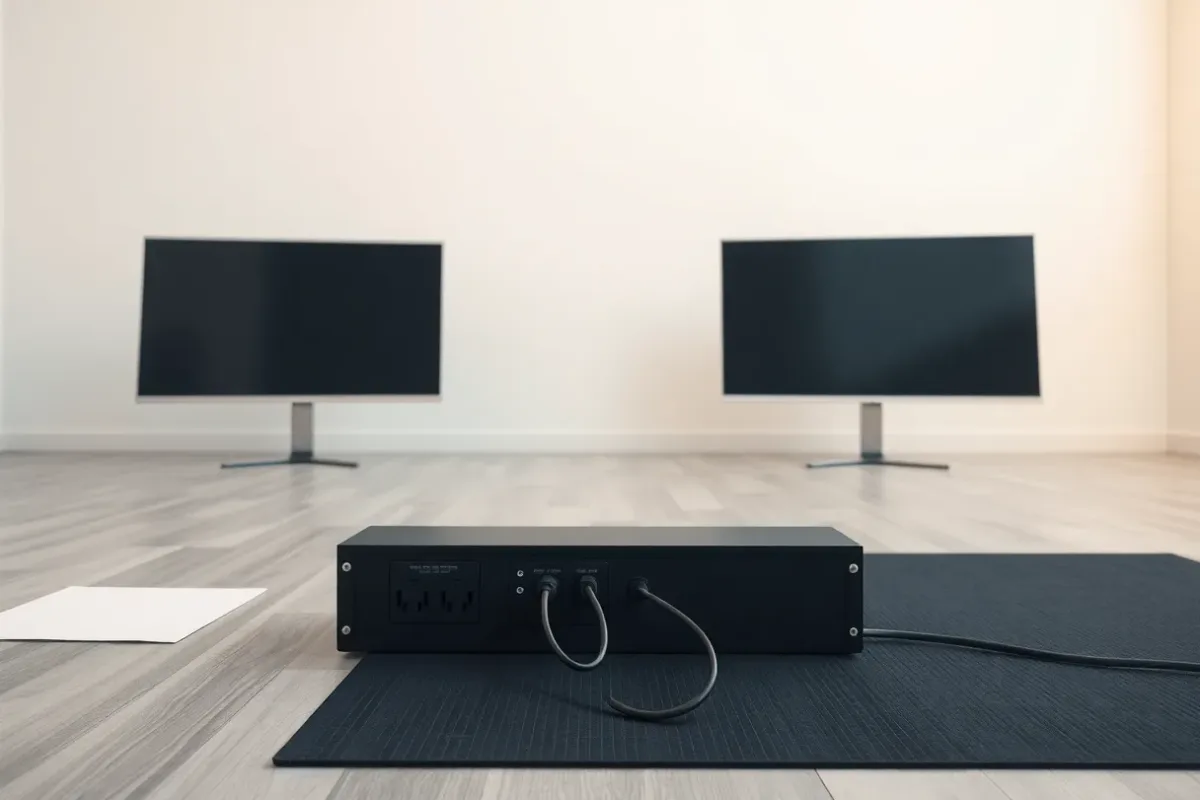
| Power | Venue | How many separate circuits, rated at what? |
| Backup equipment | A good DJ brings some | What happens if something fails mid-evening? |
The power row is the one that actually sinks parties. In function rooms it is a non-issue; in barns, marquees and gardens it is not. Ask the venue what the circuits are rated at and pass the number on rather than guessing it. If the kitchen, the lighting and the sound system share a circuit, everything goes out at once somewhere in the middle of the main course.
Ask as well whether the venue has a sound limiter installed. Limiters cut the power when the level is exceeded, and for a DJ with no warning that is a problem. Which limits and curfews apply at all is decided, depending on the country, by the local authority or the venue — get that answer from the venue, not from the supplier.
The most revealing question is not which tracks they play, but what they do when none of them works.
2. Music: request list, do-not-play list, who steers
The second block establishes who actually steers the evening. There is no right answer, but there is one that has to suit you.
- How many tracks may we specify, and how late can we do it?
- Will you take a do-not-play list, and will you hold to it even if a guest requests the track?
- May guests make requests during the evening — directly to you, through us, through a link?
- What do you do if a requested track empties the dance floor?
- How do you handle very different age groups — split by time of night, or mixed?
- Do you also play during the meal and the drinks reception, and what runs then?
- Will you play our first dance from the recording, and in which version — full length or shortened?
Question 2 is the most important and the one to listen to most carefully. The do-not-play list is the only part that genuinely has to be binding: nearly every family has a song that should not play for good reasons, and you do not want to explain those reasons on the night. The usable answer is: your do-not-play list outranks any guest request.
Question 4 separates routine from experience. Anyone who says it does not happen to them has either played few weddings or is glossing. Anyone who describes a concrete approach — a different tempo, a more familiar track, a short break instead of pushing on — has already rescued a lot of evenings.
And one request of yourselves: deliver the lists early and in a readable format. Thirty titles in a message the day before are unworkable for anybody. If you want to collect requests from guests, do it somewhere the guests already go — on a wedding website it fits beside the schedule and the directions, and you get one list instead of sixty separate messages.
3. Running order and hosting
At many weddings the DJ is the only person with a microphone and a view of the whole room. Whether they take that role on is something you agree, not something that happens by itself.
So settle who makes which announcement:
- Opening the buffet or starting the meal — often the DJ, sometimes the service staff.
- Introducing speeches — needs somebody who knows the order; what that order usually looks like is under the order of wedding speeches.
- The first dance — announcement, count-in, volume; this is where the moment either works or does not.
- Games and set pieces — who hosts, who runs the equipment, how long they may last.
- Cake, midnight food, the send-off — short announcements that get the room moving; the options for the ending are under a send-off with sparklers or confetti.
Say how much hosting you want. The range runs from somebody who never speaks to somebody who leads the whole evening. Both exist, both are pleasant when done well — only the surprise is bad.
And name a contact for the evening who is not you. People getting married are unreachable between conversations, photographs and hugs; every query that reaches you costs five minutes of your own evening. Who needs which times from which supplier is under sharing the timeline with your vendors; the rough frame you set beforehand in the running order.
Related articles
4. Times, contract and music licensing
The fourth block is the least romantic and the one that costs money later if it is missing.
- From when are you on site, and how long does the set-up take?
- Do you set up in front of guests or beforehand — and what does that mean for access to the room?
- How long is the booked playing time, and when does it start running: at the drinks reception or at the dancing?
- What does an extension cost, and by when do we have to decide on it?
- How large is the deposit, and when is the balance due?
- How is the cancellation scale staged, and what applies if we move the date?
- Do you need feeding, and is travel included?
On 5 and 6 the same rule applies as for every other supplier: deposits, payment terms, cancellation fees and postponement are contract matters, governed by the law of the country you book in. There is no internationally valid rate. As a labelled example, in the US market a deposit of a quarter to a half at booking is common, together with a cancellation scale that rises as the date gets closer; get both in writing and check explicitly whether postponement is covered at all.
Question 3 causes the most additional invoices. “Five hours” often means from the first dance to you and from the first music of any kind to the supplier — and if you want background music during dinner, two hours are gone before anybody dances. Put two clock times in the contract instead of a number of hours.
And settle the question of music licensing once. Playing recorded music at an event attracts fees to one or more collecting societies in most countries, and who registers and pays — you as the host, the venue, or nobody because a private wedding falls outside the rules — depends on the market and on the individual case. The most reliable answer comes from your venue: most hold a blanket licence and have had the question a hundred times for their own building.
5. The answers that mean you keep looking
You end up with an impression, and it helps to pin it to concrete signals rather than to rapport. Keep looking if you see any of these patterns:
- No planning call. Anyone who wants to know nothing about you, your guests and your running order before the night is playing their set, not your evening.
- No cover arrangement. Illness happens. The usable answer is a name or a network, not an assurance that it has never occurred.
- No backup equipment. One dead channel otherwise ends the evening.
- All-inclusive with no itemisation. A number with no list of deliverables can neither be compared nor enforced.
- Reluctance about the do-not-play list. The argument that they know what works is, at this one point specifically, not good enough.
- Cash only, no invoice. You then have no record of a service you may need to insist on.
- Fixed set pieces that are not negotiable. If games or hosting blocks are baked in although you do not want them, the way of working does not fit.
One signal is strongly positive, and it costs nothing: if the first conversation contains more questions to you than deliverables listed at you. Anyone who wants to know how old your guests are, whether they dance, where the dance floor sits and when the grandparents leave is planning the evening — and that is what you are booking.
If two quotes feel equally good, put them side by side line by line rather than comparing bottom lines; how to do that is under comparing quotes.
Twenty minutes on the phone decide more here than any listening session: equipment and power, request and do-not-play lists, how much hosting, two clock times instead of a number of hours, and a named cover arrangement.
Write the answers down and get the four contractual points confirmed before you send the deposit.
All things wedding
Plan your wedding
Bring your tasks, costs and guests together for the day.
Invitations and wording
Find the right words for your wedding invitation.
As a wedding guest
Write a personal message and choose a thoughtful gift.
Wedding anniversaries
Explore anniversary names, traditions and celebration ideas.
Planning your dream wedding?
Create your own wedding website in minutes – with RSVP function, photo gallery, and more.