Over a six-hour evening allow 1.0 to 1.5 litres of water, 0.5 to 1.0 litres of soft drinks, two 100 ml glasses of sparkling wine for the reception and one to two cups of coffee per guest. Count wine and beer only for the roughly 60 per cent of guests who drink alcohol.
Drink quantities are the one part of wedding planning that can be worked out completely on paper. There is no taste involved, no style question, only litres per head, bottle sizes and a modest buffer. Most couples still walk into the shop with a feeling and drive home with far too much prosecco and nowhere near enough water.
The decision underneath the arithmetic is whether you supply the drink yourself or let the venue do it. Both are defensible. Self-supply means you also take on the buying, the chilling, the transport, the glassware and the returns. Either way you need the numbers, because a quotation from a venue or from the caterer you picked against a set of criteria only becomes checkable once you know what the correct quantity looks like.
1. The six-hour baseline
Every figure below assumes an evening of roughly six hours, from the drinks reception to the late part of the night. A longer night mainly increases water and beer. A shorter one reduces everything more or less evenly.
Water is the most underestimated line on the list: 1.0 to 1.5 litres per guest, regardless of whether that guest drinks alcohol. In a hot tent, or with a long dance set, you will be at the top of that range or above it. Soft drinks and juice add 0.5 to 1.0 litres per guest. Coffee runs at one to two cups each. For the reception, allow two glasses of sparkling wine at 100 ml per guest; a 750 ml bottle yields six to seven glasses when poured properly, or about five if poured generously.
The reason these four lines matter more than people expect is that they apply to everybody in the room, including the drivers, the pregnant guests, the children and the half-dozen people who have simply decided not to drink tonight. Get them wrong and the shortage is visible within an hour. Wine and beer, by contrast, apply to a subset, which is the subject of the next section and the single most common mistake in this whole calculation.
If you cannot state the quantity yourself, you cannot judge the quotation. Drink is the line item where an hour of arithmetic pays for itself.
2. Count the drinkers, not the guests
The useful rule of thumb is that about 60 per cent of a wedding party drinks alcohol at all, and that this group splits roughly half and half between wine and beer. Everything else follows from those two fractions. A wine drinker gets through 0.4 to 0.5 litres over the evening. A beer drinker gets through 0.7 to 1.0 litres, which is a little over two US pints at the top end.
Applied to 80 guests: 48 people drink, so 24 wine drinkers and 24 beer drinkers. That is 9.6 to 12 litres of wine, which is 13 to 16 bottles, and 17 to 24 litres of beer, which is 36 to 51 US pints, or 4.5 to 6.5 gallons. Applied to 120 guests: 72 drinkers, so 36 and 36. That is 14 to 18 litres of wine, or 19 to 24 bottles, and 25 to 36 litres of beer, or 53 to 76 US pints, which is 6.5 to 9.5 gallons. A half-barrel keg holds 15.5 gallons, about 59 litres or 124 US pints, so one keg covers the beer for 120 guests with room to spare. A sixth-barrel keg holds 5.2 gallons, roughly 20 litres, which does not cover it, and two of them only just do.
Compare that with the version most people write down first. Eighty guests multiplied by half a litre of wine gives 40 litres, or 53 bottles, against the 16 you actually need. Buying more than three times the wine and too little water is the standard outcome of skipping this step, and it is expensive in both directions at once.
3. Litres into bottles, cases and pints
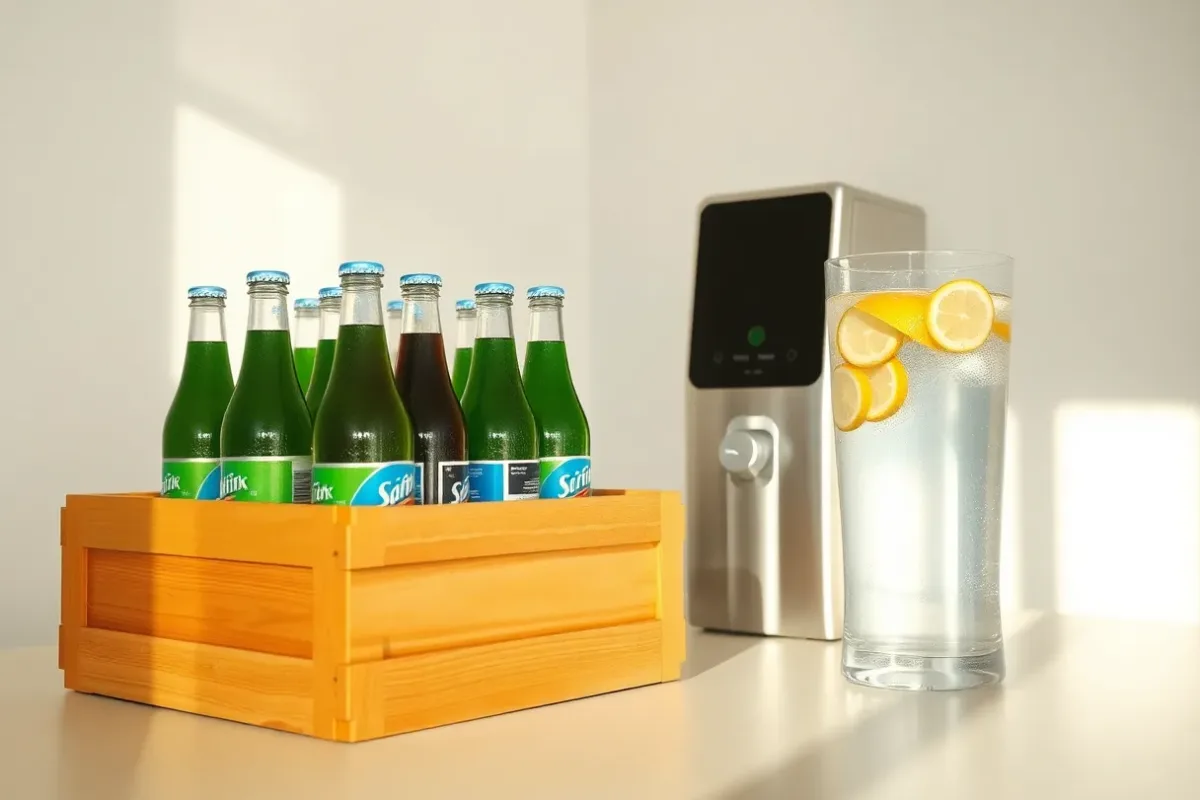
Stores do not sell litres. They sell bottles of 750 ml, cases of six or twelve, crates and kegs. Two conversions are worth writing down before you start: a US gallon is 3.8 litres, and a US pint is 473 ml, so one litre is a little over two pints and four litres is a little over a gallon. Converting before you order is what turns an estimate into a shopping list. The table works a 120-guest evening all the way through, so you can scale it up or down against your own numbers rather than starting again.
| Drink | Per guest | For 120 guests |
|---|---|---|
| Water | 1.0 to 1.5 litres | 120 to 180 litres |
| Soft drinks and juice | 0.5 to 1.0 litres | 60 to 120 litres |
| Reception sparkling wine | 2 glasses of 100 ml | 240 glasses, so 35 to 40 bottles |
| Wine | 0.4 to 0.5 l per wine drinker | 36 drinkers: 19 to 24 bottles |
| Beer | 0.7 to 1.0 l per beer drinker | 36 drinkers: 53 to 76 US pints, about 6.5 to 9.5 gallons |
| Coffee | 1 to 2 cups | 120 to 240 cups |
| Ice in summer | 0.5 to 1 kg | 60 to 120 kg |
Three things shift these figures noticeably: weather, ages and the shape of the evening. Above roughly 28 degrees the water column can double while the red wine barely moves. A young room drinks more beer and more long drinks; an older room drinks more wine and far more coffee. What you do not have to guess, you can ask, and the responses are easy to collect through a wedding website where guests confirm whether they drink alcohol at all, which turns the 60 per cent assumption into an actual count before you place the order.
Related articles
4. Ice, glassware and chilling
Ice is the line forgotten most often. On a summer evening allow 0.5 to 1 kg per guest: 40 to 80 kg for 80 guests, 60 to 120 kg for 120. That is not a misprint, because most of it chills bottles rather than going into glasses. Buy it in 10 kg bags, keep it in a tub or a lined wheelbarrow, and remember that 80 kg of ice becomes 80 litres of water, so put it somewhere with drainage rather than on a dance floor.
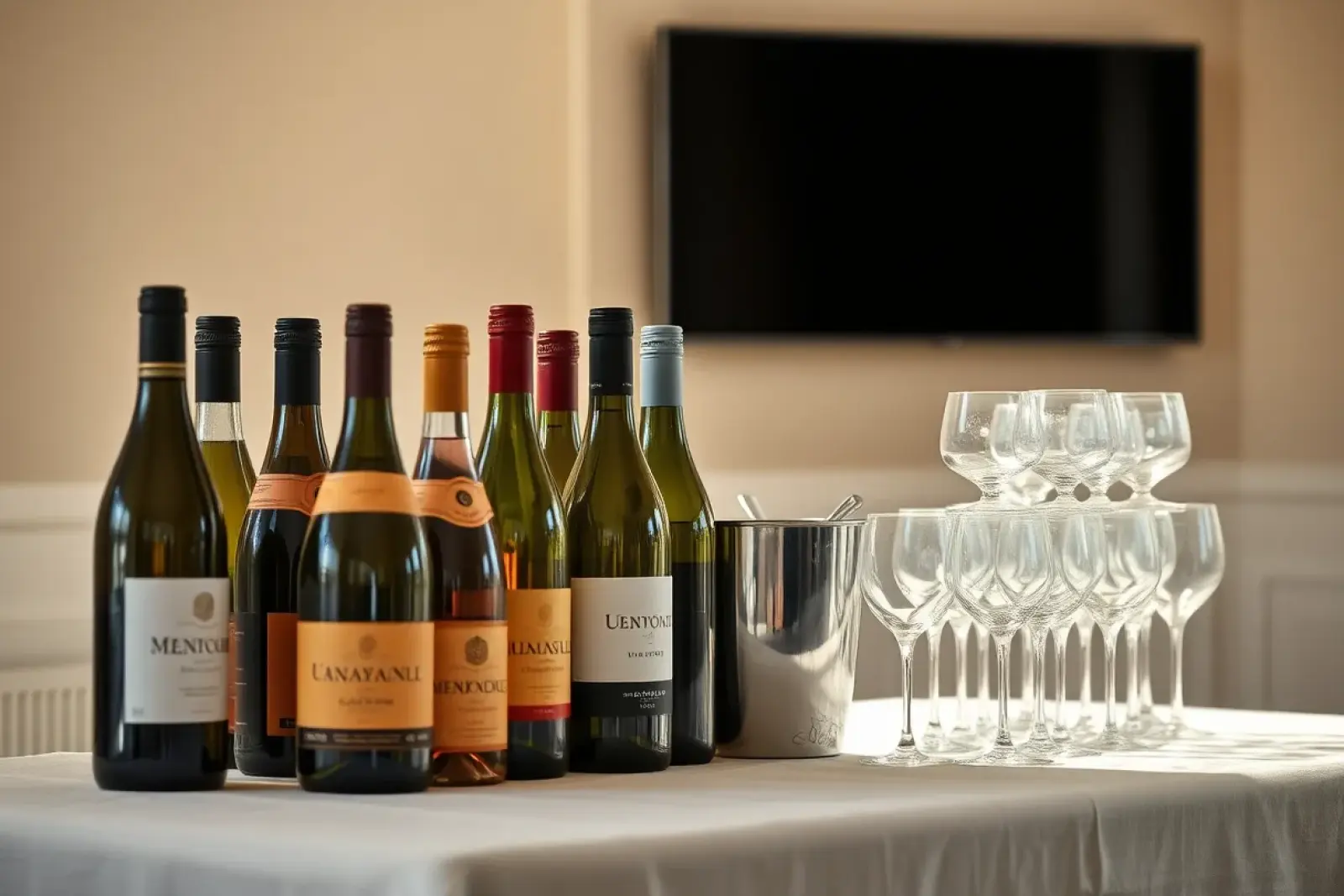
Rental companies count glasses by type, not by head. Allow 1.5 to 2 glasses per guest per type, because glasses get abandoned, swapped and left at the edge of the dance floor. For 80 guests that is roughly 120 to 160 water glasses, a similar number of wine glasses and 100 to 130 flutes. Most rental firms supply glassware free with a drinks order or at a small deposit; check whether they come back washed or dirty, because that clause decides who spends Sunday morning at a sink.
Chilling is a question of time rather than equipment. A crate of water at room temperature needs several hours in a fridge. In a tub of ice, water and a handful of salt, a bottle is ready in twenty to thirty minutes, because iced water carries heat away far faster than cold air does. Ask the venue how much cold storage you actually get. If the answer is one domestic fridge, you need tubs, double the ice and somebody whose job it is to keep topping them up.
5. Corkage, returns and what you cannot send back
Many venues let you bring your own drink but charge corkage, a fee per bottle opened. Before the fee, though, comes the licence. A venue that holds its own liquor licence frequently cannot let outside alcohol through the door at all, and one that can will usually insist that a licensed, insured bartender does the pouring — self-service from a table you stocked yourself is the version most contracts and most insurers refuse. Where corkage is offered at all, the rate sits in the contract rather than on a price list and runs anywhere from token to punitive, so find the clause before you plan around self-supply. Always set it against the saving: on mid-priced wine, corkage can swallow the entire advantage of bringing your own. Ask whether it applies to sparkling and still wine only or to beer and spirits too, whether it is charged per bottle opened or per bottle brought, and whether the bartender requirement carries an hourly cost of its own.
Sale or return is the other half of the arithmetic, and it is decided by state law before it is decided by the shop. Some states do not permit alcohol to be returned at all; elsewhere most supermarkets and wine merchants will take back unopened cases, usually within a set window and usually only on full, undamaged cases with the labels intact. Ask before you over-buy rather than after, because that one answer sets the size of your buffer. Nothing that has been opened comes back in any state, and neither does a broached cask, a mixed punch or anything that has spent the night in melting ice. So buy generously on the things you can return and tightly on the things you cannot.
That rule sets your buffer. Where returns are allowed, add about 10 per cent to water, beer and wine. Where they are not, order to the calculation and no further. Add nothing to anything pre-mixed or already poured. Then decide, before the day, who is physically returning the unopened cases and when. Nobody wants that job on the Monday, so name a person and agree a slot with them while you are still shopping.
The calculation has three steps: set litres per guest for the drinks everybody has, apply wine and beer only to the roughly 60 per cent who drink, then convert into bottles, cases and pints before you order. For 120 guests that comes to 120 to 180 litres of water, 35 to 40 bottles of sparkling wine, 19 to 24 bottles of wine and 53 to 76 US pints of beer — about 6.5 to 9.5 gallons, or a single half-barrel keg — plus 60 to 120 kg of ice in summer. Glassware and chilling belong on the same list or they get improvised the day before. Write the list out in cases and crates rather than litres, then ask your venue to quote against it line by line.
All things wedding
Plan your wedding
Bring your tasks, costs and guests together for the day.
Invitations and wording
Find the right words for your wedding invitation.
As a wedding guest
Write a personal message and choose a thoughtful gift.
Wedding anniversaries
Explore anniversary names, traditions and celebration ideas.
Planning your dream wedding?
Create your own wedding website in minutes – with RSVP function, photo gallery, and more.